The skincare company is pairing fresh AlphaRet findings with consumer education, highlighting the category’s continuing focus on efficacy that can support regular use.
skinbetter science is using new clinical findings around its AlphaRet Overnight Cream to support the third annual National Retinoid Week, a programme created by the skincare company to broaden understanding of retinoid use. In a 12-week, multicentre, dermatologist-led study of 56 participants with self-identified retinoid sensitivity and mild-to-moderate photoaging, 98% agreed that the product could be used nightly. The findings place tolerability alongside visible results as a central concern in a category often associated with difficult adjustment periods.
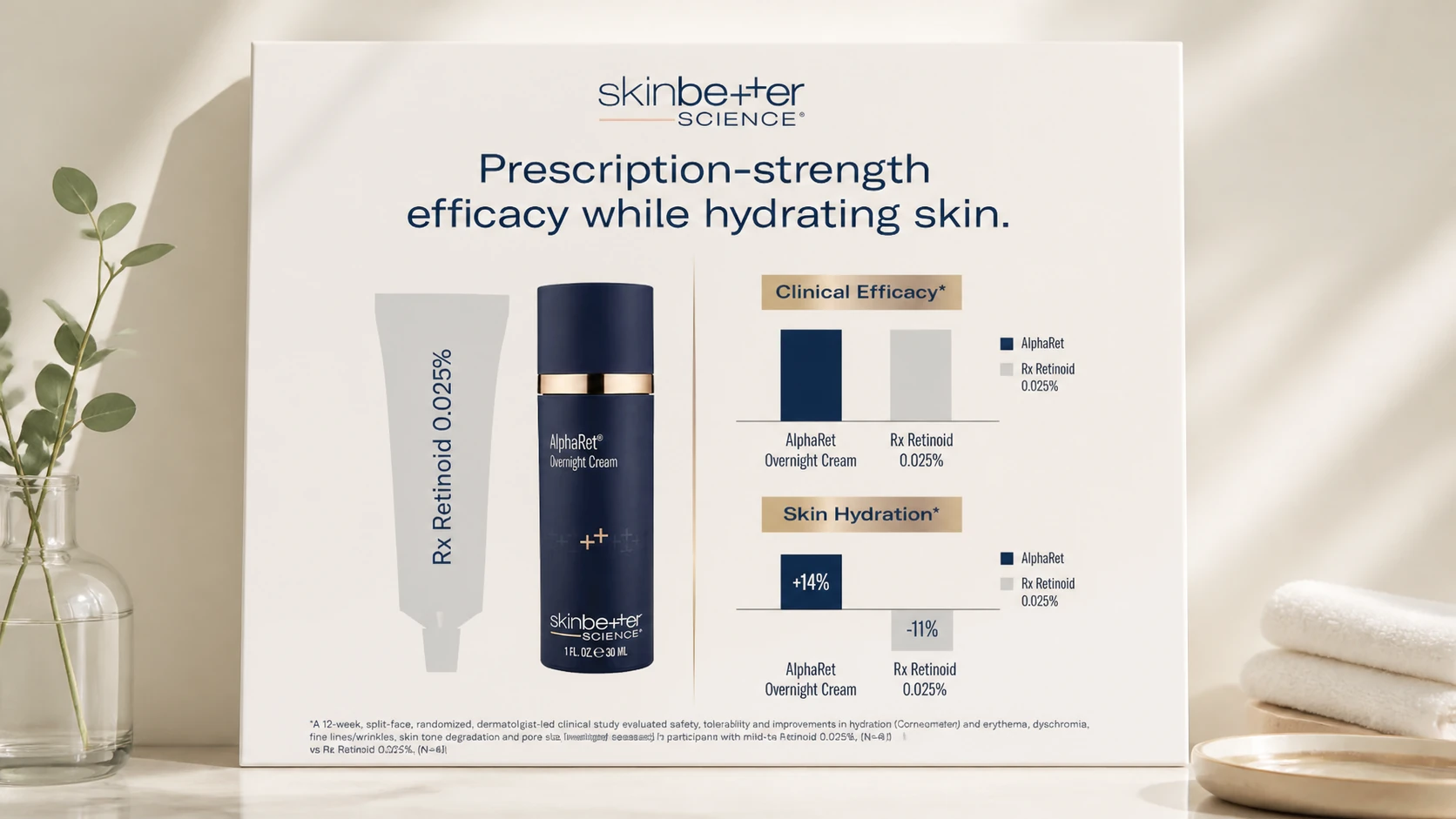
The study focused on participants who identified as sensitive to retinoids, rather than a general skincare audience. According to skinbetter science, 95% of participants agreed that their skin felt smoother, firmer and comfortable after using AlphaRet Overnight Cream, while hydration improved by 42% and skin dullness improved by 48% at 12 weeks. The company says the results build on the approach behind AlphaRet Technology, which reached its 10-year anniversary earlier this year.
The findings are being presented alongside dermatologist-led content, social activations, expert partnerships and educational material intended to help consumers understand how retinoids may fit into individual skincare routines. skinbetter science General Manager Geneviève Bibeau said the company’s focus was on helping more people incorporate retinoids with confidence, while dermatologist Annie Gonzalez said the study was notable because it involved patients who had previously struggled with retinoid products. The AlphaRet Collection is sold through skinbetter.com and authorised physician providers.
For the wider skincare category, the development illustrates how brands are using clinical substantiation to address the gap between a product’s stated efficacy and whether customers can continue using it consistently. The study does not establish that every retinoid-sensitive consumer will respond in the same way, but its design gives the company a defined evidence base for speaking to users who have found retinoids difficult to tolerate. That emphasis also connects product performance with education rather than treating the two as separate propositions.
skinbetter science is therefore positioning AlphaRet around a combined message of prescription-strength efficacy, hydration and practical usability, while using National Retinoid Week as a platform for professional guidance. The company’s findings add detail to its long-running argument that consumers should not have to choose between results and tolerability. Their commercial significance will depend on whether the evidence and education help translate interest in retinoids into sustained routines.