TouchHub adds chores, rewards and smart-home controls to DAKboard’s digital calendar, reflecting a broader push to make household organization more visible and collaborative.
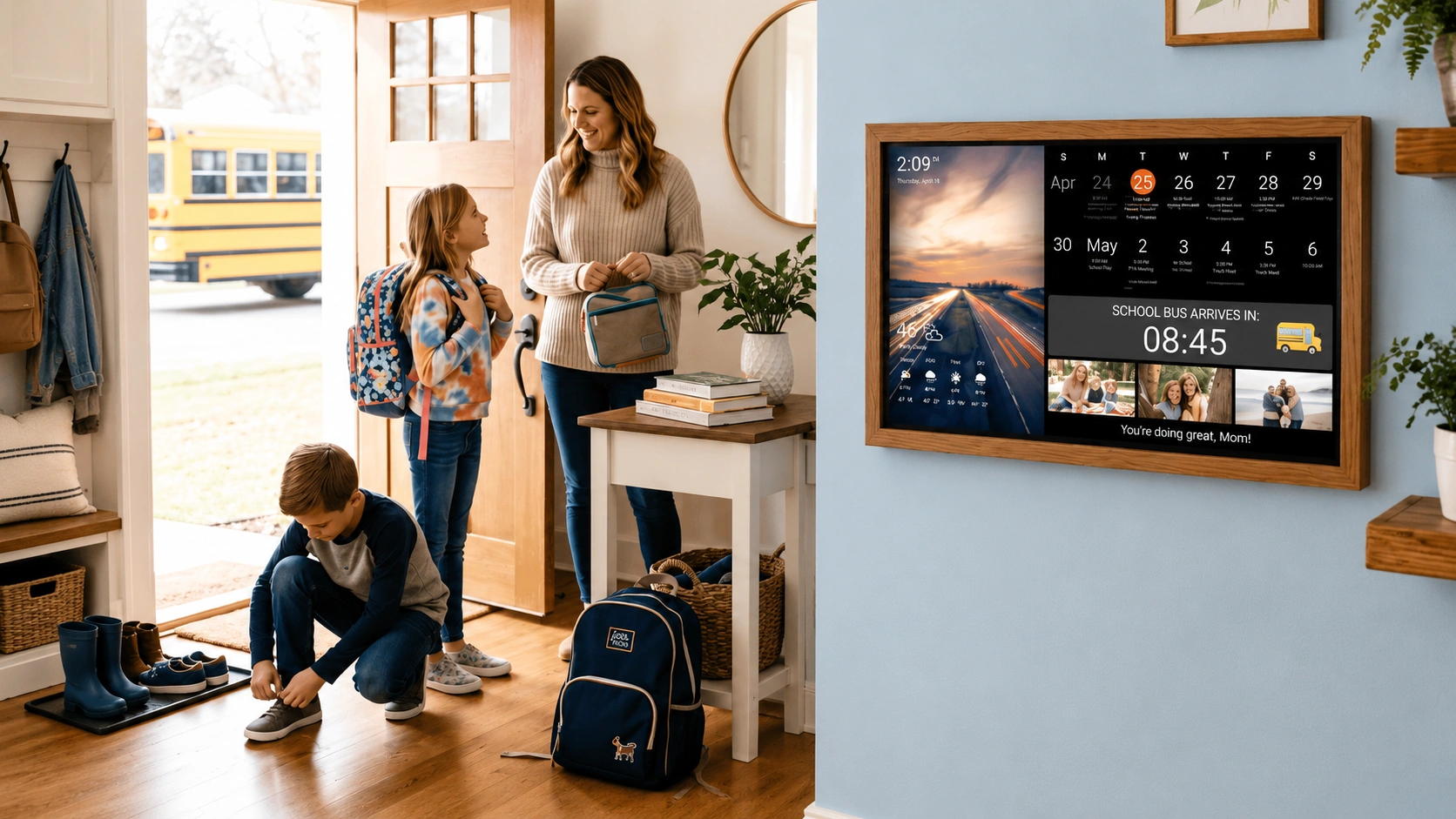
DAKboard has launched TouchHub, an interactive update to its digital calendar platform that turns the company’s wall-based displays from primarily informational screens into tools family members can actively use. Arriving ahead of the back-to-school season, the update combines calendars with chore management, rewards and smart-home controls, reflecting an effort to consolidate everyday household coordination into a shared interface rather than another individual phone app.
Central to the update is the Family Chores Manager, which gives household members individual task lists that can be completed directly from a touchscreen. Parents can assign points to chores and connect those points with chosen rewards, while a family leaderboard provides a visible record of progress. A Child Lock is intended to let children manage their own tasks without accidentally changing another family member’s entries, giving younger users some independence within the system.
TouchHub also expands DAKboard’s role beyond schedules and responsibilities. Home Assistant is now available as a dedicated app for controlling connected devices such as lights, locks and thermostats, while a new navigation dock provides quick access to calendars, photographs, weather information and other screens. DAKboard also plans to add a Meal Planner, extending the same centralized approach to another recurring piece of household planning.
One notable aspect of the update is that families do not necessarily need to purchase dedicated hardware to use it. DAKboard software can operate on televisions, tablets, monitors, Raspberry Pi devices, browsers and its Android app, and TouchHub can be tested on an existing touchscreen. The feature is also being made available across the company’s plans, including its free tier.
The broader idea behind TouchHub is less about introducing another productivity tool than reconsidering where household information lives. Family scheduling apps can centralize information digitally, but they still depend on individuals remembering to open them. A persistent, interactive screen in a common area instead makes schedules, chores and home controls part of the physical household environment. Whether that meaningfully reduces the work of managing a busy family will depend on how consistently everyone participates, but TouchHub illustrates a shift toward shared technology designed around collective routines rather than individual devices.