Daniel Humm and Mark Ramadan’s five-kit range combines shelf-stable convenience with ingredients and preparation designed to preserve a hands-on role for home cooks.
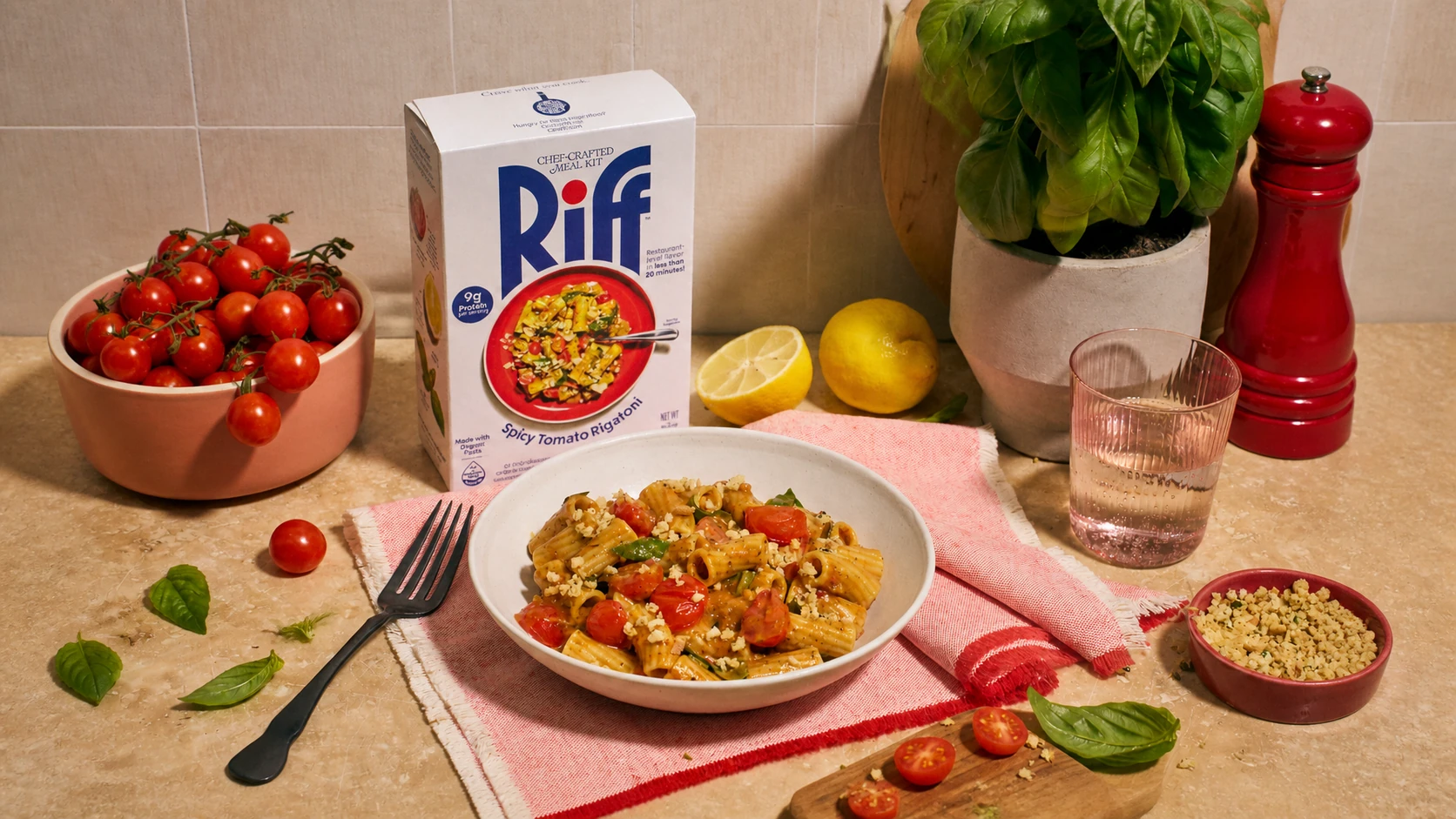
Riff, founded by chef Daniel Humm and food and beverage entrepreneur Mark Ramadan, has introduced a line of shelf-stable meal kits intended to sit between scratch cooking and conventional convenience food. Each $6.99 box contains the components for a one-pot dinner that the brand says takes 20 minutes, with availability at Target locations nationwide and through its own website. The range gives home cooks a structured base while leaving room to add vegetables, herbs or leftover protein.
The format removes several features associated with subscription meal kits: it requires no delivery, perishable produce or advance planning. Instead, each box contains organic bronze-cut pasta or air-dried noodles, a seasoning mixture used to build the sauce and a crunchy topping. Riff says Humm and his culinary team spent 18 months developing the products, seeking to translate their standards for flavour and texture into a pantry-stable format suited to weeknight routines.
The opening collection comprises Spicy Tomato Rigatoni, Creamy Parmesan Cavatappi, Garlic Lemon Rotini, Sesame Ginger Noodles and Coconut Curry Noodles. Their sauces draw on ingredients including tomato, crushed red pepper, parmesan, buttermilk, black pepper, garlic, lemon, shallot, sesame, ginger and coconut milk. Riff’s website also states that the kits use organic pasta or noodles, non-GMO ingredients and no artificial flavours or dyes, while the finishing toppings are intended to add texture.
Humm, whose restaurant background includes Eleven Madison Park, shaped the culinary approach, while Ramadan brought experience from co-founding Sir Kensington’s and serving as chief executive of Hu Kitchen. Ramadan characterised the opportunity as a gap between the meals people would like to prepare and the time or energy available on a weeknight. Humm’s emphasis is on giving cooks enough guidance to produce dinner confidently without removing their ability to adapt it.
That balance distinguishes Riff’s proposition from both fully prepared food and more demanding recipes. The box supplies a defined foundation, but the invitation to customise makes participation part of the product rather than an optional afterthought. By placing the range in Target’s boxed-meals aisle as well as selling it directly, Riff is positioning chef-developed meal kits as a pantry purchase rather than a scheduled service. The result is a convenience format built around retaining a small but meaningful element of cooking.