Embry-Riddle and Florida’s transportation agency brought researchers, policymakers and aviation companies together to examine how emerging aircraft could enter the state’s transport system.
Embry-Riddle Aeronautical University, also referred to as Embry-Riddle, and the Florida Department of Transportation hosted the first Florida Advanced Air Mobility Symposium at the university’s Daytona Beach Campus from May 11-12, 2026. More than 300 researchers, policymakers and aviation innovators attended two days of discussions and demonstrations focused on the development, safe integration and economic possibilities of aircraft designed to move people and cargo through the skies. The event matters because it placed technical, regulatory and infrastructure questions in the same forum as live aircraft demonstrations.
The symposium covered a category that includes autonomous drones, air taxis and other aircraft using short or vertical take-off capabilities. Sessions addressed safety, security, air traffic management, communications, policy and workforce preparation, reflecting the range of issues involved in integrating new aircraft into existing aviation systems. Participants also discussed potential uses in fire, rescue and medical emergencies, as well as propulsion approaches including hybrid, electric and hydrogen systems.
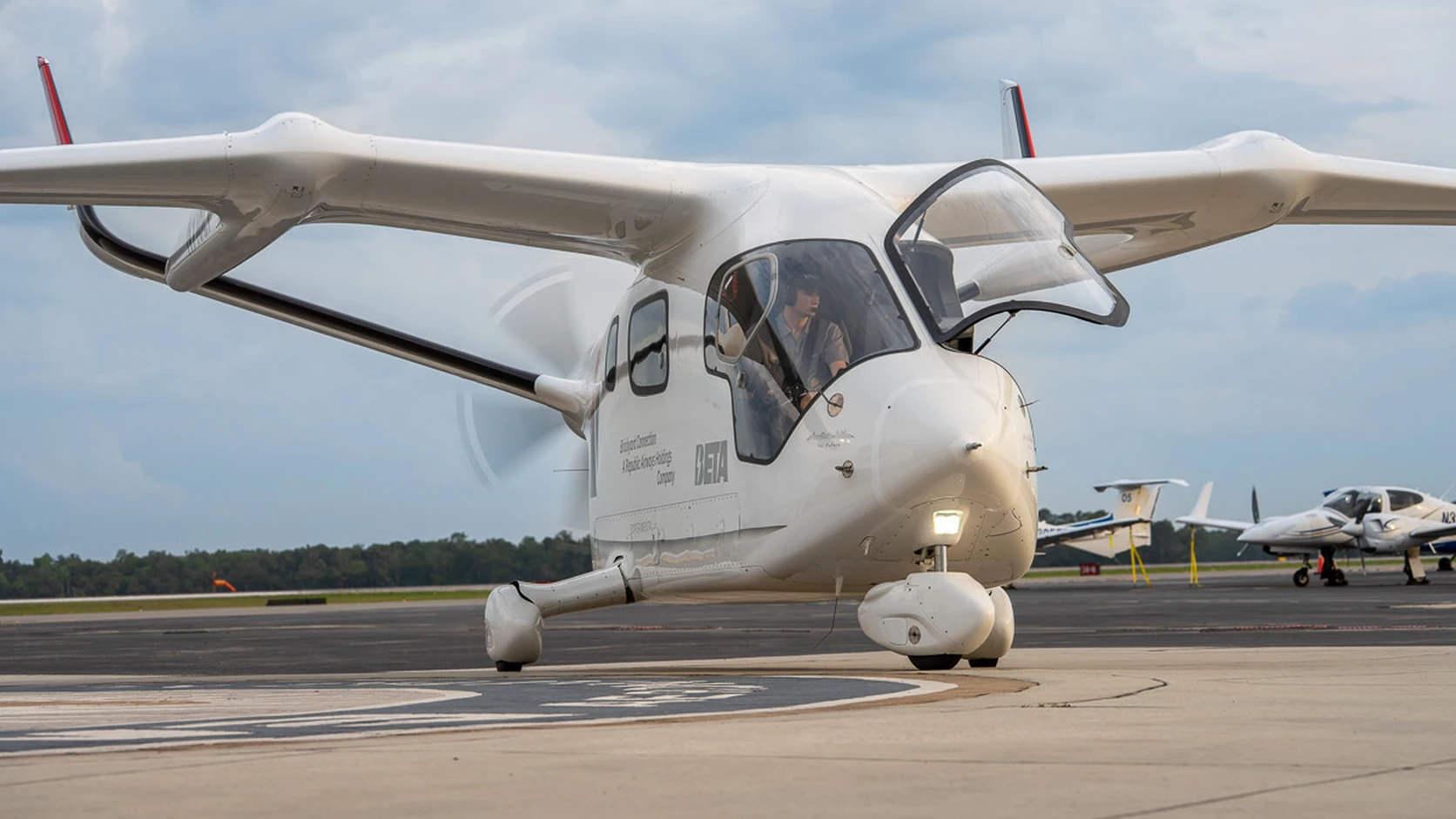
The practical element of the programme came through demonstrations at Embry-Riddle’s Flight Line near Daytona Beach International Airport. BETA Technologies flew ALIA CTOL, its all-electric fixed-wing aircraft, while Joby Aviation provided an immersive electric vertical take-off and landing simulator connected with the company’s development of electric air taxis for commercial passenger service. The release said the event culminated in the live launch of an AAM aircraft from BETA Technologies, giving attendees direct exposure to aircraft operations alongside the policy discussions.
Infrastructure and public confidence were recurring parts of the symposium’s agenda. Panels examined electrified infrastructure, vertiports, complex airspace, pilot and maintenance-technician training, aircraft operations, security and economic development. The release also pointed to Florida legislation allowing vertiports and electric charging systems to receive funding through transportation projects, and cited FDOT’s Suntrax Air as home to what it described as the nation’s first AAM test track.
For Embry-Riddle, the gathering connected its aviation and aerospace education mission with a developing set of requirements around technology, infrastructure, regulation and talent. University president P. Barry Butler said the institution’s research expertise and government and industry partnerships position Florida as a national hub for AAM innovation, while the university said it and FDOT will continue collaborating with industry. The symposium therefore presented advanced air mobility not as a single aircraft launch, but as a coordination challenge spanning the state’s public agencies, researchers, educators and commercial developers.