SPONSORED CONTENT
Through JAMS and BRONCO, Connor Blakley is pairing familiar foods with familiar faces to challenge some of the biggest brands in the grocery aisle.
For a generation raised on frozen PB&J sandwiches, Nickelodeon reruns and Disney Channel sitcoms, nostalgia is more than a marketing trend. It is a shared language.
Connor Blakley is turning that language into a business.
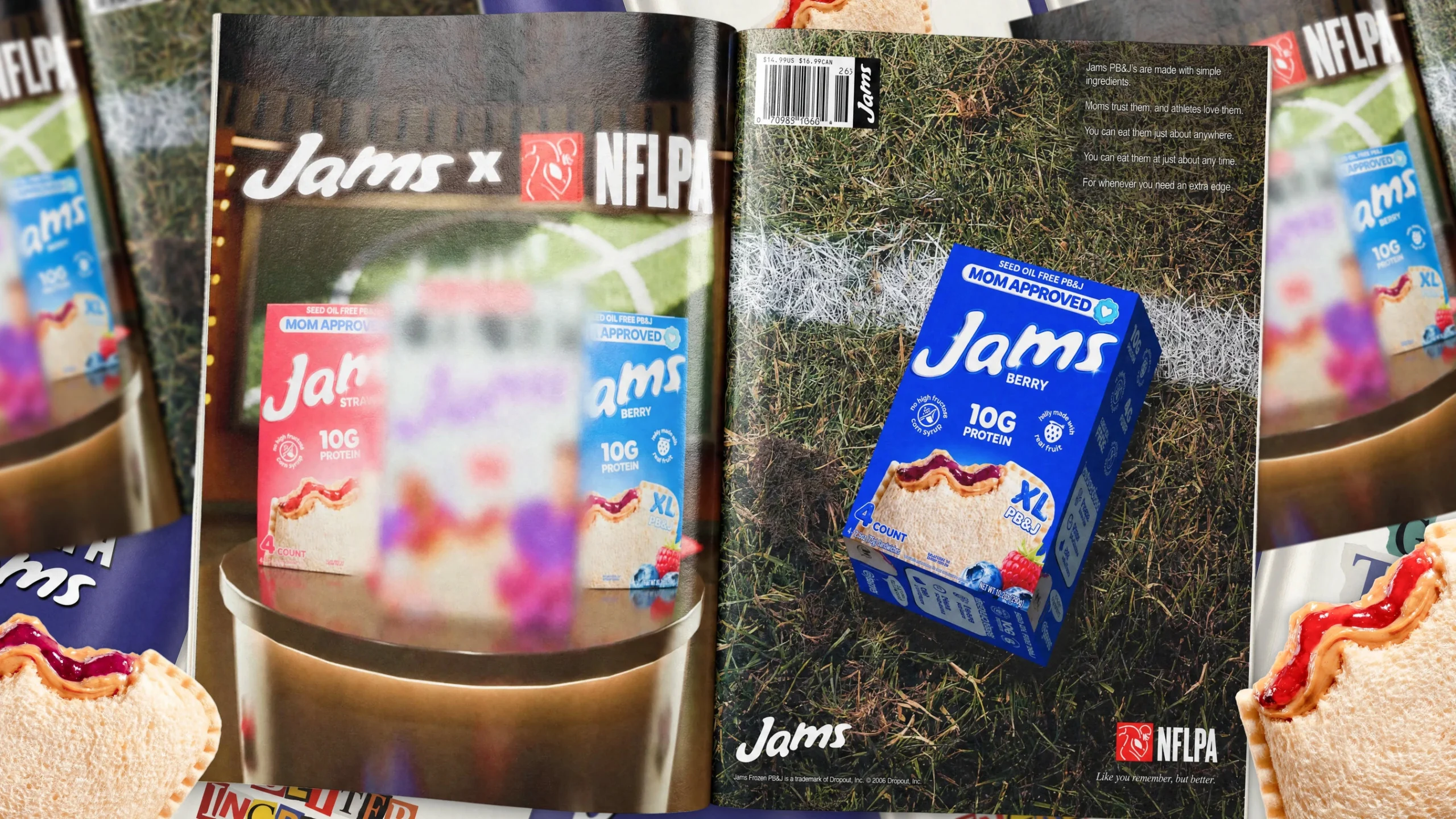
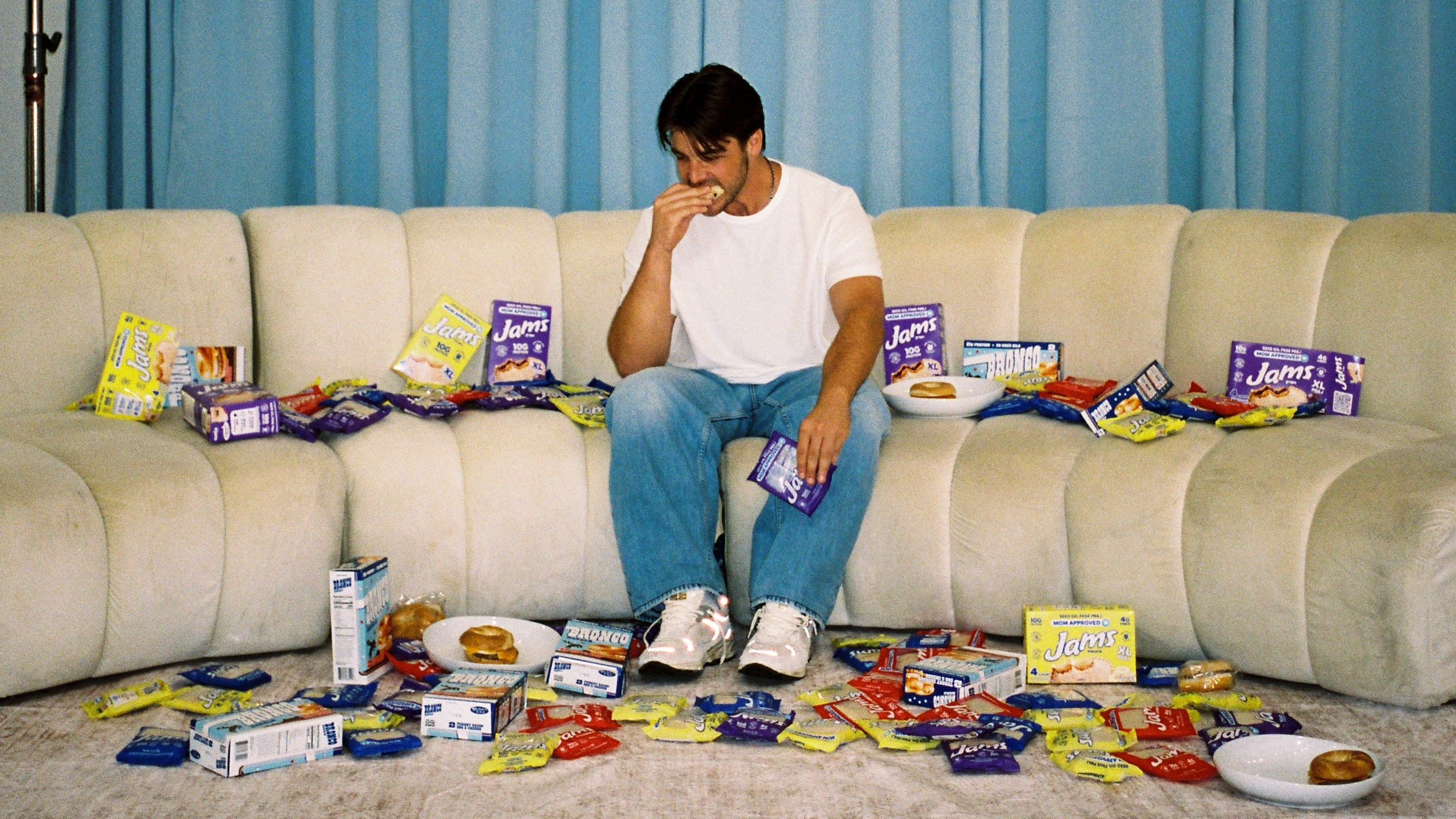
The 27-year-old founder of Dropout Companies is building a portfolio of food brands designed to feel familiar before shoppers have even tried them. Its growing lineup includes JAMS, a protein-packed take on the frozen peanut butter and jelly sandwich, and BRONCO, a modern brand entering the bagel and breakfast aisle.
The products may be new, but nearly everything surrounding them is intended to trigger recognition.
Selling a Memory, Not Just a Product
Established food companies have spent decades building familiarity through recognizable packaging, mascots and advertising. That kind of emotional equity is difficult for a startup to replicate.
Rather than manufacturing it from scratch, Dropout begins with recognition that already exists.
For BRONCO, that includes BooG!e, known to a generation of viewers as T-Bo from iCarly. On the show, T-Bo famously sold food on a stick, including bagels. Today, he serves as BRONCO’s Chief Bagel Officer.
It is a partnership that works on several levels. Fans recognize the actor, remember the reference and understand the joke without needing it explained. Even the job title becomes content.
BRONCO has also worked with Kevin Chamberlin, remembered by many younger consumers as Bertram from Disney Channel’s Jessie. JAMS, meanwhile, counts sports personality Pat McAfee as an owner and has featured current NFL players in its campaigns.
These are not interchangeable celebrity endorsements added after the products have been developed. The talent, references and brand identities are connected from the beginning.
A conventional endorsement pays for attention. Dropout’s approach taps into an existing memory, giving audiences a reason to engage, share and remember why the partnership feels so familiar.
A Media Company Built for the Grocery Aisle
The traditional CPG playbook starts with product development and retail distribution. Brand awareness follows, often through expensive campaigns designed to establish recognition over time.
Dropout is developing its products, talent relationships and content engine together. That allows each brand to enter the market with a personality and cultural point of view already attached.
In that sense, Dropout operates as much like a media company as a food business.
The products still need to earn repeat purchases, but the content gives them a faster route into the conversation. A nostalgic reference can stop the scroll. A familiar face can make a new package feel instantly recognizable. The product then has an opportunity to turn that attention into lasting demand.
Early signs suggest the strategy is carrying beyond social media. According to the company, JAMS is consumed by players across 14 to 16 NFL locker rooms and is outselling legacy competitors at Target. Dropout has also secured nationwide distribution through Walmart and Target, while BRONCO is available through Kroger.
The Letter That Came Before the Competition
Long before launching Dropout, Blakley was advising established companies on how to reach his generation.
In 2018, at age 18, he sent J.M. Smucker CEO Mark Smucker a handwritten letter offering the services of YouthLogic, his Gen Z-focused marketing consultancy. Smucker responded on company letterhead, praising Blakley’s approach to influencer marketing and connection with Gen Z.
According to a recent Fast Company profile, Blakley followed up repeatedly, but the proposed meeting never took place.
Years later, he is competing in one of Smucker’s most recognizable categories through JAMS. Blakley has made his ambitions clear, telling Fast Company that Dropout plans to capture between 70 and 80 percent of the incumbent’s market share.
Whether it reaches that target remains to be seen. Cultural relevance alone does not guarantee lasting success in the fiercely competitive grocery business. Products still need to deliver on taste, value, availability and repeat purchase.
Still, the letter captures the larger arc of Blakley’s career. He first offered to help legacy food companies understand his generation. When they failed to move quickly enough, he began building the brands himself.
Dropout’s goal is to create a consumer-product and talent engine capable of developing the leading brand in every snack and food aisle. If JAMS and BRONCO continue gaining traction, it may offer a glimpse of what the next major food company looks like: part manufacturer, part talent network and part entertainment studio.
This sponsored content was produced in partnership with Dropout Inc.