The deployment replaces paper flight strips with shared real-time data, highlighting how airport surface operations are being modernised through connected technology.
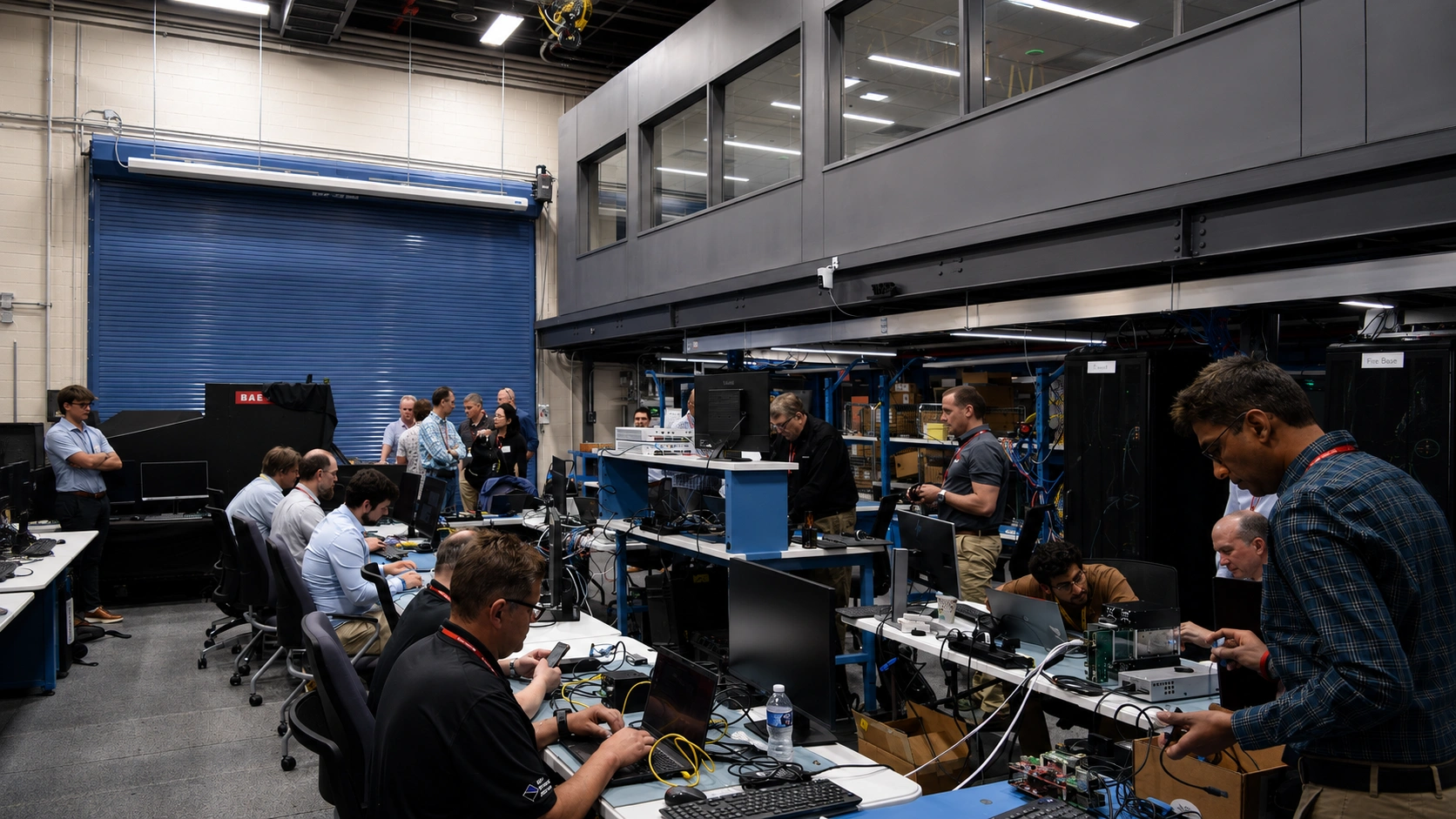
Leidos has deployed a Terminal Flight Data Manager system at Ronald Reagan Washington National Airport, giving tower controllers access to digital flight strips, an integrated surface display and real-time operational data. Developed for the Federal Aviation Administration’s TFDM programme, the system is intended to improve coordination, aircraft movement and safety on the airport surface. The installation illustrates how digital infrastructure is moving into one of aviation’s most operationally constrained environments: the space between gates and runways.
TFDM replaces paper-based flight strips with electronic data shared among controllers, air traffic managers, aircraft operators and airports. The Federal Aviation Administration describes the system as an automation solution for modernising surface operations at some of the busiest airports in the National Airspace System, where congestion has increased the need for more efficient ground-level planning. Its functions include improving data exchange, streamlining departures and supporting collaboration between airport gates and control towers.
The implementation at Reagan National began in June 2025 and became operational 45% faster than the traditional 18-month deployment cycle, according to Leidos. The company says the system provides predictive modelling tools alongside a shared view of surface activity, allowing aviation stakeholders to coordinate arrivals and departures with more current information. Ten airports are currently using TFDM, while further deployments are scheduled in the months ahead.
For controllers, the change is designed to reduce reliance on manual processes and provide a common operating picture across organisations that manage aircraft on the ground. Leidos says those capabilities can help reduce controller workload, improve predictability and support smoother departures and arrivals, although the company frames those outcomes as intended benefits rather than confirmed performance results at Reagan National. The broader significance lies in treating airport surface management as a data-coordination problem as much as an air-traffic-control task.
Leidos’ air traffic management business supports systems used across the National Airspace System and internationally, while the FAA remains responsible for the TFDM programme and its wider implementation. At Reagan National, the deployment places electronic flight information at the centre of day-to-day surface coordination, linking tower operations with airlines, airport personnel and air traffic managers. As more airports adopt the platform, the system’s value will be measured by how effectively that shared information supports safe and efficient movement on increasingly busy airport surfaces.