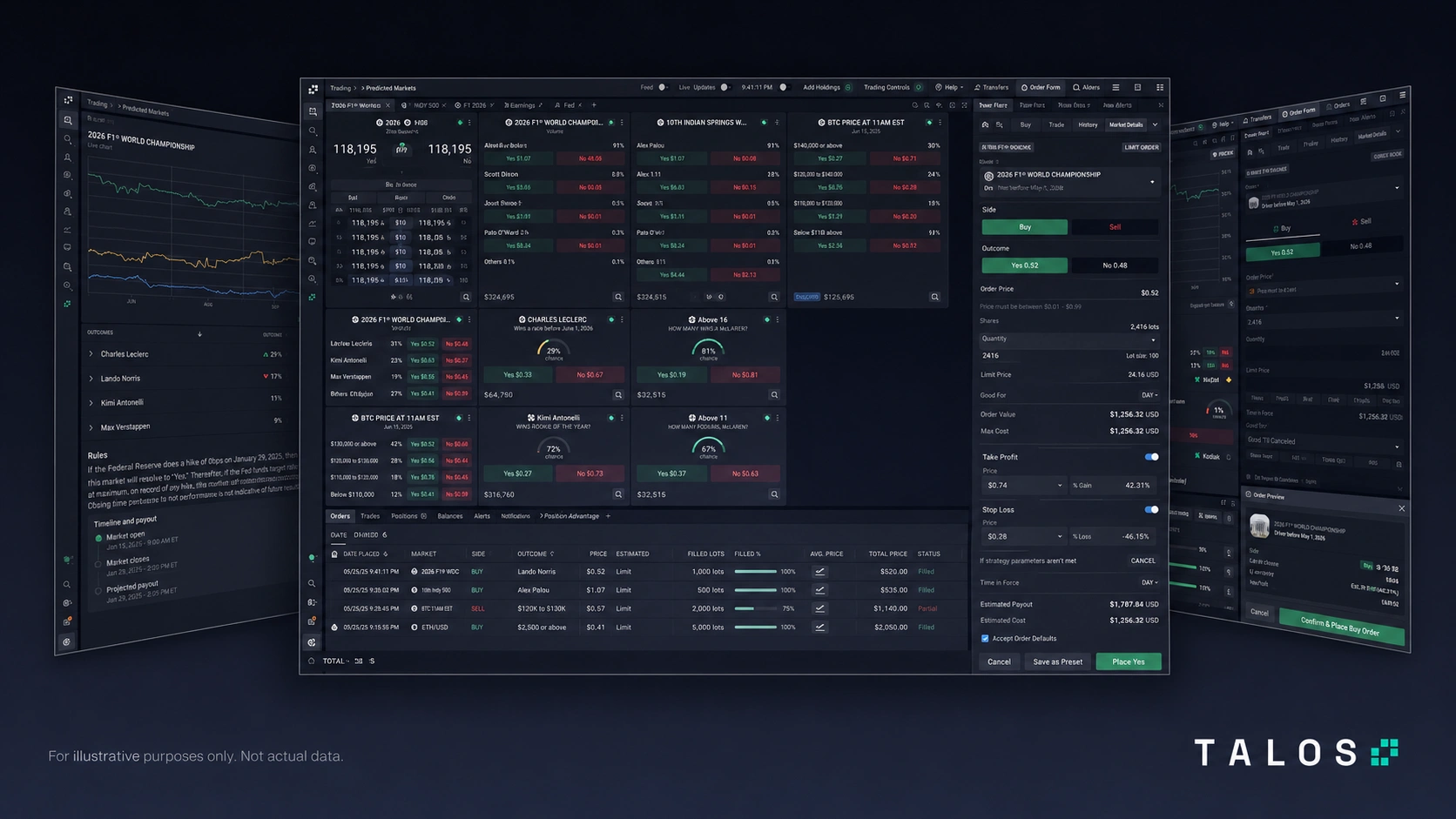
The integration with Kalshi gives select institutional traders access to event contracts and crypto perpetuals through tools already used for digital assets, signaling a maturing market.
Talos is integrating prediction markets into the trading infrastructure already used by its institutional digital asset clients, allowing select firms to access Kalshi event contracts and crypto perpetuals without building a separate connection. The move is significant because it places products that have largely developed outside conventional institutional workflows alongside familiar execution, market data and block-trading tools.
Through the integration, hedge funds, market makers and other eligible clients can use Talos algorithms such as Iceberg, TWAP, Pegged, Sniper and POV when trading on Kalshi. The platform will also support multi-leg execution for perpetual-to-perpetual and perpetual-to-spot spreads, enabling strategies involving basis and funding-rate differences. Talos says it eventually intends to extend those capabilities to spreads combining prediction markets and perpetual contracts.
The arrangement also introduces infrastructure for larger transactions. Talos plans to make its request-for-quote system available for off-exchange block trading through its network of over-the-counter liquidity providers, while Kalshi’s regulated clearing structure gives participating institutions a framework closer to those used in established futures and options markets. Cantor advised Talos on aspects of the development of its institutional prediction-market functionality.
Another challenge is market data. Prediction venues can represent binary outcomes differently, making direct comparisons across platforms more complicated than simply combining feeds. Talos plans to create a harmonized data service covering events, trades, order books, open interest and implied probabilities using a common format, with Kalshi expected to be among the first supported venues. The company also intends to let brokers and trading platforms distribute Kalshi event contracts to eligible customers through its dealer software later this year, subject to jurisdiction.
The integration does not establish prediction markets as a conventional institutional asset class, but it does address some of the infrastructure needed for broader professional participation. As event contracts and round-the-clock digital markets attract greater attention, standardized execution tools, liquidity access and comparable data could become important to how these markets develop. Talos’s move suggests the next stage of prediction-market growth may depend as much on trading infrastructure and market structure as on expanding the range of events available to trade.