The BT1 transmitter combines analogue outputs with rugged construction and intrinsically safe options, targeting temperature monitoring across mobile machinery, factory automation and oil and gas systems.
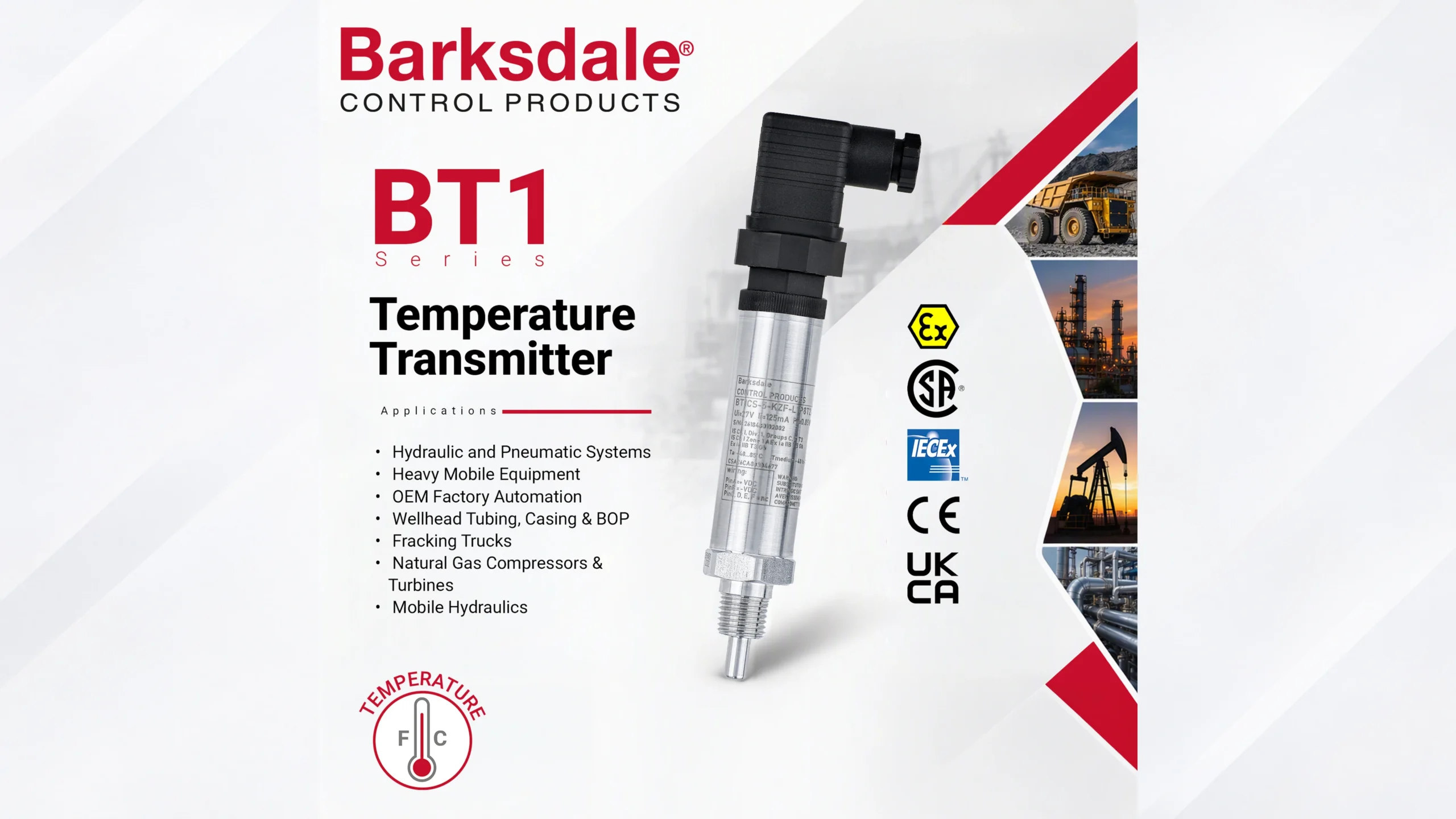
Barksdale Control Products has introduced the BT1 Temperature Transmitter, a compact sensor designed for temperature measurement in aggressive media and equipment exposed to repeated operating cycles. The launch focuses on analogue output options and intrinsically safe configurations for hazardous locations, bringing temperature sensing, mechanical durability and control-system integration into one stainless-steel unit.
Built around a Class B PT100 resistance temperature detector, or RTD, the BT1 measures process temperatures from −40°C to 200°C, according to the announcement. Barksdale describes the design as fast responding and resistant to drift, positioning it for applications where consistent readings must be maintained under demanding operating conditions.
The transmitter offers 4–20 mA current and voltage output options. These give equipment manufacturers a choice of signal formats when connecting temperature measurements to their control systems. The emphasis on analogue connections makes integration a central part of the product’s positioning, alongside the physical requirements of the equipment in which it will operate.
Barksdale lists hydraulic and pneumatic systems, heavy mobile equipment and factory automation among the intended applications. Oil and gas uses include wellhead tubing and casing, blowout preventer systems, fracking trucks, natural gas compressors and turbines. The range of applications places the BT1 across both stationary industrial installations and machinery that operates in the field.
Durability features include reverse-polarity and overvoltage protection. Barksdale says the transmitter withstands vibration of 20 g across three axes and a one-metre free fall. Ingress protection is rated IP65 or IP67 depending on the electrical connector, so the protection level varies with the selected configuration.
The announcement also identifies intrinsically safe CSA Class I, Division 1 and ATEX Ex ia options. These approvals are an important part of the offer for hazardous-location applications, with the appropriate configuration remaining central to product selection. Barksdale is positioning the BT1 as a cost-effective addition to its temperature portfolio, although the release does not disclose pricing.
The launch brings the focus to the practical demands of industrial measurement: a usable temperature signal, a compact housing and specifications suited to the operating environment. For Barksdale, the BT1 broadens its temperature-sensing offer around those requirements, with output format, connector choice and hazardous-location options shaping how customers specify the transmitter.