Cigna Healthcare is expanding predictive tools designed to identify complex health needs sooner, pairing AI-enabled insights with clinicians as it seeks to improve care and contain costs.
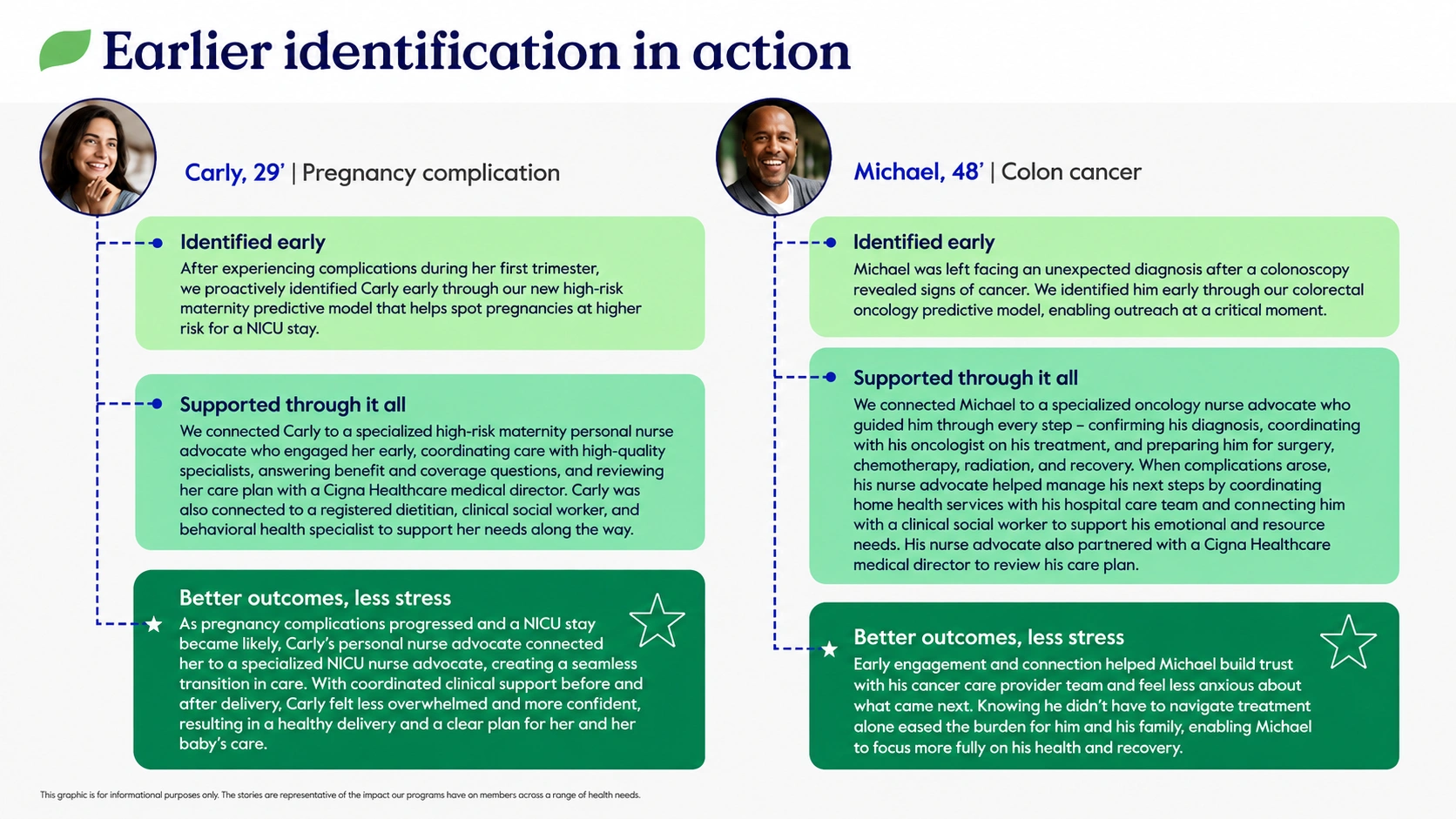
Cigna Healthcare is expanding its use of AI-enabled capabilities and predictive analytics to identify customers who may benefit from clinical support before their health needs become more serious. The health benefits provider says the expanded care management programs will reach 20% more customers with emerging, complex or chronic needs, including cancer, heart and kidney disease, high-risk pregnancy and behavioral health conditions.
The approach illustrates a growing role for AI in health care that is less about replacing clinical judgment than determining when human attention may be most useful. Cigna uses predictive models to identify and prioritize opportunities for outreach, while more than 1,250 nurses, behavioral health specialists and other clinicians provide guidance, coordinate care and connect customers with additional resources.
Cigna estimates that engaged customers receiving this support generate an average of $2,000 less in medical costs annually, with projected savings totaling $200 million over the next three years. The company also reports a 42% reduction in avoidable inpatient stays among customers who engage early with its care management programs, while its systems have identified likely breast, colorectal and lung cancer diagnoses approximately 55, 46 and 37 days earlier, respectively.
Those figures highlight the economic argument behind earlier intervention, particularly as complex conditions can become more difficult and costly to manage when care is delayed. At the same time, the model places considerable importance on how predictive systems are used: the technology identifies potential opportunities for support, but clinicians remain responsible for helping customers understand their options and navigate care.
The expansion also reflects a broader effort to make health benefits more proactive rather than waiting for customers to seek assistance after a major diagnosis or costly event. Cigna plans to personalize outreach through phone, text, email and digital tools, while using AI-enabled insights to help clinicians determine where engagement may have the greatest value. Whether those tools consistently translate into better outcomes will depend in part on customer participation, but the strategy shows how insurers are increasingly viewing predictive technology as a way to intervene earlier in the health care journey.