The St. Louis attraction has installed a restored 1920s-era ride, extending its artist-built environment with an experience designed for younger visitors.
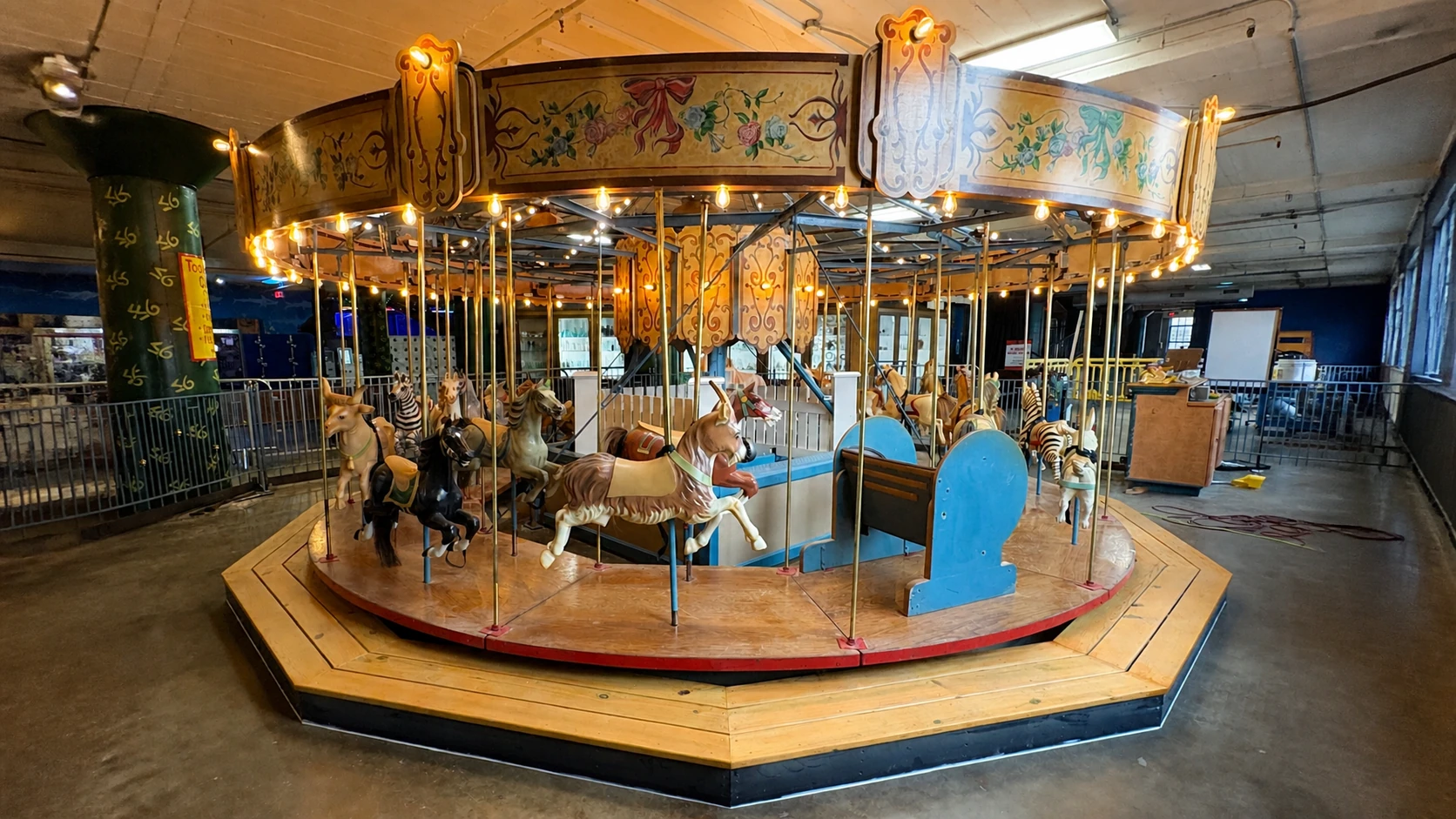
City Museum has added the Antique Children’s Carousel to its family attractions in St. Louis, introducing a restored 20-foot ride manufactured in the 1920s by Allan Herschell Company. The carousel debuted on March 13, 2026, becoming the museum’s third ride alongside the Rooftop Ferris Wheel and City Express Train. Its arrival broadens the venue’s offer while giving younger visitors an attraction scaled specifically to them.
The carousel was made by the Allan Herschell Company of North Tonawanda, New York, which City Museum identifies as the most prolific carousel maker in American history. The company produced more than 3,000 hand-carved wooden carousels and specialised in portable machines that travelled with carnivals across the United States. That history places the new attraction within a tradition of mobile amusement rides rather than presenting it solely as a contemporary family installation.
The ride was restored in 1988 as a historical art preservation project by sculptor Carlos Sardina and his wife, Judy. The Sardinas toured their carousels nationwide from the late 1980s through the early 2010s, bringing antique rides to communities across the country. City Museum now provides the carousel with a permanent home, with the attraction included in general admission and member passes.
To mark the opening, City Museum scheduled two weekends of 1920s-era entertainment between noon and 4pm, including stilt walkers, balloon twisters and live music in Beatnik Bob’s. The first weekend featured a ragtime jazz duo, while the second included performances by the Gaslight Square Duo and another ragtime ensemble. The programming connects the ride’s historical character with the museum’s wider emphasis on playful, participatory experiences.
The carousel strengthens City Museum’s position as an indoor, outdoor and underground attraction built around art, movement and discovery. It also shows how a heritage object can be incorporated into a broader visitor experience without being separated from its original amusement-park associations. For City Museum, the addition offers another route into its unusual environment, with a smaller-scale ride helping extend the venue’s appeal across generations.