
SAS argues that the next phase of enterprise AI will depend less on automation alone and more on governance, workforce literacy and keeping people accountable for consequential decisions.
As businesses move from experimental AI tools toward systems capable of acting independently across workflows, SAS is arguing that the measure of success should extend beyond how much work can be automated. The company says organizations seeking durable returns from agentic AI will need to preserve human judgment, establish clear governance and help employees understand both the capabilities and limitations of increasingly autonomous systems.
The argument reflects a broader challenge emerging as AI shifts from generating information to taking action. Automating routine tasks may produce immediate efficiencies, but systems operating across business processes also raise questions about who sets objectives, determines acceptable risk and remains accountable when outcomes have meaningful consequences. SAS maintains that human oversight should therefore be built into AI systems from the beginning rather than added as a final checkpoint.
There may also be a financial case for that approach. IDC research commissioned by SAS in 2025 found that organizations prioritizing trustworthy AI were 60% more likely to double the return on their AI projects, while customer experience-focused AI initiatives generated almost 20% higher returns than projects centered on cost reduction. The findings suggest that the value of AI may depend as much on how technology improves decisions and experiences as on its ability to reduce labor or accelerate processes.
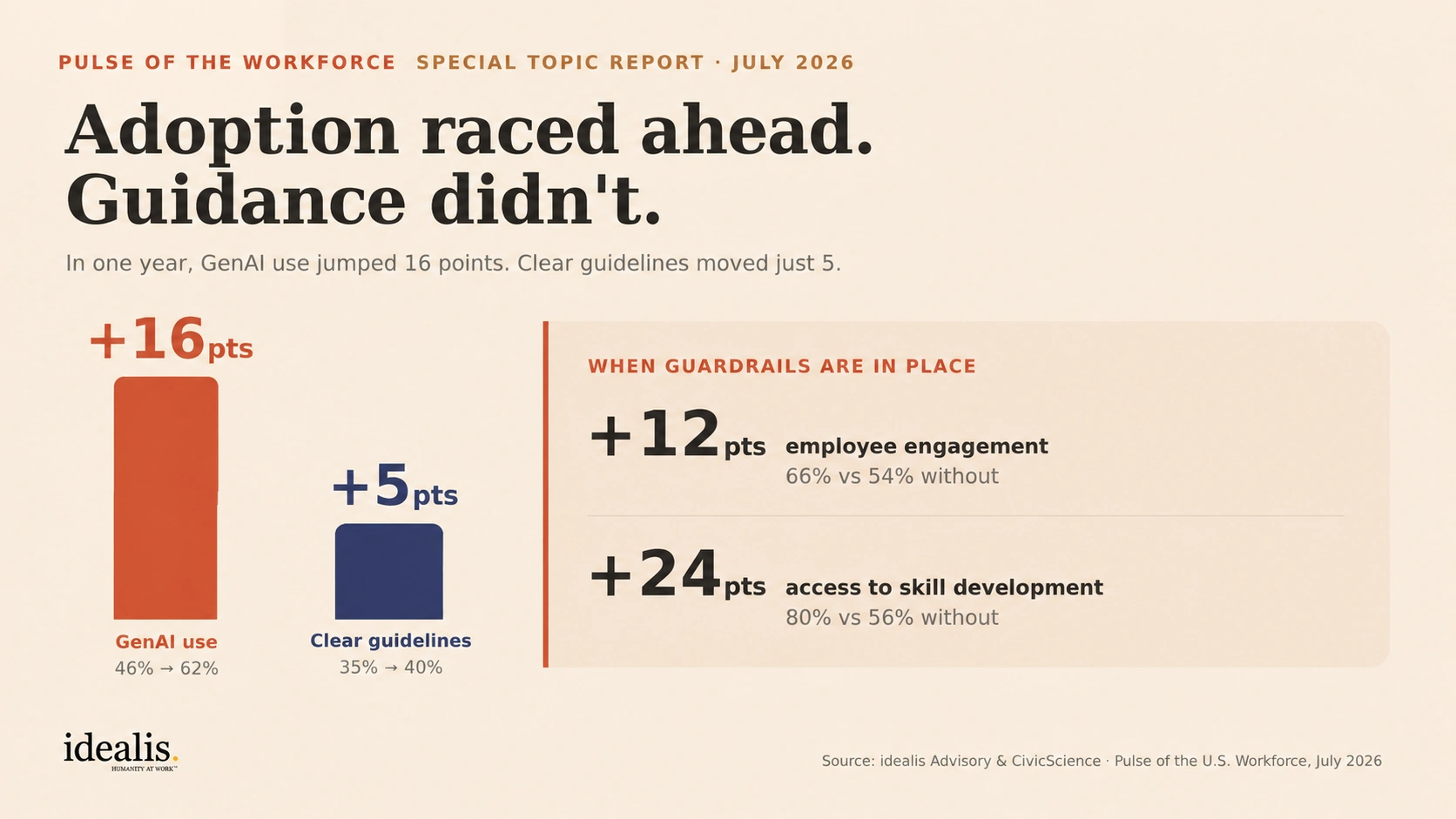
Workforce skills are another part of the equation. SAS expects AI to automate some tasks and reshape certain roles, but argues that organizations should focus on helping employees use AI to make stronger decisions rather than attempting to turn every worker into a technical specialist. That requires leaders to establish expectations around appropriate use, communicate risks and address the possibility of employees adopting unauthorized AI tools when formal guidance is absent.
The underlying question is becoming more important as access to sophisticated AI becomes increasingly widespread. If organizations can draw on similar models and automated capabilities, competitive differentiation may shift toward the quality of the people directing those systems, the proprietary context informing their decisions and the governance surrounding their use. In that environment, agentic AI may make human judgment more consequential, not less.