The hospitality operator’s early adoption of the updated ISO 14001:2026 standard reflects a broader shift toward embedding environmental management into long-term business strategy rather than treating it as a standalone initiative.
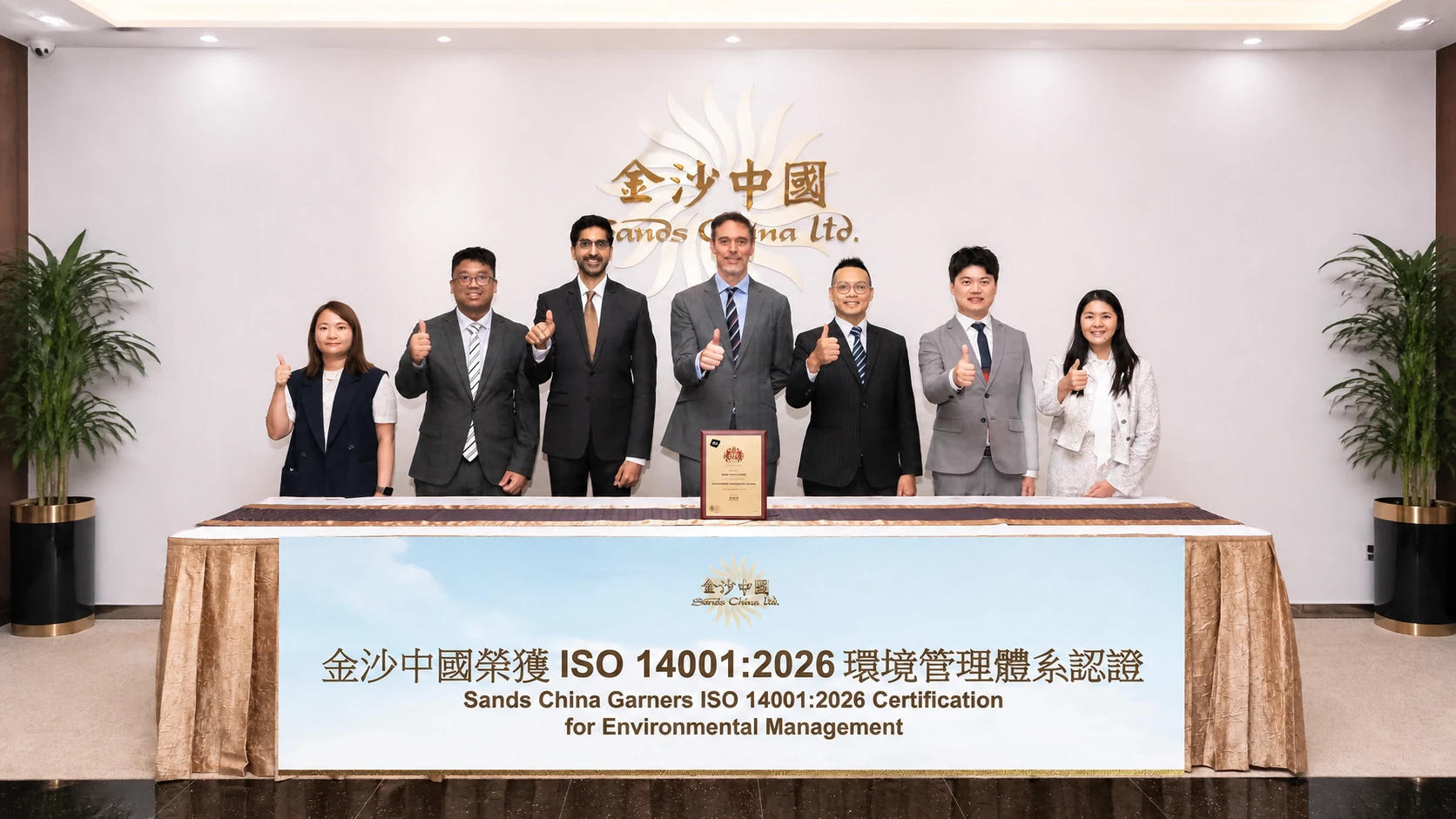
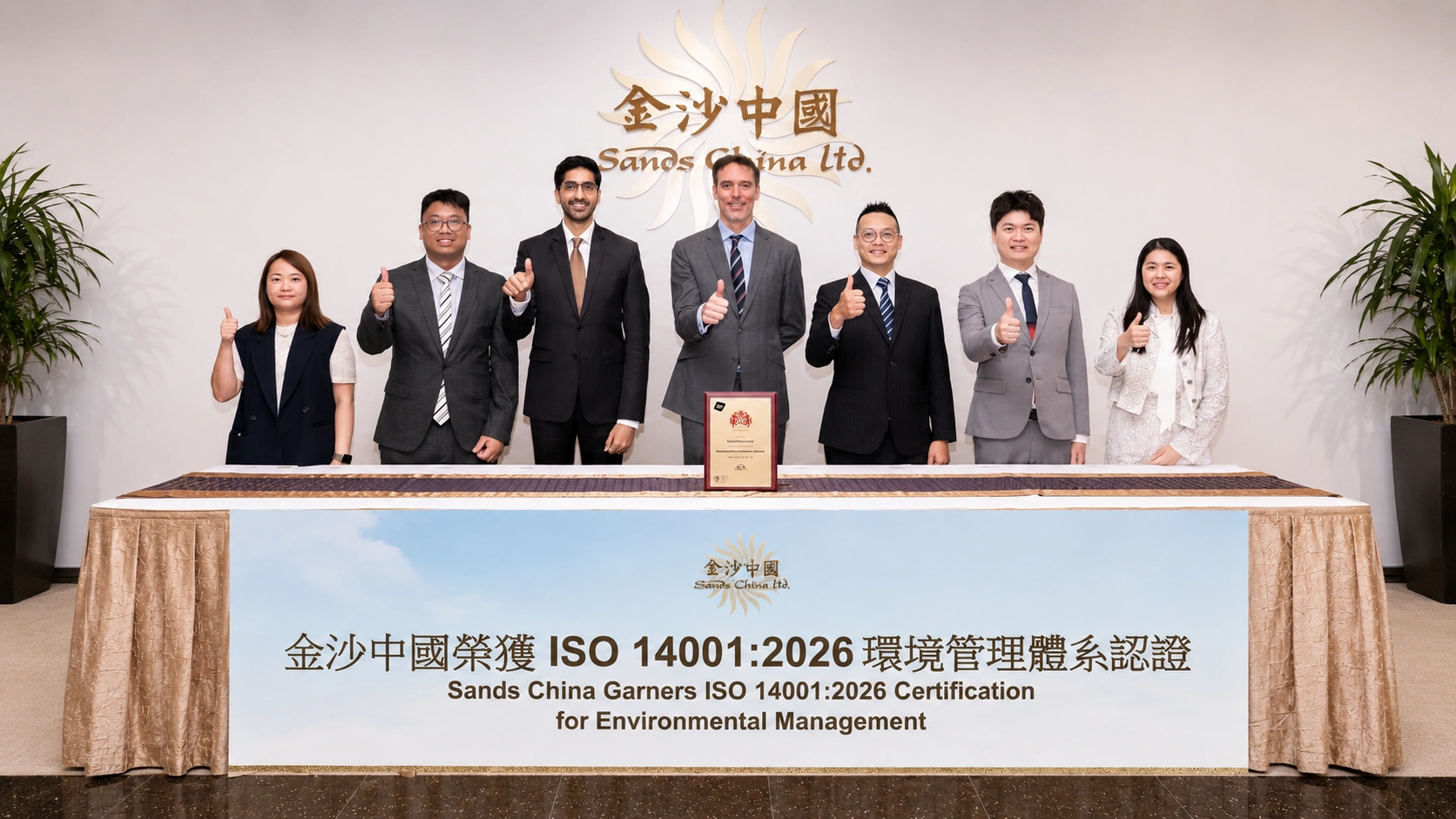
Sands China has become the first integrated tourism and leisure company to achieve certification under the newly released ISO 14001:2026 Environmental Management System standard. The certification, awarded by the British Standards Institution, also makes the company the first organization in the global hospitality sector and the Macao-Hong Kong region to meet the updated standard. Covering all of Sands China’s integrated resort properties, the recognition signals how environmental management is becoming increasingly central to the operations of large hospitality businesses.
The updated ISO 14001 standard, released earlier this year, places greater emphasis on climate change, biodiversity, natural resource management, and organizational governance than previous versions. Rather than focusing solely on regulatory compliance, the framework encourages companies to integrate environmental considerations into strategic planning and everyday decision-making. Sands China’s decision to adopt the revised standard several years before the official 2029 transition deadline suggests a proactive approach to adapting to evolving international expectations around sustainability.
The certification builds on environmental programs the company has already implemented across its resort portfolio. According to Sands China, its environmental management system is used to assess operational impacts, establish performance targets, and guide initiatives related to emissions reduction, waste management, water conservation, and biodiversity. The company also reported a 61 percent reduction in its Scope 1 and Scope 2 greenhouse gas emissions compared with its 2018 baseline, exceeding its previously established science-based reduction targets. Additional measures include reducing potable water consumption and increasing operational waste diversion to improve resource efficiency.
These efforts have been accompanied by broader recognition within environmental, social, and governance assessments. Sands China has maintained positions in several international sustainability rankings, including repeated inclusion in the S&P Global Sustainability Yearbook and the Dow Jones Best-in-Class indices. While such recognitions do not eliminate the environmental challenges associated with large-scale tourism and hospitality operations, they indicate that sustainability performance is becoming an increasingly important benchmark for evaluating companies within the sector.
As destinations worldwide seek to balance tourism growth with environmental responsibility, the hospitality industry is facing growing expectations from regulators, investors, and travelers alike. Sands China’s latest certification reflects this changing landscape, illustrating how internationally recognized environmental standards are becoming part of the competitive framework for major tourism operators rather than simply a compliance exercise.