The Kanazawa exhibition frames seven decades of Godzilla as a bridge between Japanese visual culture, traditional craftsmanship and international tourism.
Kanazawa Biyori is using “Godzilla Expo in Kanazawa” to present Japanese pop culture through the setting of the Ishikawa Prefectural History Museum, linking the character’s seven-decade history with the craft traditions and regional stories of Kanazawa. The travelling exhibition brings together material from the Showa, Heisei and Reiwa eras, including posters, suits, statues and on-set props. Its significance lies in treating Godzilla not only as entertainment, but also as an accessible route into Japan’s visual and technological history.
The exhibition is currently scheduled at the museum from January 17 to March 22, 2026. Kanazawa Biyori describes the project as part of its wider role as a regional information website covering traditional crafts, food culture and daily life in the Kanazawa, Noto and Kaga areas, while also offering perspectives intended to enrich visits for audiences in Japan and overseas. The exhibition therefore places a globally recognisable piece of Japanese pop culture within a distinctly local tourism and heritage context.
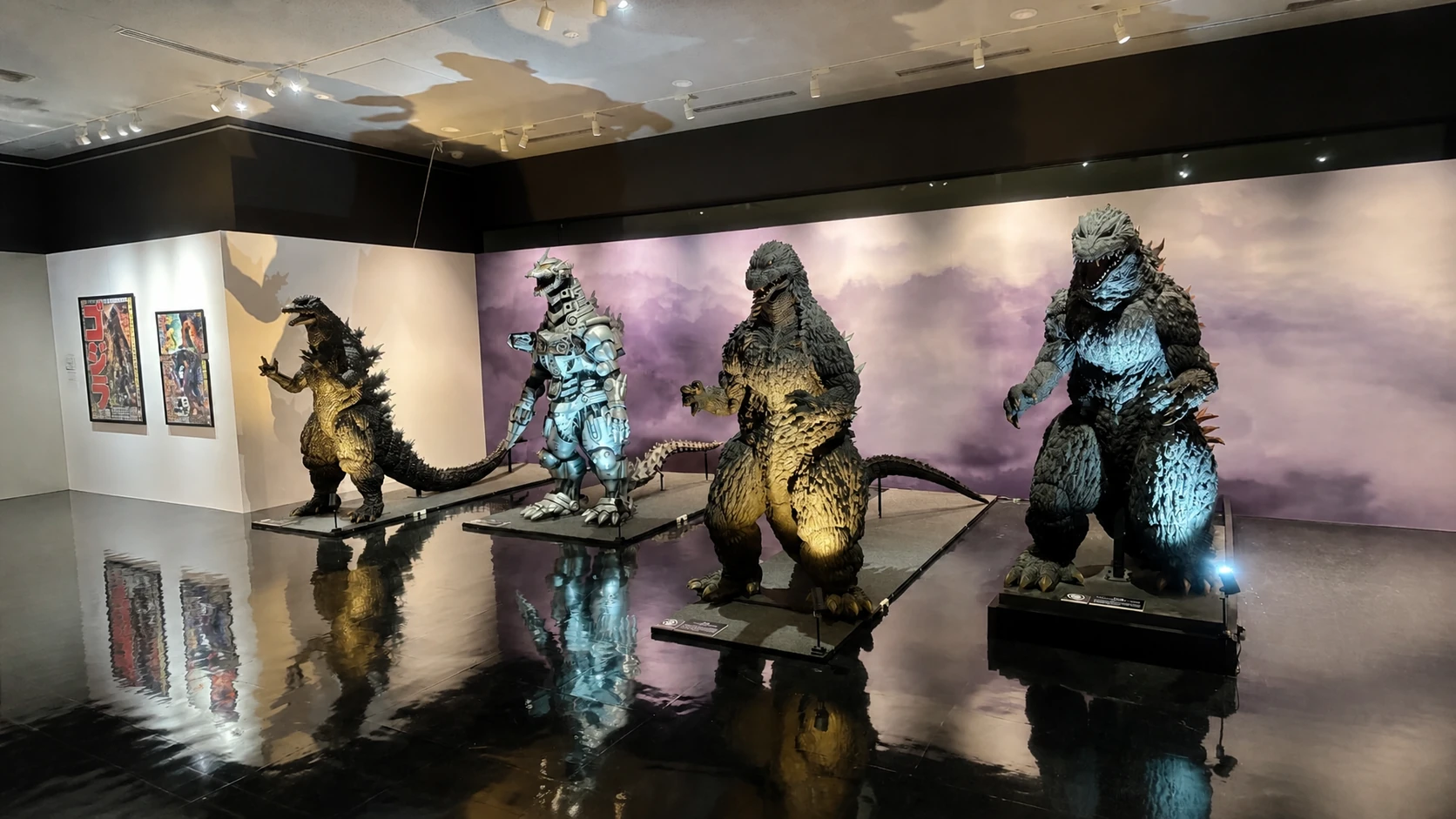
Visitors encounter Godzilla suits and statues from different periods alongside large-scale dioramas and filming props. The displays are designed to show the practical ingenuity behind tokusatsu, Japan’s special-effects filmmaking tradition, and to trace a progression from miniature sets and sculpted details to digital compositing and visual effects. The museum itself occupies renovated red-brick buildings that once served as an army munitions depot and has long presented Ishikawa’s history and folklore through its collections.
That combination gives the exhibition a dual frame: film history is presented through the material culture of making, while local history supplies the setting in which that culture can be interpreted. Kanazawa Biyori draws a parallel between the artisanal skill embedded in suit design and miniature construction and the accumulated techniques associated with traditional crafts. The organisation also positions Godzilla as a figure that has reflected changes in society and technology over time, making the exhibition a potential entry point for international audiences unfamiliar with the broader depth of Japanese pop culture.
The Kanazawa presentation follows earlier editions in Tokyo, Osaka, Sapporo and Morioka and marks the exhibition’s full-scale appearance in the Hokuriku region. Admission is listed at ¥1,400 for adults and university students, ¥1,000 for junior high and high school students, and ¥700 for elementary school students, with reduced advance-ticket prices and free entry for preschool children. By combining a major pop-culture property with a regional museum and a craft-oriented editorial perspective, Kanazawa Biyori is extending the way visitors can encounter both the city and Japan’s cultural legacy.