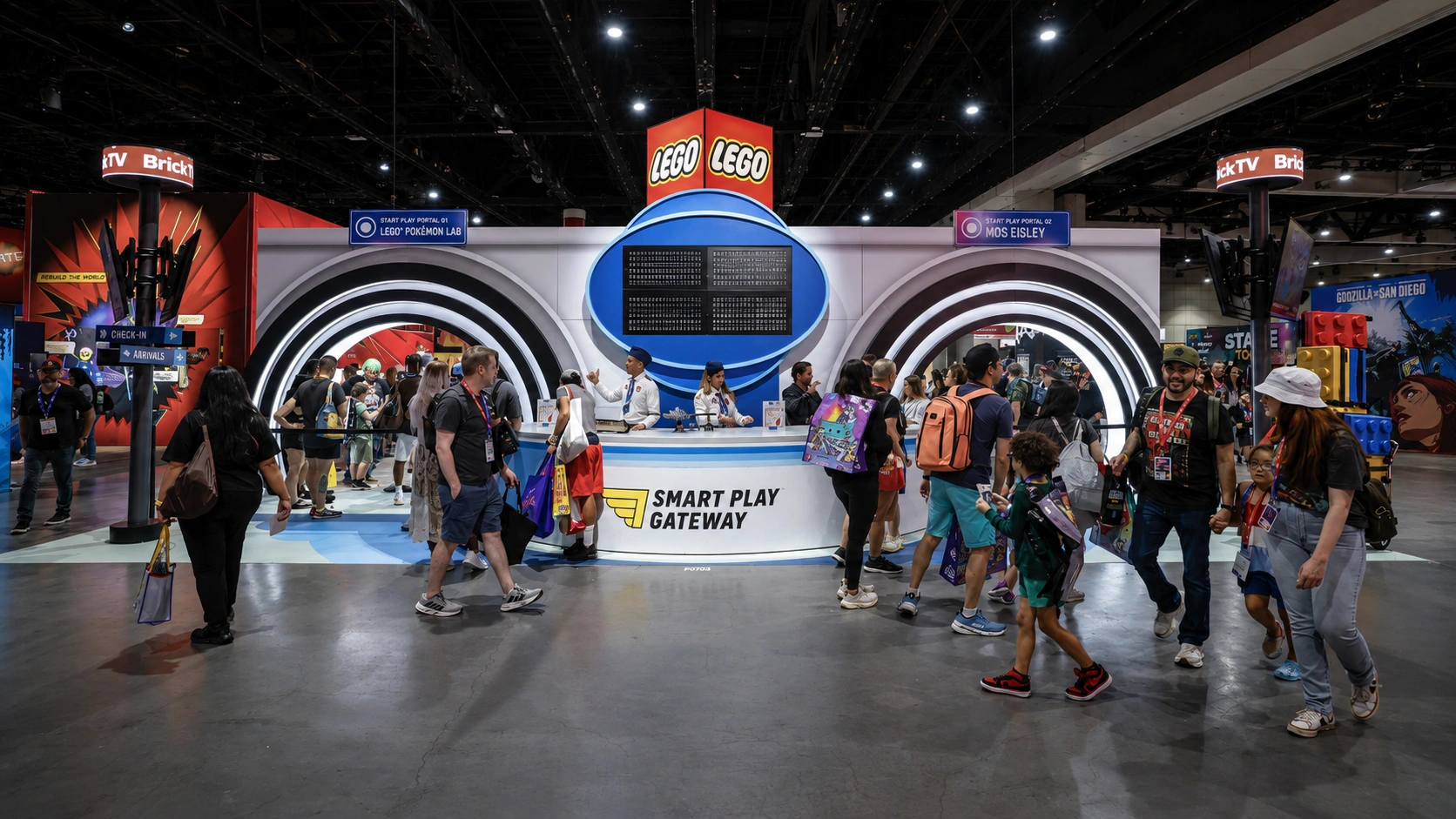
The LEGO Group is using San Diego Comic-Con to demonstrate how its SMART Play technology can add digital responsiveness to physical building without abandoning the familiar brick.
The LEGO Group is bringing its LEGO SMART Play Gateway to San Diego Comic-Con 2026, turning its booth into an interactive showcase built around Star Wars and Pokémon. The experience highlights SMART Play, a technology platform introduced earlier this year that adds responsive light, sound and motion-based interactions to physical LEGO creations.
At the center of the system is the SMART Brick, a 2×4 brick compatible with the existing LEGO building system and equipped with more than 20 patented technologies. It can recognize SMART Tags and SMART Minifigures, detect precise motion and generate light and sound, allowing physical builds to respond to how children and other users move and interact with them.
Comic-Con provides LEGO with a particularly visible setting to demonstrate what that technology means in practice. Inside a Pokémon-themed laboratory, visitors can select Bulbasaur, Charmander or Squirtle and trigger responsive effects, while the Star Wars section recreates Mos Eisley with interactive elements including a microphone that activates a SMART Brick remix of the Cantina Song.
The broader significance is how LEGO is approaching the intersection of physical toys and digital interaction. Rather than moving play onto a separate screen, SMART Play embeds technological responses into the brick-based environment itself, potentially allowing familiar construction and storytelling habits to coexist with more dynamic feedback. The Comic-Con installation offers a controlled demonstration of that idea, though its longer-term appeal will depend on how naturally the technology fits into everyday building and imaginative play.
The booth also serves as a platform for more conventional product reveals, including a 1,701-piece Star Trek U.S.S. Enterprise NCC-1701 Bridge, a mechanical Donkey Kong Arcade model and a 12-character Shrek Minifigures series. Together, the releases show LEGO pursuing two complementary directions: expanding its catalog through established entertainment franchises while experimenting with technology that could change how its physical sets respond to the people building them.