HealthView Services estimates that potential Social Security cuts beginning in 2034 could erase six figures in lifetime benefits, raising difficult questions for Americans nearing retirement.
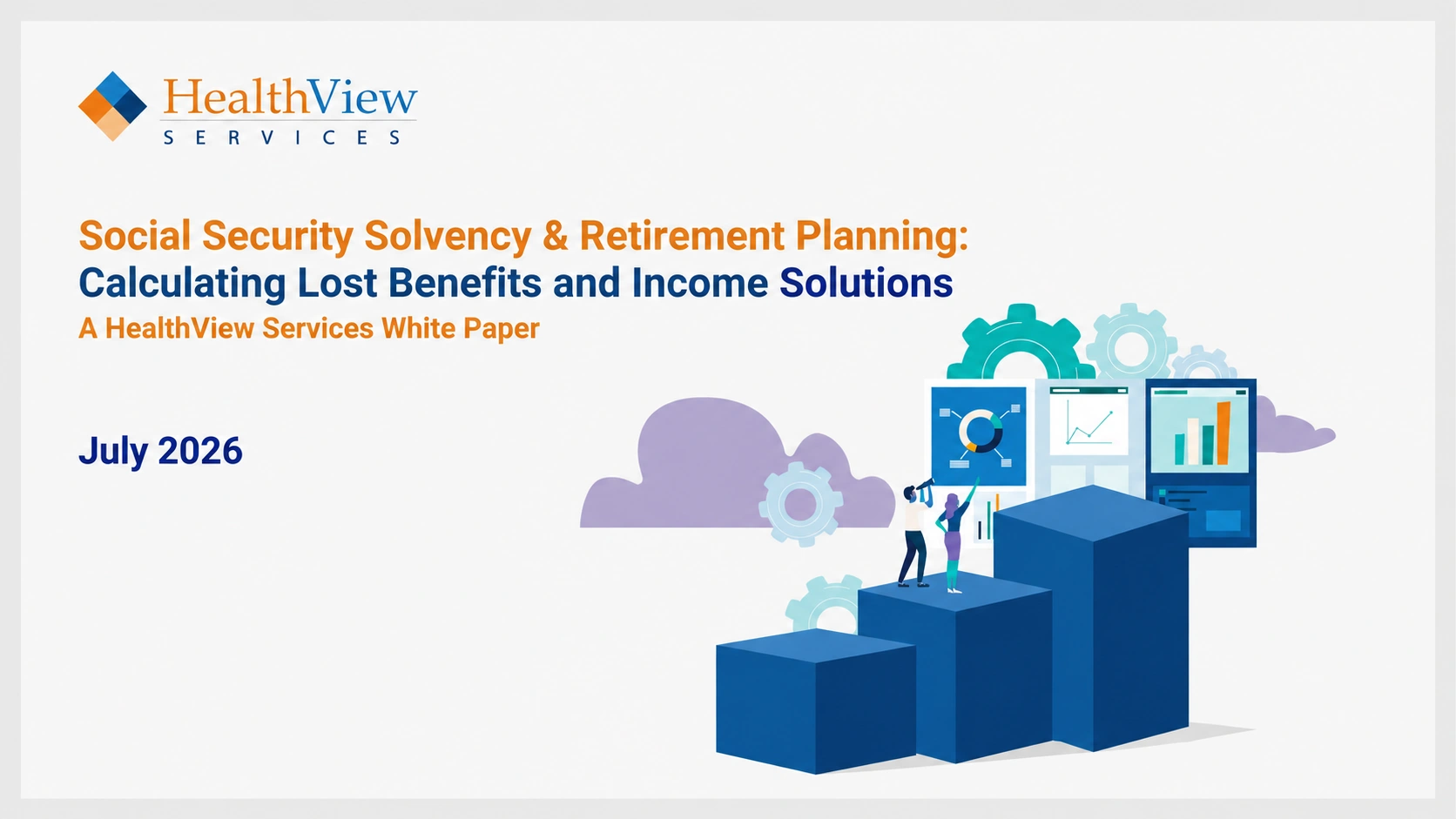
HealthView Services is putting a dollar figure on one of the biggest uncertainties facing future retirees: what happens if Social Security benefits are reduced after the program’s trust funds face projected funding pressure. Its new analysis estimates that a 54-year-old couple retiring in eight years and receiving average benefits could lose between $161,000 and $194,000 over their lifetimes if payments decline by 17% beginning in 2034.
The potential impact becomes considerably larger for higher earners. A couple receiving maximum Social Security benefits could lose between $425,000 and $509,000, depending on when they claim, according to the report, which assumes average lifespans of 81 for the man and 84 for the woman based on Social Security actuarial tables. These figures are scenarios rather than predictions, since Congress could change taxes, benefits or other program rules before reductions occur.
The analysis also illustrates how difficult replacing lost guaranteed income could be. Assuming a 6% investment return, HealthView calculates that the average-benefit couple would need to set aside roughly $52,000 to $55,000 today to compensate for the modeled shortfall, while the maximum-benefit couple would require approximately $123,000 to $130,000. Other possible policy changes carry their own costs: delaying full retirement age from 67 to 68 could reduce lifetime benefits by $72,000 for the average-earning couple and $252,000 for the higher-earning couple.
Healthcare adds another layer of pressure. Under the report’s 17% benefit-reduction scenario, healthcare expenses would consume an estimated 96% of lifetime Social Security income for the average-income couple, compared with 80% under current assumptions. That does not mean Social Security is destined to become inadequate, but it demonstrates how reductions to one source of retirement income can reshape the broader household budget.
HealthView has also introduced ClaimSync, a calculator for financial professionals that models Social Security outcomes using factors including age, income, longevity, marital status and potential benefit reductions. The larger takeaway is less about predicting exactly what lawmakers will do than acknowledging uncertainty early: for households approaching retirement, testing plans against multiple Social Security outcomes may be increasingly important.