Old Forester’s latest 117 Series bourbon is the first made entirely from whiskey distilled at its Main Street facility, highlighting how production history can shape modern whiskey releases.
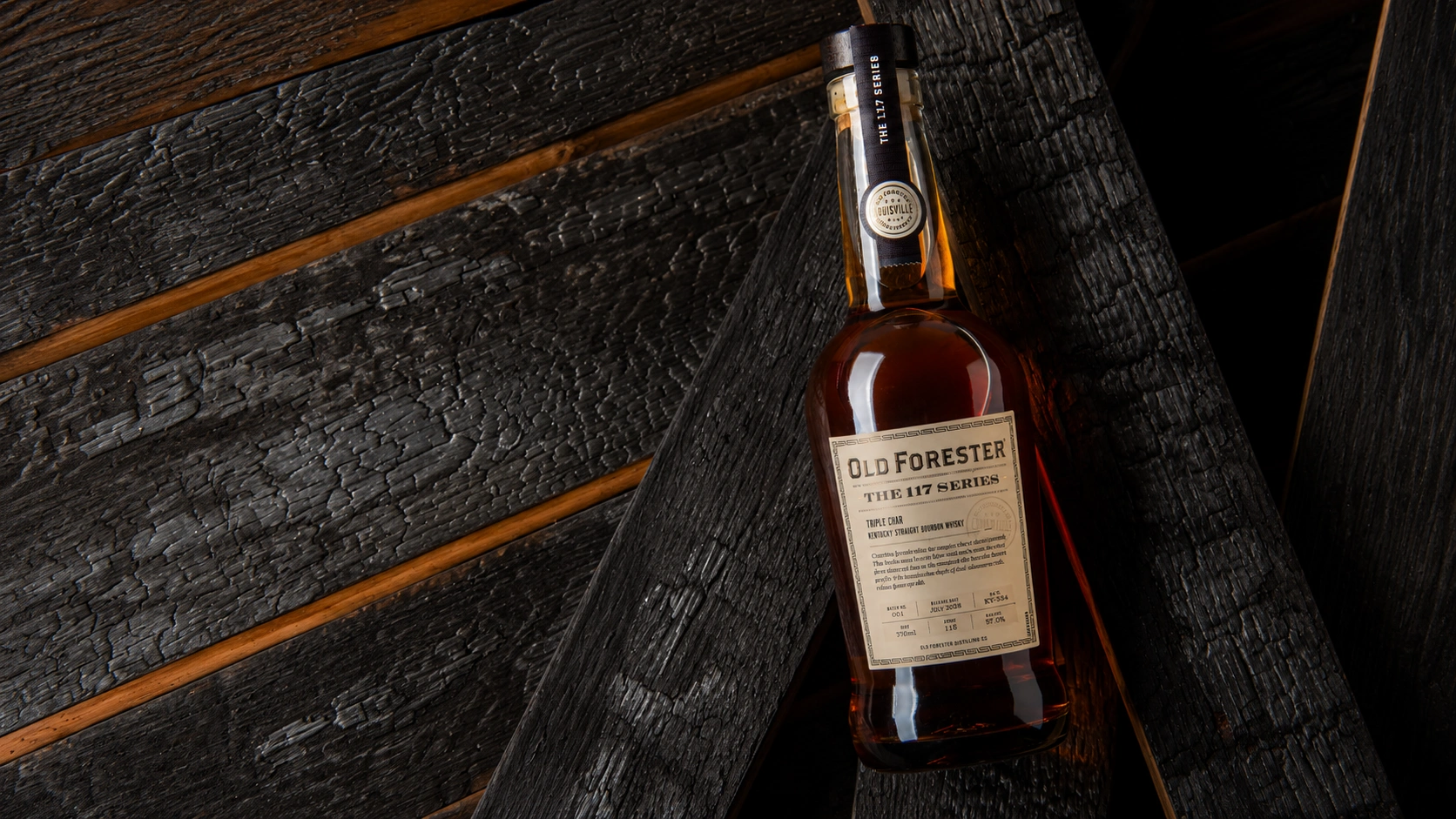
Old Forester has introduced Triple Char, the newest expression in its limited 117 Series and the first bourbon crafted entirely from whiskey distilled at the company’s Main Street distillery in Louisville. The release marks an important milestone for the facility, which has operated as both a visitor destination and an active production site since opening in 2018. Rather than simply adding another limited-edition bottle to its portfolio, the company is using the release to recognize the point at which whiskey produced entirely at the distillery has reached maturity and is ready for bottling.
In bourbon production, time is as significant an ingredient as grain or barrel selection. New distilleries often wait years before they can offer whiskey produced entirely from their own operations, making milestone releases an opportunity to demonstrate both patience and continuity. For heritage brands in particular, these moments connect contemporary production with traditions that have shaped American whiskey for generations while illustrating how long-term planning remains central to the craft.
Triple Char distinguishes itself through an extended barrel-charring process. According to Old Forester, the barrels used for this release were charred three times longer than the company’s standard specification before being filled with bourbon. The deeper char is intended to increase the interaction between the whiskey and the oak, contributing more pronounced notes associated with toasted wood and spice during maturation. Bottled at 115 proof, the release joins the 117 Series, a collection that has explored distinctive production techniques, barrel treatments, and experimental approaches while remaining rooted in the company’s established bourbon-making practices.
The announcement also reflects a broader trend within the American whiskey industry. Established distilleries increasingly use limited releases to highlight specific aspects of production, whether that involves barrel construction, aging methods, or individual facilities. These bottlings often appeal to enthusiasts interested not only in tasting different expressions but also in understanding how relatively small production changes can influence the final character of a whiskey.
Old Forester’s latest release demonstrates how innovation in bourbon frequently comes through refining traditional methods rather than abandoning them. By combining a historically significant production milestone with a variation in barrel treatment, the company offers a reminder that craftsmanship in American whiskey continues to evolve through careful experimentation while remaining closely tied to the long timelines that define the spirit itself.