A limited-edition sandal collaboration draws on Hawaii’s everyday food culture, reflecting how brands increasingly translate regional identity into products that blend nostalgia, storytelling, and lifestyle appeal
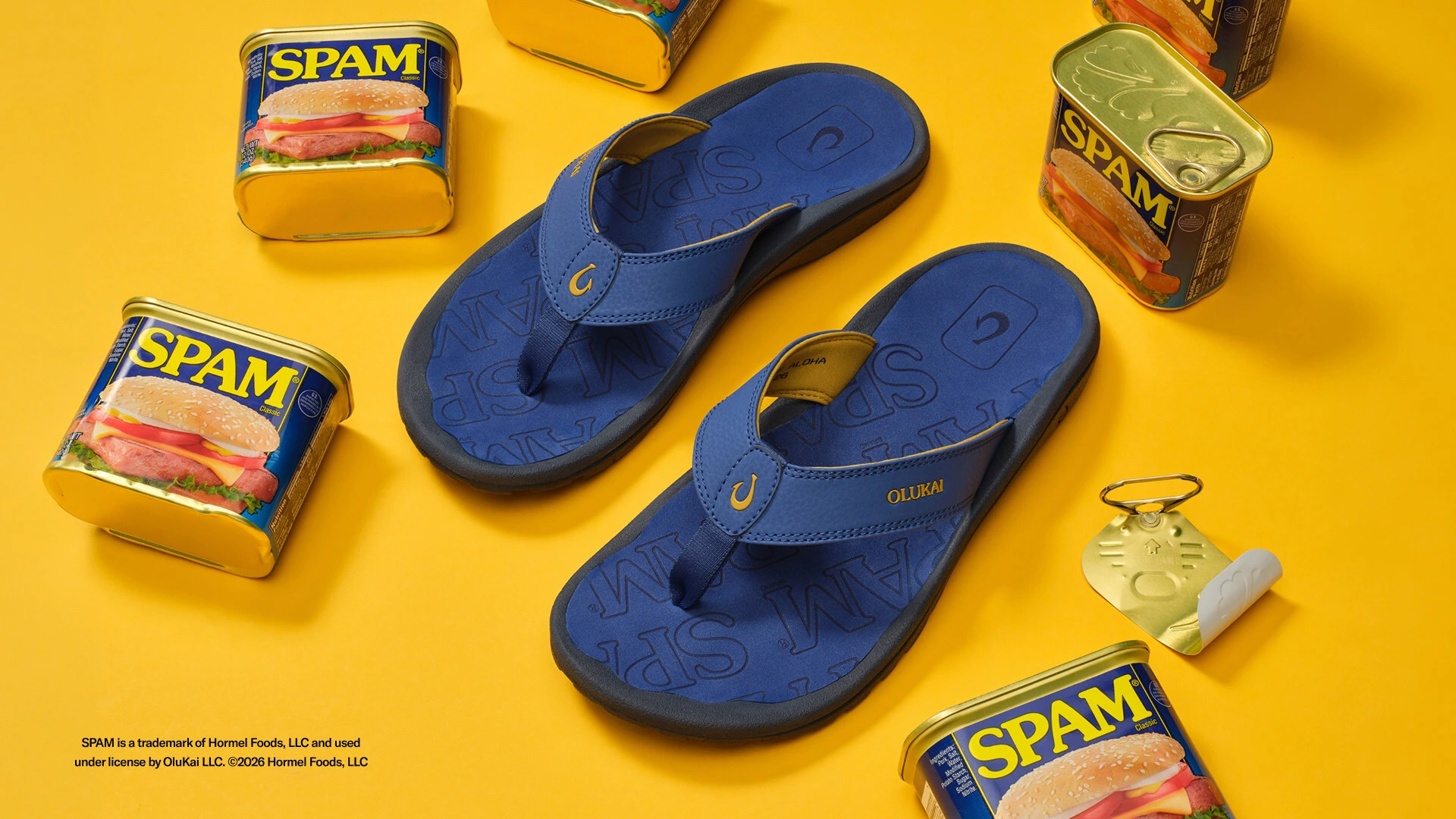
OluKai has partnered with SPAM® to release a limited-edition sandal collection inspired by one of Hawaii’s most recognizable comfort foods: SPAM musubi. The collaboration merges footwear design with culinary symbolism, translating familiar textures and colors into wearable form. While the concept may appear playful, it reflects a deeper trend of brands drawing from localized cultural touchpoints to create broader consumer resonance.
The collection centers on two visual interpretations. One design references the layered composition of musubi, incorporating color blocking and textures that echo rice, seaweed, and the product itself, while another leans into the bold blue-and-yellow palette associated with the SPAM can. These choices suggest a deliberate effort to balance novelty with recognition, ensuring the designs remain legible even to audiences less familiar with the cultural reference.
Hawaii’s long-standing relationship with SPAM provides the foundation for the collaboration’s narrative. The product has been a staple in the region for decades, woven into daily meals and local identity in ways that differ markedly from its perception elsewhere. By embedding that context into a consumer product, the collaboration attempts to translate a specific cultural experience into something that can be appreciated globally, though not without simplifying its origins.
Such partnerships also highlight the evolving role of branding in lifestyle goods. Increasingly, companies are looking beyond functional attributes to create products that carry symbolic meaning or tell a story. Limited-edition releases, in particular, allow brands to experiment with these narratives while generating short-term demand through scarcity and novelty.
Ultimately, the OluKai x SPAM collection illustrates how cultural references are being repurposed within consumer markets. It points to a broader shift in which everyday objects, including food, become sources of design inspiration and identity signaling. Whether seen as homage or marketing strategy, the collaboration underscores how brands continue to blur the boundaries between culture, memory, and commerce.