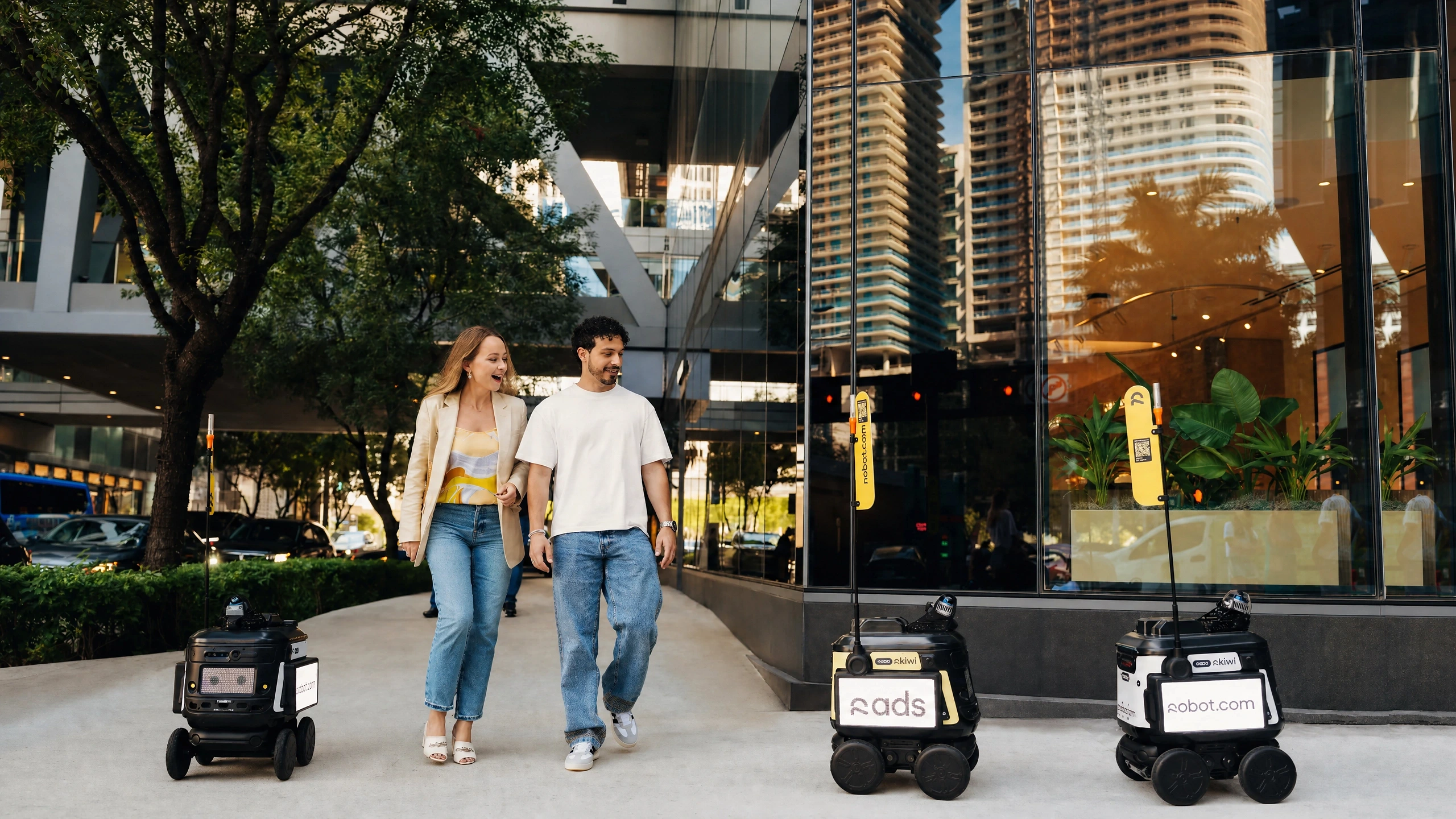
Robot.com’s R-ads platform blends robotics and advertising, pointing to a future where physical media becomes interactive, measurable, and embedded directly into everyday environments
Robot.com is positioning itself at the intersection of automation and advertising with the launch of its R-ads platform, a system that transforms autonomous robots into mobile media units operating in real-world environments. The company frames this as an evolution of out-of-home advertising, where impressions are no longer passive but tied to physical interaction.
The idea builds on a familiar tension in advertising: traditional formats like billboards offer scale but limited feedback, while digital platforms provide detailed measurement but lack physical presence. By equipping robots with screens, sensors, and data capture tools, Robot.com is attempting to bridge that gap, turning everyday encounters into trackable engagements. In practice, this could mean a robot not only displaying an ad but distributing samples, capturing responses, and feeding data back into campaign analytics.
What makes the model notable is its dual-purpose economics. Each robot continues performing its primary operational role—such as delivery or inspection—while simultaneously functioning as an advertising channel. This approach suggests a broader shift in how infrastructure is valued, with assets increasingly expected to generate multiple streams of return rather than serving a single function.
Early deployments, including a public awareness campaign tied to a major motorsport event in Miami, offer a glimpse of how the concept plays out in crowded, high-attention environments. The reported ability to deliver measurable impressions in settings where traditional advertising formats may be restricted highlights the platform’s flexibility, though its scalability and long-term effectiveness remain open questions.
More broadly, R-ads reflects a growing push to make physical spaces as data-rich as digital ones. As cities, campuses, and commercial environments become more instrumented, the boundary between service infrastructure and media channel continues to blur. Whether this leads to more meaningful engagement or simply more pervasive advertising will depend on how these technologies are deployed—and how audiences respond to being addressed not just by screens, but by machines that move alongside them.