With China’s national team absent from the tournament, Coca-Cola focused on participation rather than competition, using music, AI, and fan-created content to localize a global sporting event.
Coca-Cola launched its “This Moment Toast to our FIFA World Cup” campaign in China during the 2026 FIFA World Cup, taking a different approach to engaging fans whose national team was not competing in the tournament. Rather than centering its activation on the matches themselves, the company built its campaign around the experiences of Chinese supporters, emphasizing participation through music, interactive technology, and user-generated content. The strategy reflects a broader evolution in sports marketing, where brands increasingly seek to create experiences that extend beyond sponsorship and traditional advertising.
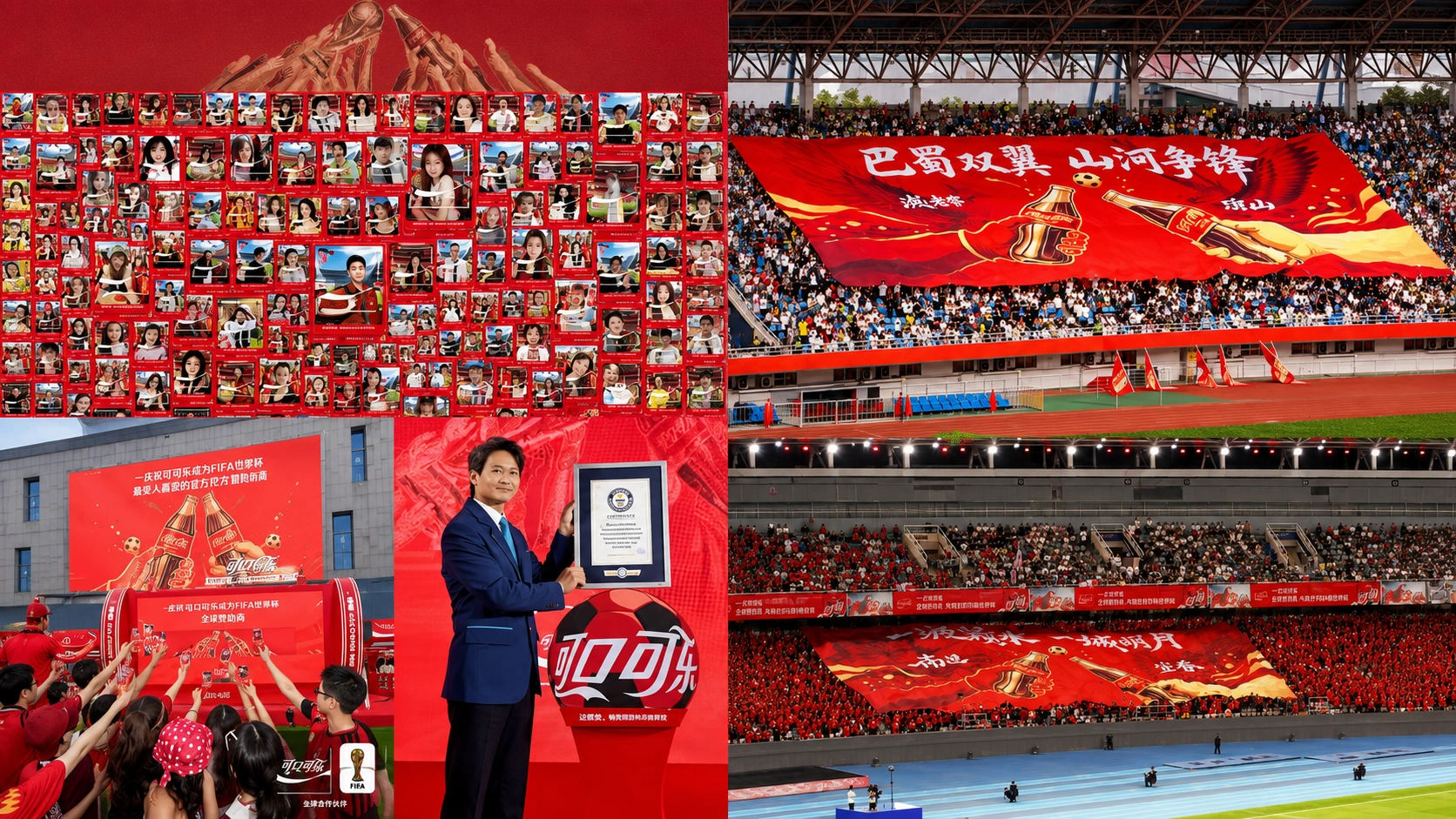
One of the campaign’s most visible initiatives invited fans to contribute photos that became part of a massive digital TIFO, culminating in a Guinness World Records title for the most contributions to an online photo mosaic. Throughout the tournament, supporters could scan QR codes on Coca-Cola packaging to participate, linking everyday purchases with a collective digital display. By transforming individual viewing moments into a shared visual project, the campaign shifted attention from the absence of the national team to the community built around the event.
Music and technology also played central roles in the initiative. Coca-Cola commissioned the anthem “JUMP,” performed by brand ambassador Liu Yuning and international artist J. Balvin, blending Chinese folk influences with contemporary rock to create a soundtrack tailored for local audiences. At the same time, the company introduced an AI-powered avatar of former Chinese football player Fan Zhiyi, developed using Baidu’s technology, allowing fans to discuss matches and interact throughout the tournament in real time. The feature illustrates how conversational AI is becoming part of the fan experience during major sporting events rather than remaining a post-event novelty.
The campaign also reflects the growing importance of localization for global brands operating in international sports. Rather than simply adapting existing marketing materials, companies are increasingly creating region-specific experiences that acknowledge local culture and fan behavior. In markets where national teams may not always participate on the world’s biggest stages, emotional engagement can come from shared rituals and community rather than competitive success alone.
As global sporting events become increasingly digital, campaigns like Coca-Cola’s demonstrate how brands are redefining sponsorship. The emphasis is shifting from visibility during competition to creating opportunities for audiences to contribute, interact, and feel included. In doing so, the World Cup becomes not only a tournament to watch but also a cultural event that fans can actively help shape, regardless of the final score or the teams on the field.