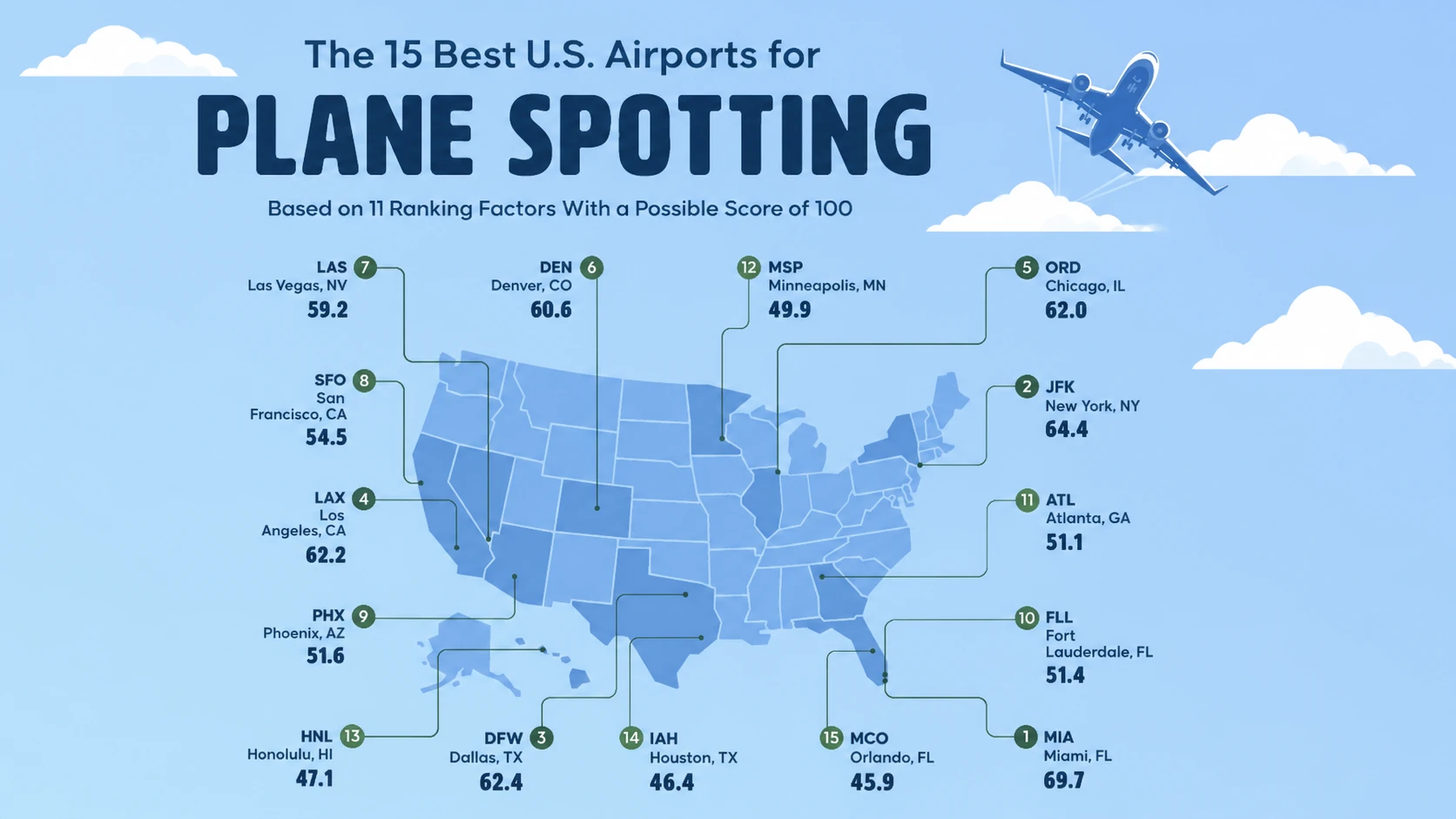
A data study places Miami at the top of a 50-airport ranking, highlighting how traffic, infrastructure and visibility shape aviation-focused travel experiences.
Upgraded Points has ranked 50 of the busiest U.S. airports according to their appeal for plane spotting, placing Miami International Airport at the top with a score of 69.7 out of 100. The study assesses the practical conditions that shape an aviation enthusiast’s visit, from aircraft activity and runway layouts to visibility and accessibility. Its findings turn an informal travel pastime into a measurable feature of the airport experience.
The ranking reflects the different ways large airports can serve visitors who want to watch or photograph aircraft. Upgraded Points evaluated 11 factors, including daily takeoffs and landings, runway count and average length, foggy days, short-term parking availability and documented spotting locations. The approach places equal emphasis on the spectacle of busy international hubs and the physical conditions that make viewing possible.
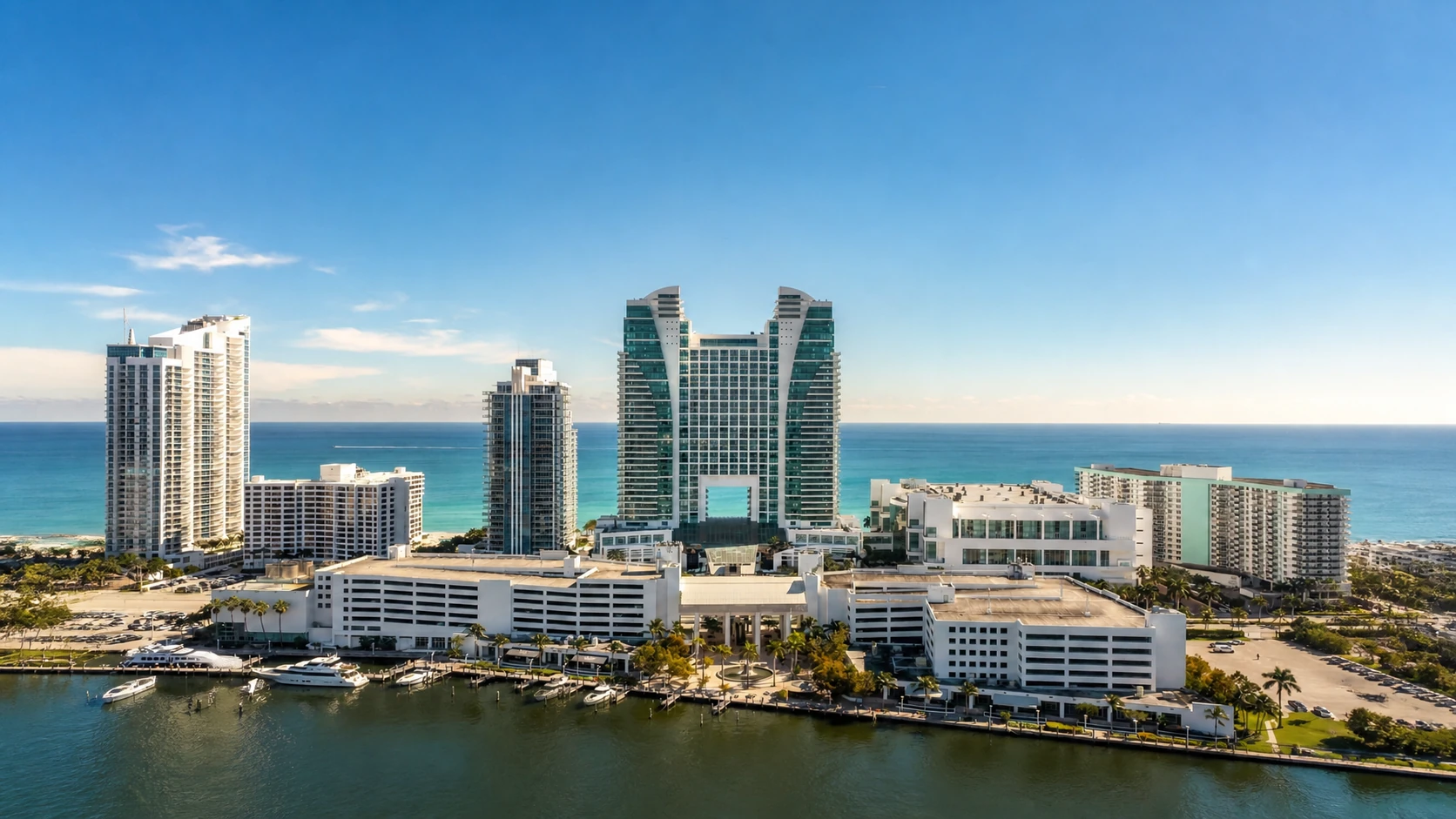
Miami leads with more than 1,300 daily flights and 18 official viewing locations, while John F. Kennedy International Airport ranks second at 64.4 and has the study’s highest total of official spotting locations, at 19. Dallas Fort Worth International Airport, Los Angeles International Airport and Chicago O’Hare International Airport complete the top five. The remaining top-ten airports are Denver, Harry Reid, San Francisco, Phoenix Sky Harbor and Fort Lauderdale–Hollywood.
Several individual findings show how the ranking combines scale with usability. Denver International Airport has the longest average runways in the study, at 12,667 feet, compared with an average of 9,204 feet. Chicago O’Hare records the highest flight volume, with 2,349 daily takeoffs and landings, while Daniel K. Inouye International Airport and Kahului Airport report zero foggy days annually. Miami’s “The Holes” viewing area and Dallas Fort Worth’s Founders Plaza also illustrate the importance of designated spaces.
For Upgraded Points, the study extends its travel research into a specialist interest that depends on both airport operations and visitor infrastructure. The results suggest that the strongest plane-spotting destinations are not defined by traffic alone: aircraft variety, clear sightlines, runway design and places to remain near the action all contribute to the experience. By ranking those elements together, Upgraded Points gives aviation enthusiasts a more structured way to compare major U.S. gateways.