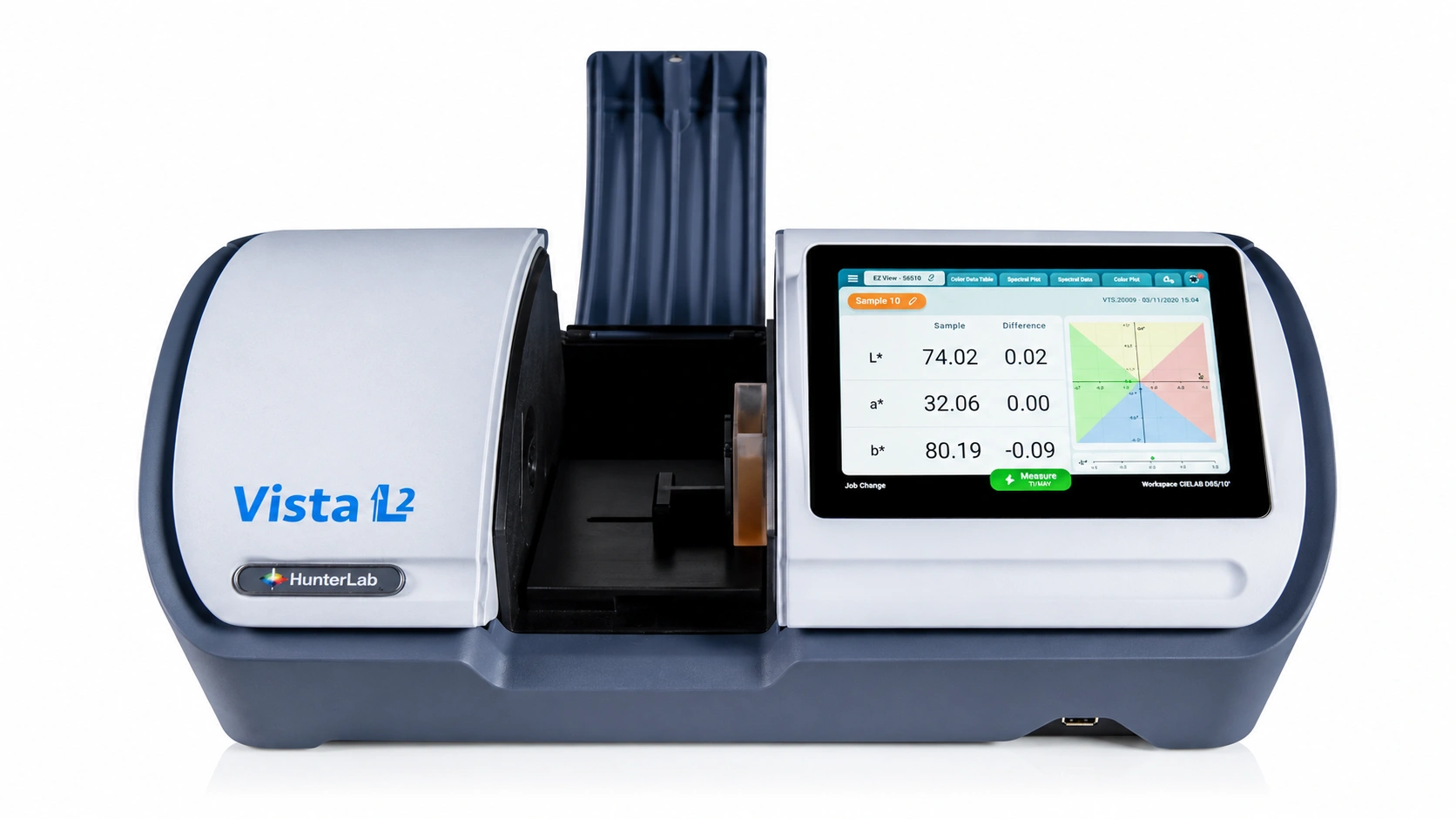
The updated spectrophotometer adds a wider spectral range and greater computing capacity, reflecting growing demands for faster, more detailed quality control across industries.
HunterLab has introduced the Vista L2, an updated transmission spectrophotometer designed to measure color and haze in transparent and translucent liquids and solids. The new model extends its spectral range to 710 nanometers while adding upgraded analysis software, processing power and storage, changes aimed at quality-control teams working with products ranging from beverages and edible oils to pharmaceuticals, chemicals and plastics.
The wider measurement range is significant because color and haze can reveal different information about a product. By more precisely distinguishing color measured through light absorption from haze measured through light scattering, the instrument is intended to help manufacturers identify signs of instability and evaluate color consistency. The 710-nanometer range also enables chlorophyll measurements at 630, 670 and 710 nanometers under the AOCS Cc 13d-55 method, which is used when monitoring oxidation and shelf-life considerations in edible oils.
Rather than replacing the underlying Vista platform, HunterLab has focused much of the update on expanding what laboratories can do with an existing measurement approach. Vista L2 retains the platform’s transmission geometry, full-spectrum LED illumination and touchscreen interface while adding 32 GB of onboard storage, HDMI output and a built-in wavelength verification standard. Existing methods and accessories can also continue to be used, potentially reducing disruption when laboratories upgrade equipment.
The instrument applies the Beer-Lambert law for determining absolute color using standard cuvettes and vials, and it can automatically measure food oils using 5.25-inch or one-inch path lengths. It also supports APHA color measurements using smaller cuvettes, while interchangeable holders and baseplates accommodate liquids, vials, translucent plastic preforms, films and flow-through samples. These capabilities matter in quality-control environments where laboratories may need to evaluate several types of material without maintaining separate instruments for every measurement.
The Vista L2 arrives as manufacturers face pressure to collect more quality data without necessarily expanding laboratory staffing or equipment inventories. Its practical significance will therefore depend not only on improved specifications, but on whether the broader measurement range and added computing capabilities allow laboratories to consolidate testing while maintaining repeatability. The instrument is now commercially available.