Research from Parks Associates and Plume suggests reliability, cybersecurity and proactive AI-powered support are becoming more important as high-speed broadband grows commonplace.
Parks Associates and Plume are pointing to a shift in what may increasingly determine competition among broadband providers: not simply how fast a connection is, but how reliably and intelligently it performs. Their new research argues that as gigabit internet becomes more common in the United States, providers face greater pressure to distinguish themselves through customer service, security and proactive management of connected homes.
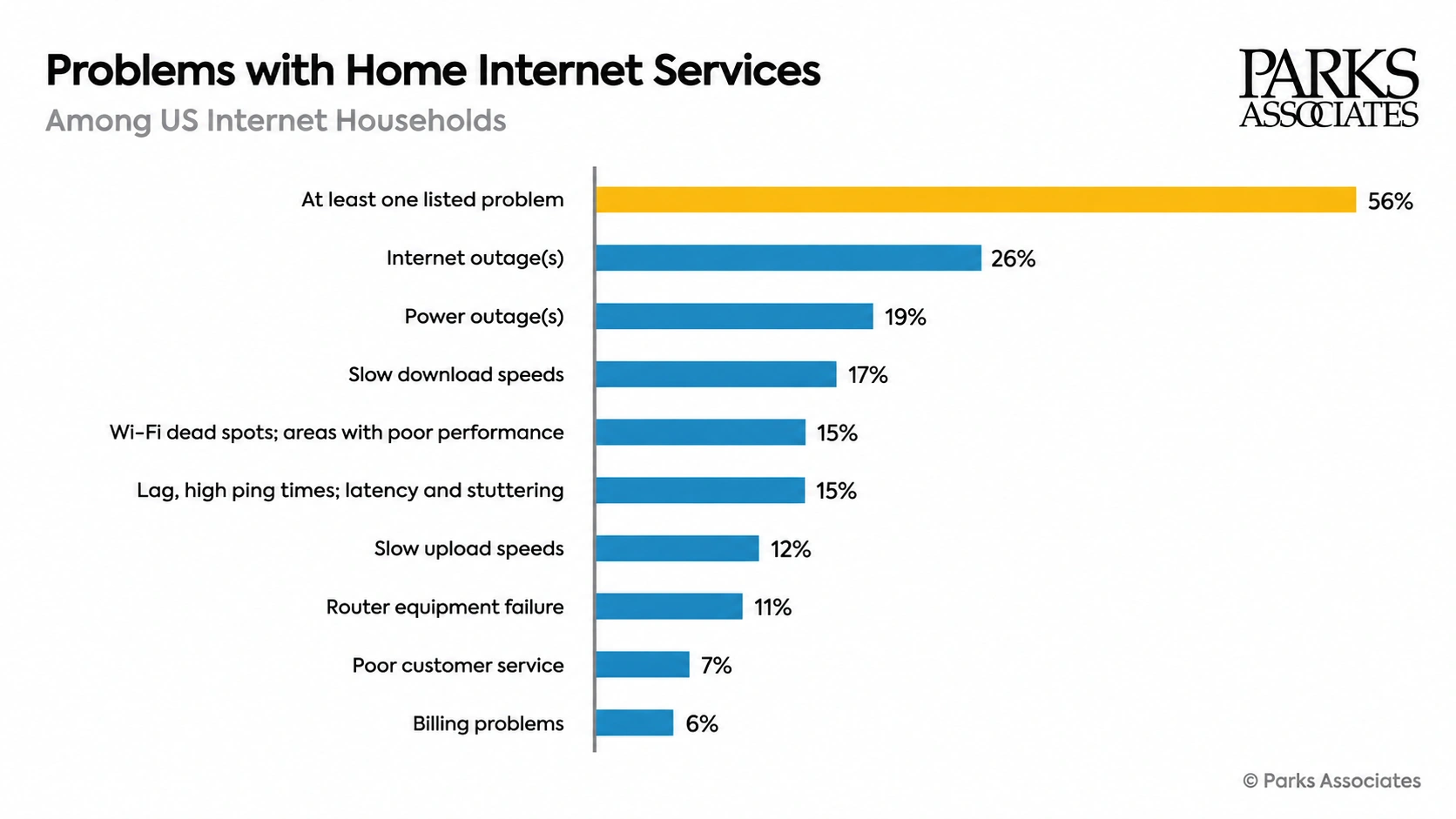
The findings suggest there is still considerable room for improvement in the basic broadband experience. Parks Associates reports that 56% of U.S. households experienced at least one home internet problem during the previous 90 days, while subscribers who encounter poor customer service are seven times more likely to consider switching providers than those without service issues. Younger consumers appear particularly sensitive to reliability problems and more willing to change providers.
Artificial intelligence is emerging as one way providers are attempting to address those frustrations before customers need to contact support. Current applications include automated network optimization and predictive diagnostics, while newer agentic AI systems are designed to carry out more complex, multi-step tasks across network and customer-care operations. The research frames this progression as a move from responding to failures toward identifying and potentially resolving problems proactively.
Security may also become a larger part of the broadband relationship as households accumulate connected devices. Among smart home device owners surveyed, 62% said AI-powered cybersecurity monitoring was appealing, while 27% indicated willingness to pay at a tested price point. The research also estimates that connected households encounter between 36 and 86 blocked security threats each month on average, with botnet attacks increasing 89% year over year.
For broadband companies, the broader challenge is maintaining relevance as technology platforms, device manufacturers and alternative connectivity providers compete for more control over the connected-home experience. A case study included in the research describes TELUS using AI-powered customer journey orchestration to reach a 91% digital care engagement rate, with more than 500,000 support calls projected to be avoided annually. If similar approaches prove effective at scale, broadband competition may increasingly be judged by what happens around the connection, not merely by the speed delivered through it.