A new U.S. workforce study finds professional GenAI use has risen sharply in a year, while employer guidance remains limited, leaving adoption, training and anxiety out of sync.
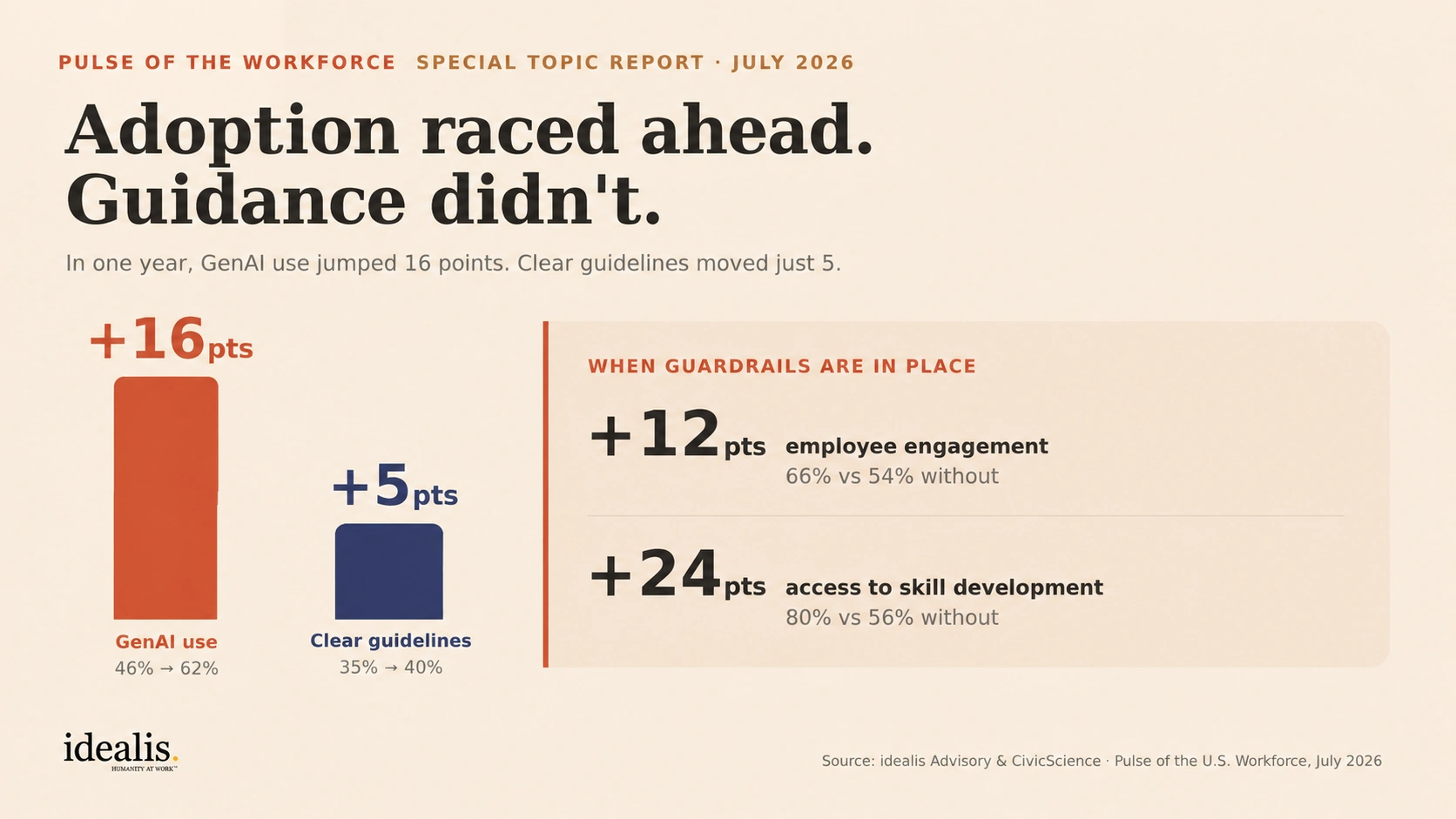
Generative AI has moved rapidly into everyday work, but organizational policies are developing at a much slower pace. New research from idealis Advisory finds that 62% of U.S. workers now use GenAI professionally, up from 46% a year ago, while only 40% say their employers have established clear guidelines for its use.
The findings, based on a nationally representative CivicScience survey of more than 15,000 workers, point to a widening gap between technological adoption and workplace governance. Leaders appear particularly comfortable with the tools, with 76% reporting GenAI use compared with 61% of non-leaders, suggesting that limited guidance is not simply the result of management being unfamiliar with the technology.
Greater familiarity also does not appear to be reducing workers’ concerns about what AI could mean for their careers. Among employees already using AI, 72% report concerns about their own job security, compared with 46% of workers who have not adopted it. Across the workforce, 78% remain concerned about AI’s broader impact on jobs, a figure that has changed little from last year despite the substantial increase in professional use.
The research also suggests that clear policies may matter beyond basic risk management. Workers at organizations with established GenAI guidelines report engagement of 66%, compared with 54% among those without clear guidance, while 80% say they have access to skill development versus 56% in workplaces lacking such policies. These figures do not establish that guidelines themselves cause higher engagement or training access, but they indicate that structured AI adoption tends to coincide with stronger organizational support.
Adoption is also uneven across industries and demographic groups, with financial services and education reporting some of the highest usage rates. Taken together, the findings suggest that the central workplace AI challenge is shifting: persuading employees to experiment with the technology may be becoming less important than determining how organizations govern its use, develop relevant skills and address persistent concerns about employment. As adoption continues largely from the ground up, employers increasingly face the question of whether their policies can catch up with practices that are already becoming routine.