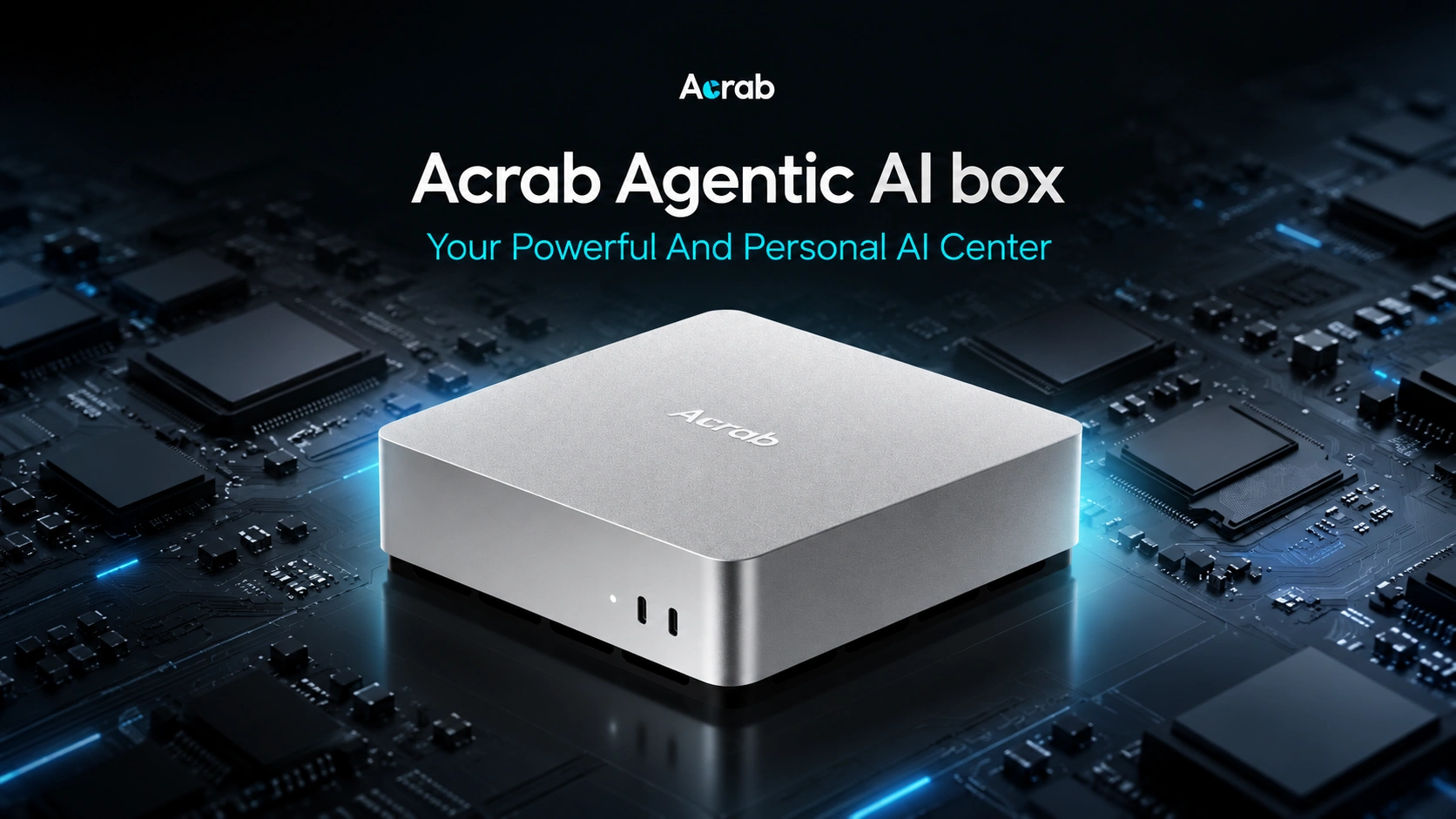
Acrab’s GΞLIX 1 chip and Agent Box are designed to run large AI models locally, reflecting a broader push for faster, more private agentic computing outside cloud data centers.
Acrab has unveiled GΞLIX 1, its first edge AI system-on-chip, alongside Agent Box, a desktop system designed to run AI models and agents locally. The Singapore-based company is positioning the hardware around a central question emerging as AI shifts from generating information toward performing tasks: how much intelligence needs to remain dependent on remote cloud infrastructure?
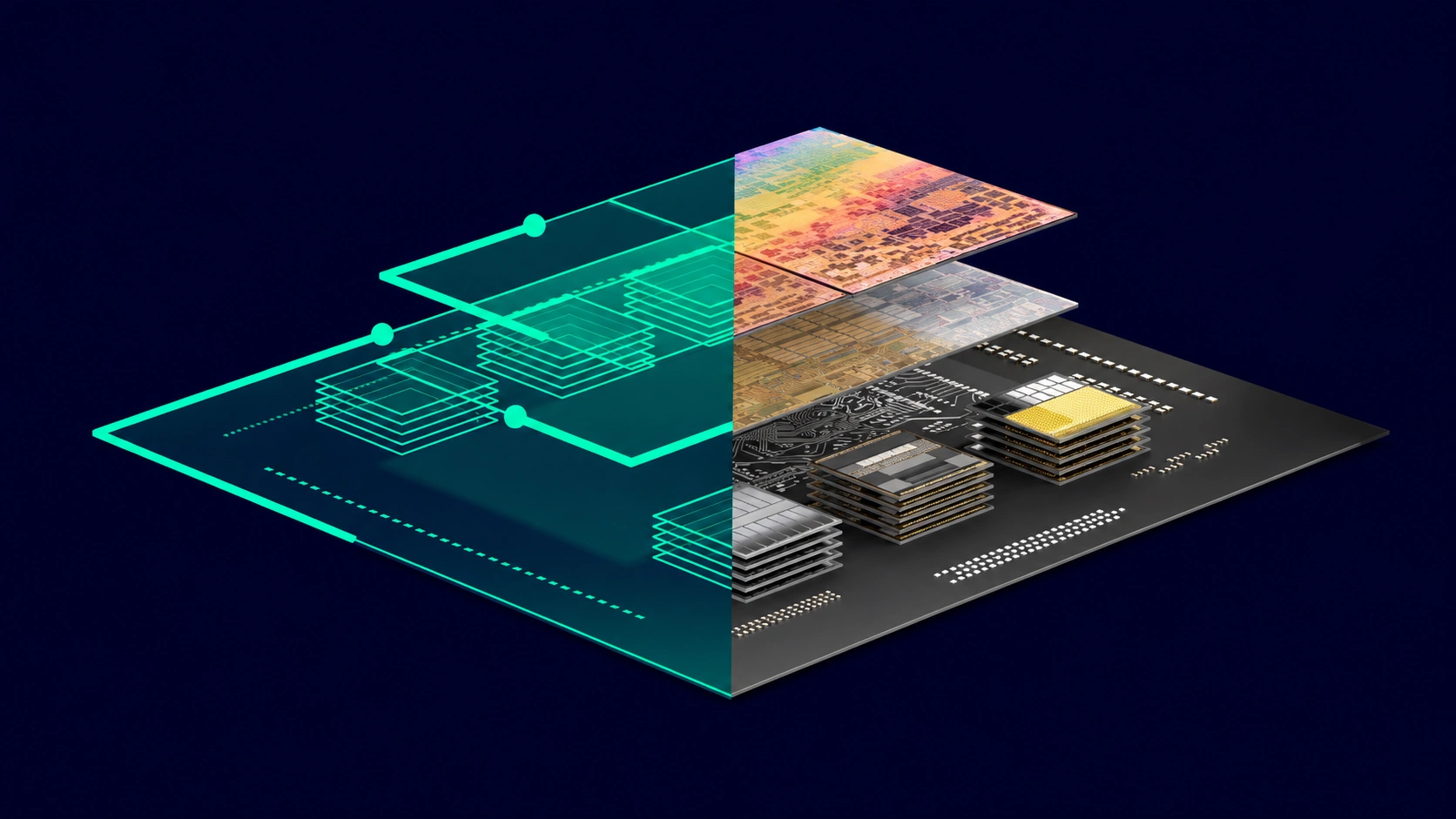
GΞLIX 1 is built on a 5-nanometer process and combines CPU, GPU and NPU resources with unified memory architecture intended for demanding AI workloads. Acrab says the chip can support open-source models in the 100 billion parameter class, a scale traditionally associated with cloud infrastructure, while its 20-core Arm CPU and 273 GB/s of unified memory bandwidth are designed to support responsive local inference.
Agent Box turns that computing platform into a personal edge AI system, combining local language and vision model inference with persistent memory, multimodal interaction and software for coordinating agents, systems and connected devices. Keeping more of that activity on the device could offer practical advantages, including reduced dependence on internet connectivity and remote processing, as well as greater local control over personal data and stored memories.
Performance remains an important question for local AI, particularly as models grow and users expect increasingly immediate responses. In company testing under a specific Gemma 26B A4B configuration, Acrab reported a prefill rate of 1,416.8 tokens per second for GΞLIX 1, compared with 188.9 tokens per second on a Mac Mini M4 Pro. The figures represent Acrab’s own testing rather than independent benchmarking, but they illustrate the performance target behind its purpose-built architecture.
The larger significance of the launch may lie beyond a single desktop device. Acrab plans to offer its silicon and software platform to manufacturers developing AI PCs, network-attached storage systems, smart vehicles and robots, creating a potential foundation for AI that operates across increasingly diverse physical devices. If large models can be run economically and responsively at the edge, the balance between cloud and local computing could become an increasingly important design choice for the next generation of AI products.