By adding xStocks to its Dual Asset offering, Bybit is blending tokenized company exposure with crypto-style structured products as traditional and blockchain markets move closer together.
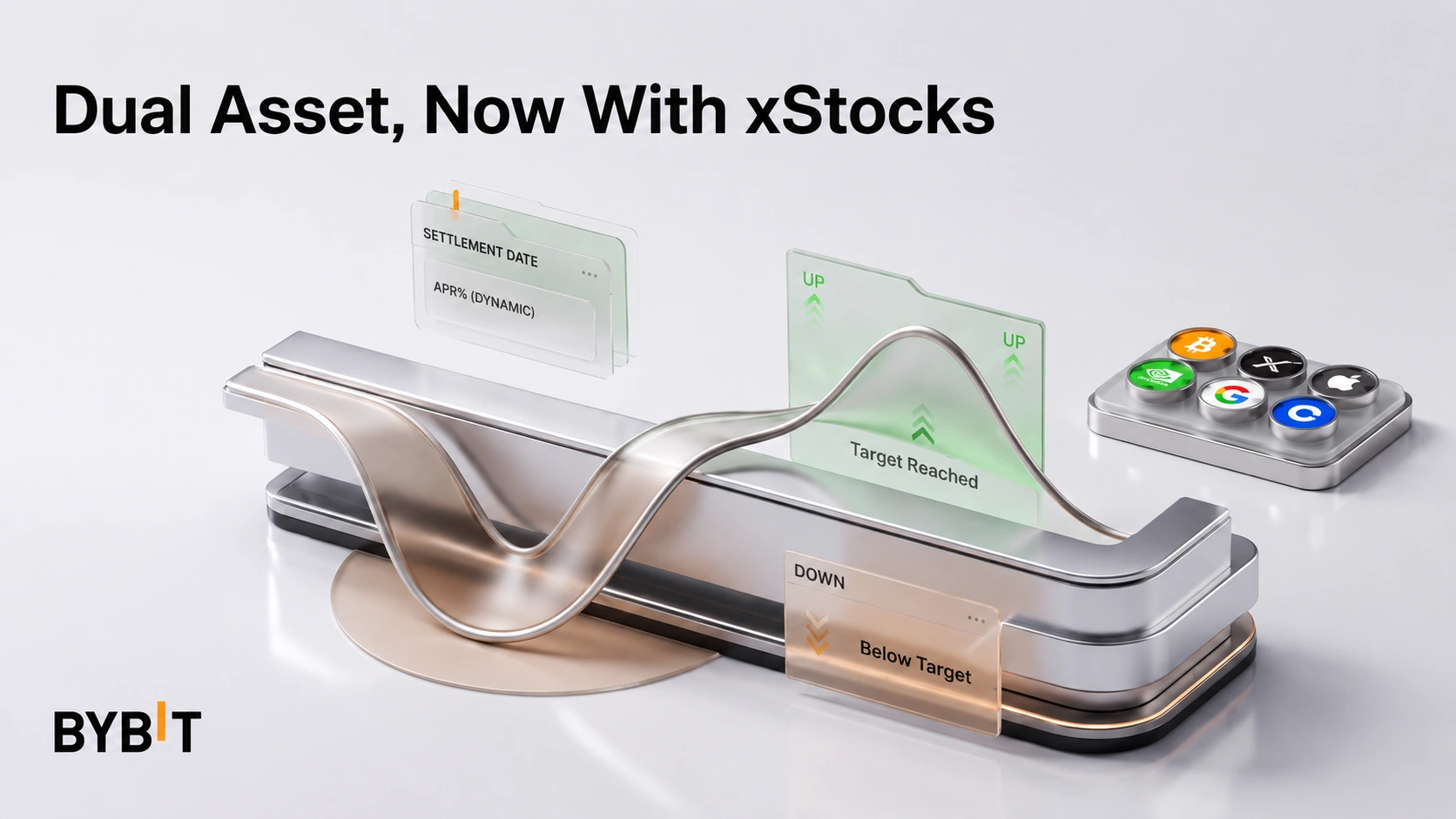
Bybit is expanding its Dual Asset structured investment product beyond conventional cryptocurrency pairs by adding xStocks as underlying assets. The initial selection covers six tokenized assets associated with SpaceX, NVIDIA, Apple, Alphabet, Coinbase and Amazon, giving users another way to take market positions linked to prominent technology, finance and aerospace names without relying solely on direct spot purchases.
The mechanics remain similar to Bybit’s existing Dual Asset product. Users choose an xStock pair, target price and investment period of eight hours, one day or seven days, with individual subscriptions ranging from 30 to 200,000 USDT. Depending on how the underlying asset moves relative to the selected target price, the investment is settled in one of the designated assets while providing a predetermined return.
The addition is notable because it places tokenized equities inside a structured product format already familiar to cryptocurrency investors. Rather than simply holding an xStock, users can employ it while waiting for a preferred entry or exit level, effectively expressing a short-term market view through a product whose final settlement depends on price movement. That expands the role of tokenized assets from representations designed primarily for trading into building blocks for more complex financial products.
The structure also introduces considerations that differ from straightforward ownership. Bybit describes Dual Asset as non-principal-protected, meaning the outcome can expose investors to losses even though the product offers an expected fixed return following subscription. Settlement in a different asset than the one initially deposited may also matter when markets move sharply, making the target price and investment period important parts of the risk rather than incidental settings.
More broadly, the launch illustrates how the boundaries between crypto markets and traditional financial assets continue to blur. Tokenization allows assets associated with familiar companies to circulate through blockchain-based infrastructure, while platforms such as Bybit are beginning to layer crypto-native investment mechanisms on top of them. Whether these products achieve wider adoption will depend partly on how investors evaluate their added complexity, but the expansion of Dual Asset shows that tokenized real-world assets are increasingly being treated not merely as digital substitutes for conventional holdings, but as components of a developing on-chain financial ecosystem.