The successful first flight of Quarterhorse Mk 2.1 gives Hermeus another test platform as it pursues unmanned supersonic and sustained ramjet-powered flight.
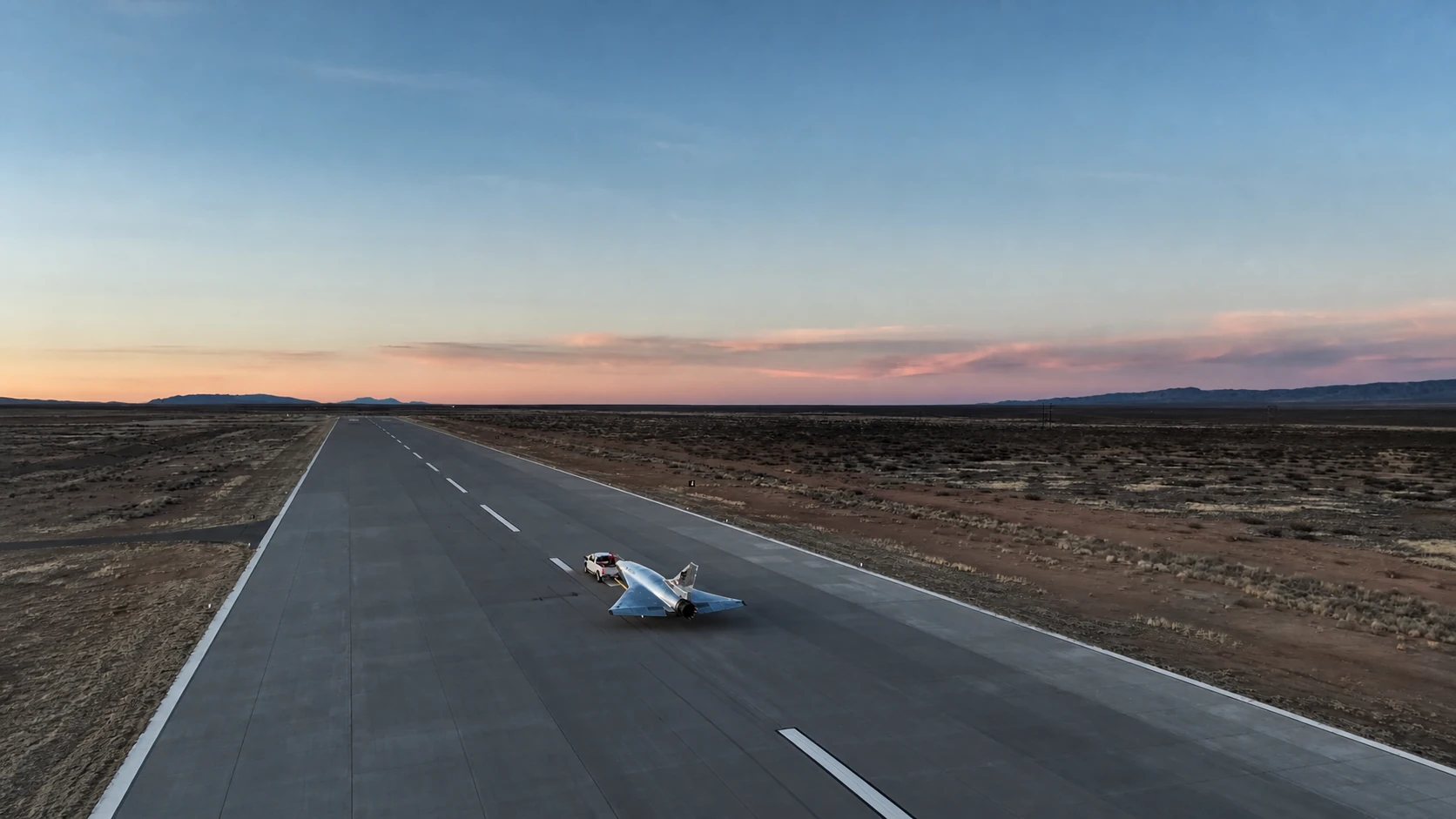
Hermeus has successfully flown Quarterhorse Mk 2.1, its newest unmanned aircraft and the second company aircraft to complete a first flight in less than a year. The flight begins a test campaign intended to take the aircraft to supersonic speeds, extending the company’s rapid, iterative approach to high-speed aviation. It also gives Hermeus a larger and faster platform for validating aircraft systems, remote operations and flight procedures.
Quarterhorse Mk 2.1 is roughly the size of an F-16 and is powered by a Pratt & Whitney F100 engine, with Pratt & Whitney identified as an RTX business. Compared with the company’s Mk 1 aircraft, which completed its first flight in May 2025, the new vehicle is nearly three times larger, four times heavier and significantly faster. Hermeus describes it as one of the largest unmanned aircraft ever built.
The flight took place at Spaceport America over White Sands Missile Range airspace in New Mexico, with the aircraft operated remotely from Hermeus’ ground-based flight deck. The company said the test validated aircraft systems, handling qualities and operational procedures. Quarterhorse Mk 2.1 is the first of multiple planned aircraft in the Mk 2 phase, which is focused on achieving and expanding supersonic flight.
The programme illustrates Hermeus’ strategy of developing several aircraft in quick succession rather than relying on a single prototype. The company says flight data from each vehicle is used to refine designs, reduce risk and increase performance across the programme. The next planned aircraft, Mk 2.2, is expected by Hermeus to become the world’s fastest unmanned aircraft, although that outcome remains a company expectation rather than a completed result.
Hermeus’ longer-term objective is sustained ramjet-powered flight for the United States this decade. CEO and founder AJ Piplica said the latest flight starts a critical campaign intended to bring the company closer to supersonic capability, while the company’s stated development roadmap continues through subsequent aircraft and test phases. The immediate significance is therefore operational as much as symbolic: a new vehicle is now available to generate flight data for the next stage of high-speed development.