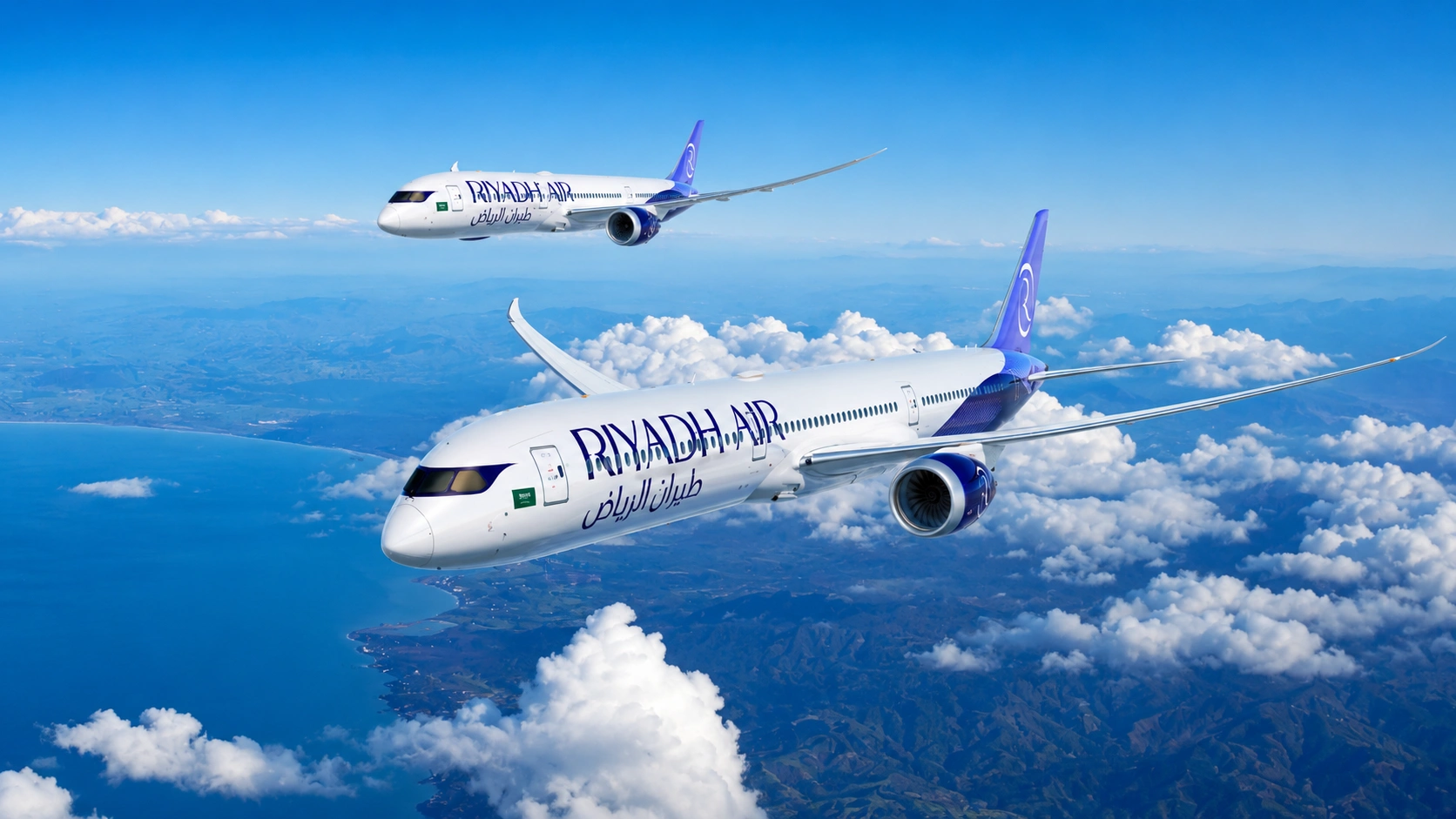
The latest Boeing agreement highlights Riyadh Air’s strategy to build a modern long-haul network while supporting Saudi Arabia’s broader plans to strengthen its role in international aviation.
Riyadh Air has expanded its commitment to Boeing by exercising options to purchase 28 additional 787 Dreamliner aircraft, reinforcing the airline’s long-term growth strategy just as it begins establishing its international presence. The agreement includes the carrier’s first order for the larger 787-10 variant and, once finalized, will increase its firm Dreamliner order book to 67 aircraft. The move reflects the rapid pace at which the Saudi airline is building its fleet as it works toward serving more than 100 destinations by the end of the decade.
The announcement extends beyond a routine aircraft purchase. Riyadh Air was created as part of Saudi Arabia’s Vision 2030 initiative, which seeks to diversify the country’s economy by expanding sectors such as tourism, transportation, and international business. Building a modern national airline is central to that strategy, with aviation expected to play a larger role in connecting Riyadh to global markets while supporting increased travel into and out of the Kingdom.
The decision to add the 787-10 also reflects broader trends in airline fleet planning. The larger variant offers increased passenger capacity while maintaining the operational advantages of the wider Dreamliner family, allowing airlines to serve high-demand routes more efficiently without introducing an entirely new aircraft type. Operating both the 787-9 and 787-10 enables shared pilot training, maintenance procedures, and flight deck systems, simplifying operations as the airline expands its network.
For Boeing, the agreement represents continued demand for widebody aircraft at a time when international travel continues its long-term recovery and growth. Airlines around the world are investing in newer aircraft that promise improved fuel efficiency and lower operating costs while offering passengers enhanced comfort on long-haul routes. Those considerations have made aircraft such as the Dreamliner an important part of many carriers’ fleet renewal strategies.
The order also illustrates how aviation investment increasingly reflects national economic priorities as much as commercial demand. Rather than simply adding aircraft to accommodate more passengers, Riyadh Air is assembling the infrastructure needed to support broader ambitions for tourism, trade, and global connectivity. As the airline expands over the coming years, its fleet decisions will serve not only as business investments but also as indicators of Saudi Arabia’s evolving role within international aviation.