Busch Gardens Tampa Bay has opened a new lion and hyena habitat as part of a broader park transformation, reflecting the growing emphasis on combining visitor experiences with modern animal care and conservation education.
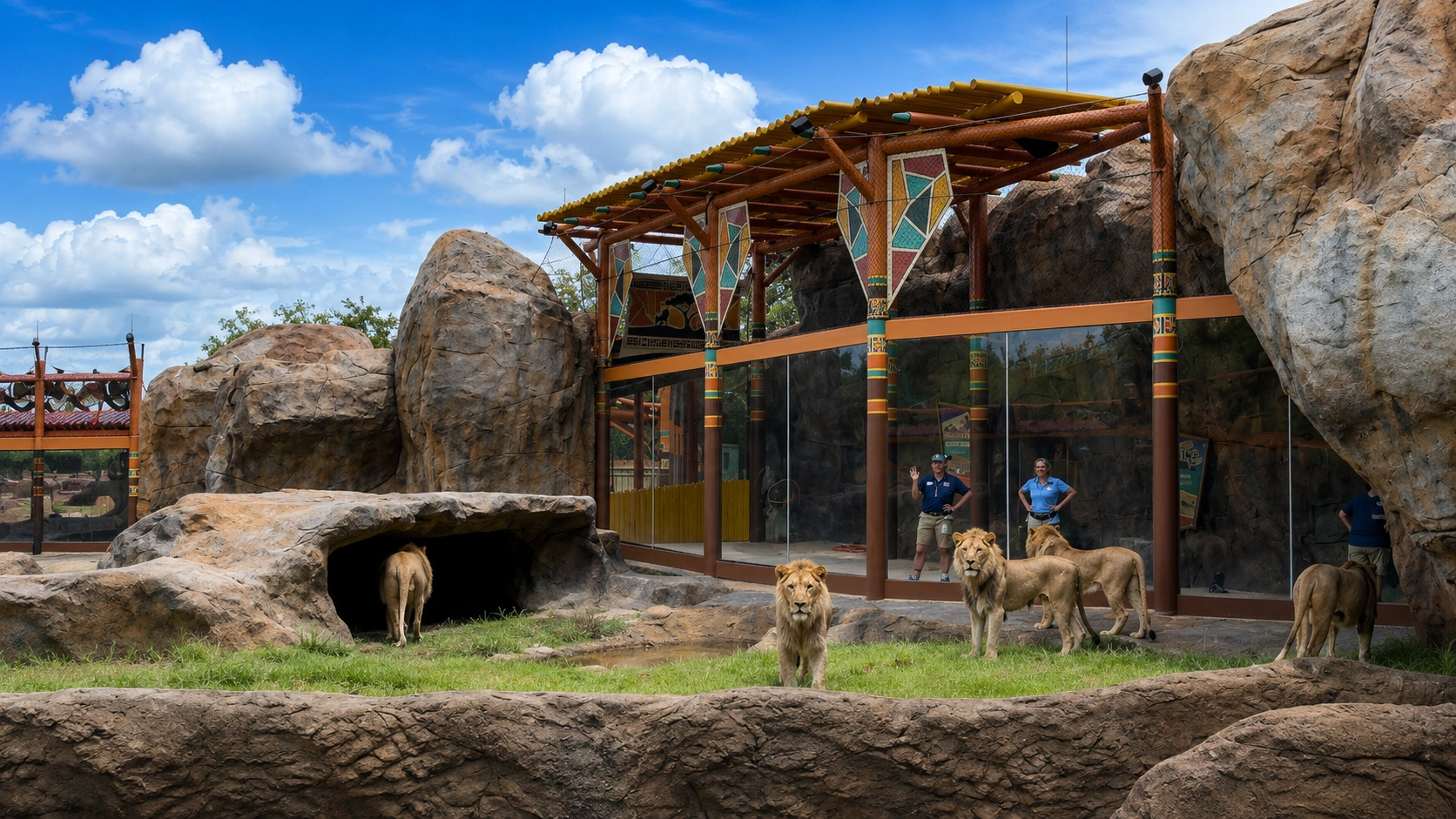
Busch Gardens Tampa Bay has opened Lion & Hyena Ridge, a 38,000-square-foot habitat designed to house lions and spotted hyenas within an immersive viewing environment. The new attraction is part of the park’s planned $200 million, five-year investment in new exhibits, attractions, and guest experiences. While the opening introduces another major feature for visitors, it also reflects how zoological parks are increasingly redesigning animal habitats to balance public engagement with evolving standards for animal welfare and environmental education.
Modern zoos and wildlife parks have moved well beyond the traditional model of displaying animals in simple enclosures. Today’s habitat design often seeks to recreate more natural environments while giving animals opportunities to climb, explore, rest, and engage in behaviours that support their physical and mental well-being. At the same time, these spaces are intended to create meaningful encounters for visitors, encouraging a stronger understanding of wildlife and the challenges facing species in their natural habitats.
Lion & Hyena Ridge incorporates expansive glass viewing areas, elevated walkways, interactive observation points, varied terrain, water features, and enrichment elements designed for both species. Because lions and hyenas are natural competitors in the wild, the park has designed the habitat so the animals rotate through different sections rather than sharing the same space simultaneously. According to Busch Gardens, this approach allows each species to experience a changing environment while supporting safe management practices and offering guests different viewing opportunities throughout the day.
The project also reflects broader trends within the theme park and zoological industries, where investment increasingly extends beyond rides and entertainment. Many parks are developing attractions that combine immersive design with educational storytelling, recognising that visitors often expect experiences that are both engaging and informative. Animal habitats, in particular, have become central to these efforts by providing opportunities to highlight conservation, species behaviour, and the importance of responsible wildlife care alongside recreation.
Busch Gardens Tampa Bay’s latest expansion illustrates how wildlife attractions continue to evolve alongside changing visitor expectations and advances in zoological design. As parks invest in habitats that prioritise both animal welfare and immersive experiences, they are redefining how guests interact with wildlife in managed environments. The new development suggests that future investments in zoological parks will increasingly focus on creating spaces that educate, inspire curiosity, and support long-term conservation awareness.