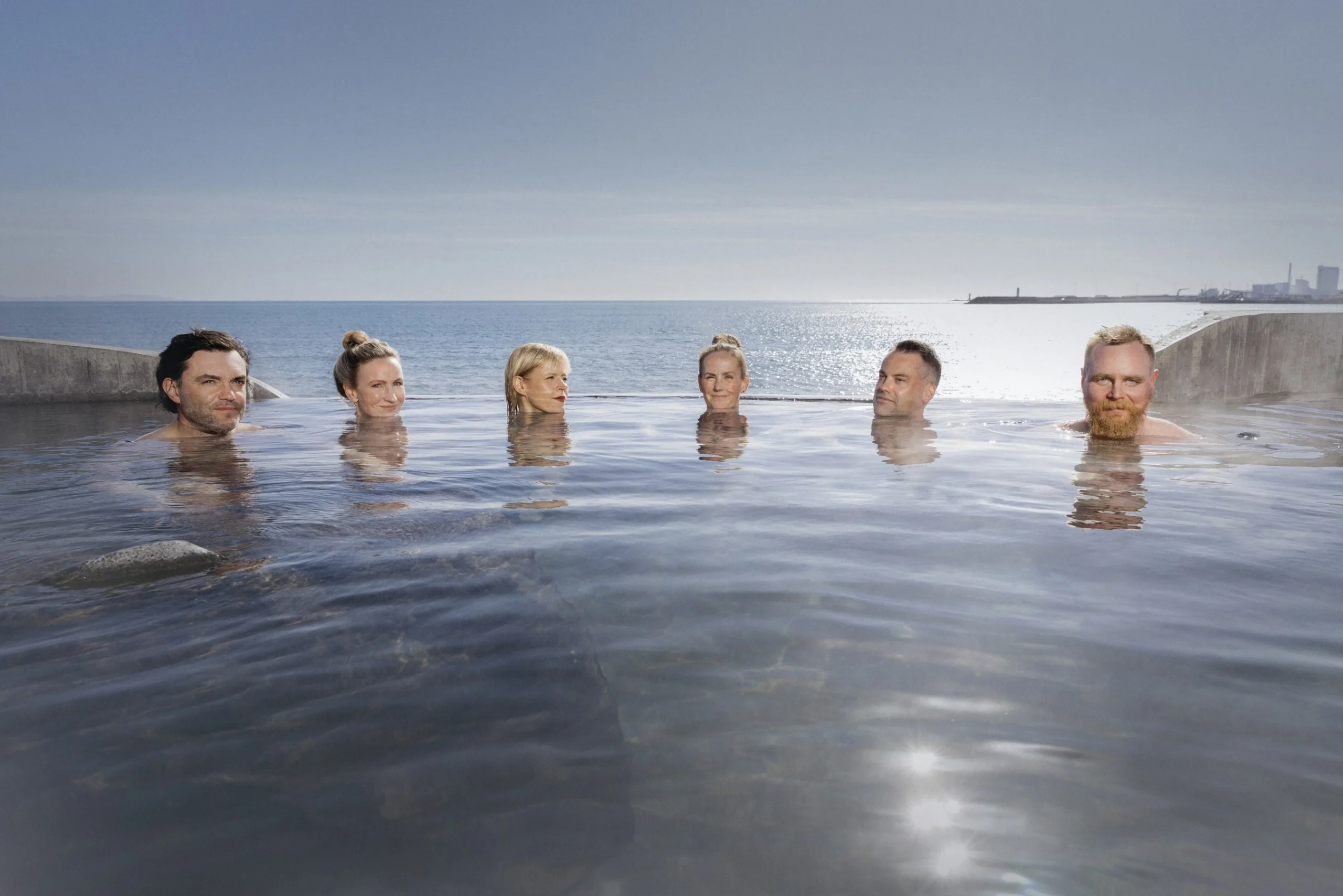
Iceland’s contribution to the Venice Architecture Biennale explores geothermal pools as social infrastructure, offering a timely perspective on connection, public space, and community.
Iceland is bringing an unusual architectural idea to the global stage: the public swimming pool. Through its pavilion at the 20th International Architecture Exhibition of La Biennale di Venezia, Iceland Design and Architecture presents SOAK: Rituals of Collective Belonging, an exhibition that examines how geothermal bathing culture has shaped social life across the country. Rather than focusing on iconic buildings or ambitious urban plans, the project turns attention to everyday spaces where people gather, interact, and build community.
The exhibition arrives at a moment when many societies are grappling with increasing social fragmentation and isolation. Curated by architect Marcos Zotes and developed through a collaboration between Basalt Architects, design studio Gagarin, and artist Rán Flygenring, SOAK argues that architecture’s most important role may not be creating landmarks but fostering human connection. In this framework, Iceland’s geothermal pools become more than recreational facilities; they serve as democratic meeting places that cut across age, profession, and social status.
The concept draws from a cultural tradition deeply rooted in Icelandic life. Access to geothermal energy has enabled swimming pools to operate throughout the country, many of them becoming central gathering places within their communities. Recognized by UNESCO as part of Iceland’s intangible cultural heritage, this bathing culture has long functioned as a form of civic infrastructure, blending leisure, wellness, and social interaction in ways that are increasingly rare in modern urban environments.
The exhibition also highlights how design can shape collective experiences. Basalt Architects, known internationally for projects including the Blue Lagoon, brings expertise in creating spaces that connect people with natural environments. Combined with Gagarin’s experience in immersive exhibition design and Flygenring’s visual storytelling, the project presents a multidisciplinary exploration of how public spaces influence behavior, identity, and belonging.Ultimately, SOAK asks a broader question about contemporary cities: what kinds of spaces help people coexist? By focusing on the geothermal pool as a “third place” between home and work, Iceland’s pavilion suggests that social resilience may depend as much on shared rituals and accessible gathering spaces as on physical infrastructure itself. In an age defined by digital connectivity yet persistent loneliness, that idea feels particularly relevant.