Aquatic Safety Research Group is expanding access to research-based online training, reflecting a growing emphasis on prevention, preparedness, and practical risk management in pools and recreational water facilities.
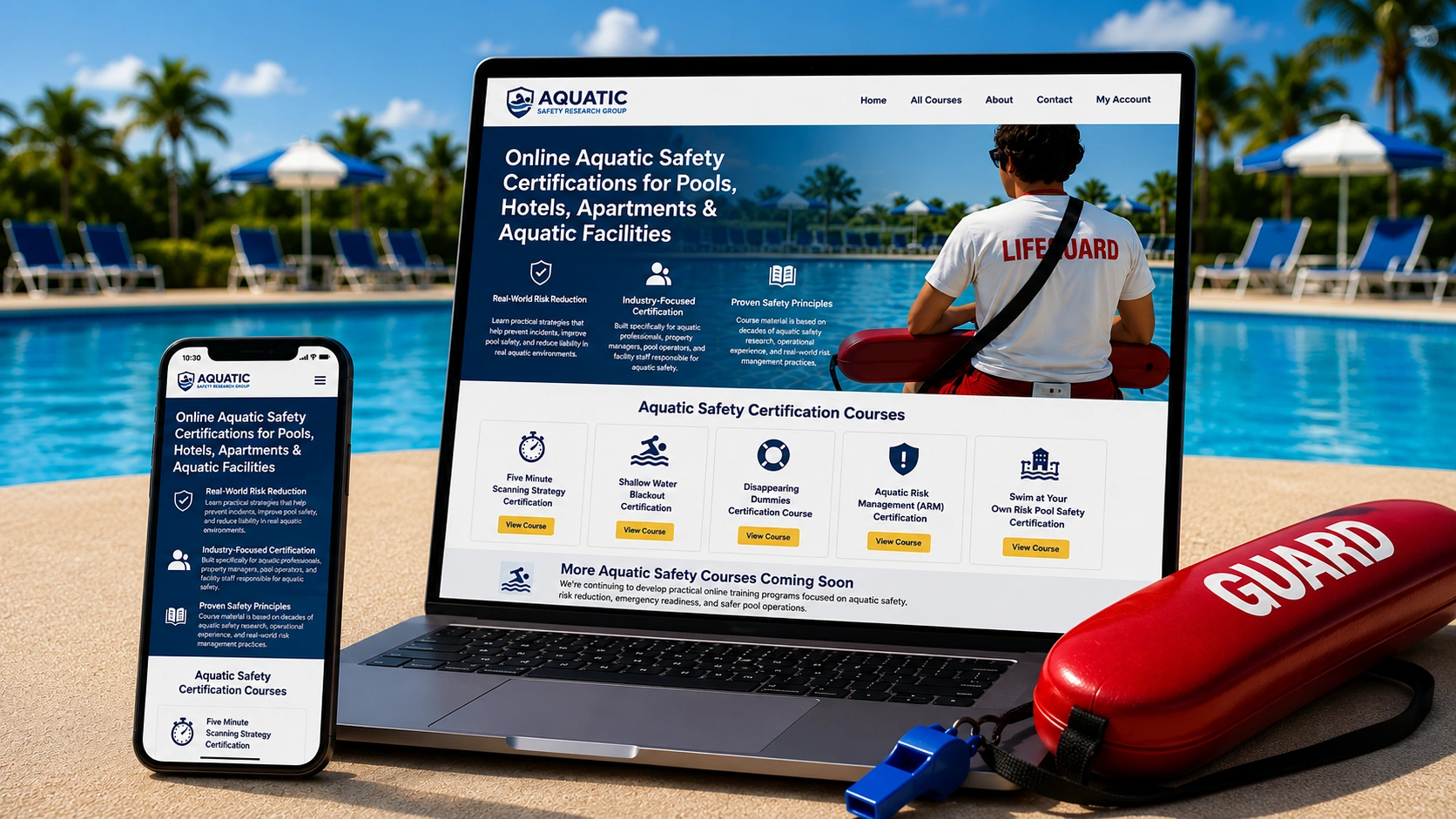
Aquatic Safety Research Group (ASRG) has introduced a new online certification platform designed to provide aquatic professionals and facility operators with practical training focused on reducing risk and preventing drowning incidents. The self-paced courses are intended for a broad audience, including hotels, schools, camps, apartment communities, homeowner associations, and public and private aquatic facilities. By moving its educational programs online, the organization aims to make specialized safety training more accessible to professionals responsible for supervising and managing aquatic environments.
The initial course offerings address several areas commonly associated with water safety and incident prevention. Topics include pool safety practices for facilities that operate under “swim at your own risk” policies, surveillance techniques such as the Five Minute Scanning Strategy, shallow water blackout awareness, and identifying distressed swimmers through courses like Disappearing Dummies. Each program combines instructional content with real-world scenarios, downloadable resources, assessments, and certificates of completion intended to support practical application in day-to-day operations.
The platform reflects a broader shift toward proactive safety management rather than relying solely on emergency response after an incident occurs. In recent years, aquatic organizations have increasingly emphasized structured training, continuous education, and operational planning as essential components of reducing preventable accidents. Online learning also allows staff members to complete certifications at their own pace, making ongoing professional development more practical for facilities that operate year-round or employ seasonal personnel with varying schedules.
ASRG says additional courses covering emergency response, supervision, aquatic operations, and other specialized safety topics are already in development. While no single certification can eliminate every risk associated with water recreation, expanding access to evidence-based training may help facilities strengthen their safety practices before problems arise. As communities continue investing in public pools, water parks, and recreational aquatic spaces, initiatives that prioritize prevention, standardized procedures, and informed decision-making are likely to play an increasingly important role in supporting safer environments for both staff and visitors.