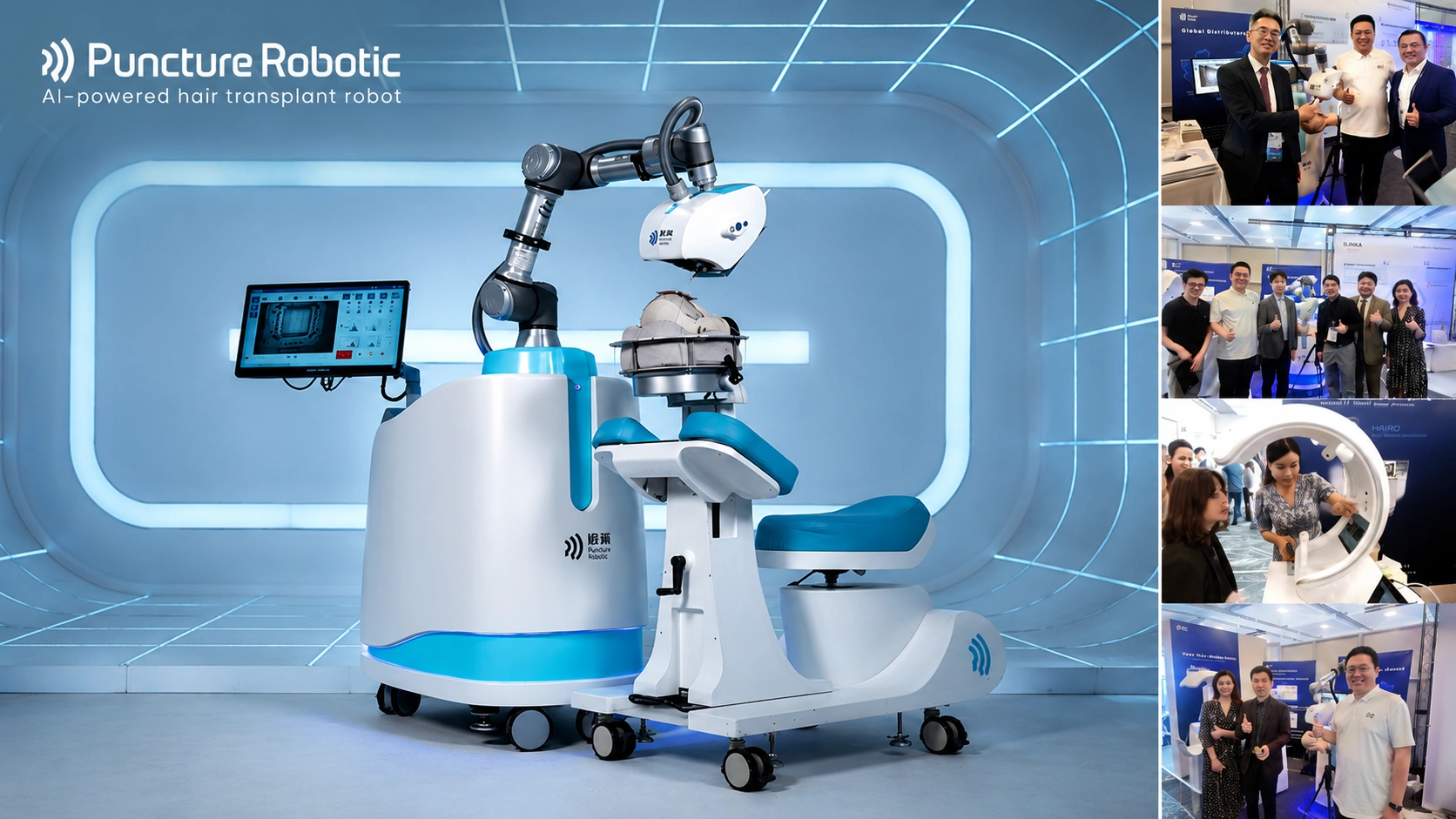
Puncture Robotic introduced its AI-powered HAIRO system at a global hair research conference, highlighting how robotics and machine learning are increasingly shaping precision-based medical procedures.
Puncture Robotic unveiled its HAIRO Hair Transplant Robot at the 14th World Congress for Hair Research (WCHR 2026), offering a glimpse into how artificial intelligence is beginning to reshape hair restoration procedures. The South Korea showcase positioned the company’s platform as a comprehensive system that combines AI, computer vision, and robotic automation to support physicians throughout the treatment process. Rather than focusing solely on the surgical procedure itself, the platform extends from patient assessment and treatment planning to postoperative management.
The announcement reflects a broader trend across medicine, where AI is being introduced to improve consistency and precision in technically demanding procedures. HAIRO, which the company says is China’s first hair transplant robot to receive NMPA Class III certification, uses intelligent imaging tools to assess hair loss and generate personalized visual simulations before surgery begins. During procedures, machine learning algorithms continuously analyze follicle characteristics and scalp conditions, adjusting operating parameters in real time as new information is gathered.
At the core of the system is an imaging platform built around 20-megapixel binocular cameras and high-speed image processing. According to Puncture Robotic, the robot can achieve positioning accuracy of up to 0.1 millimeters while extracting as many as 2,400 follicles per hour. The company also highlighted its proprietary “Single-Hair Skipping” algorithm, which prioritizes follicular units containing multiple hairs when appropriate, an approach intended to maximize visual density while reducing the number of grafts required from donor areas. Puncture Robotic reports that the system maintains a follicular damage rate below 7.5 percent under specified operating conditions.
Importantly, the company presents the technology as a surgical assistant rather than a replacement for physicians. By automating repetitive, precision-intensive tasks, the platform is designed to allow surgeons to devote greater attention to treatment planning, aesthetic decisions, and patient care. That distinction reflects a growing philosophy in medical AI, where technology is increasingly viewed as a tool that enhances clinical expertise instead of replacing it.
Looking ahead, Puncture Robotic plans to introduce a long-hair extraction version of HAIRO that would allow follicular extraction without fully shaving the donor area, addressing one of the most common concerns among prospective patients. Following a recent Series B funding round, the company is also pursuing international expansion while working toward FDA clearance and CE certification, signaling ambitions to bring AI-assisted hair restoration into a wider global clinical market.