Stoneridge has secured its largest bus camera monitor system programme to date, highlighting the growing shift from traditional mirrors to digital vision technologies in commercial transport.
Stoneridge has announced its largest bus and coach programme for the MirrorEye Camera Monitor System, marking another step in the adoption of digital vision technology across commercial transportation. The agreement, awarded by an existing global commercial vehicle manufacturer, is expected to move into full commercial production in 2027. Beyond its commercial significance for the company, the announcement reflects a broader transformation in how bus manufacturers are approaching driver visibility and road safety through electronic systems rather than conventional hardware.
For decades, exterior mirrors have been a standard feature of buses and coaches, providing drivers with essential visibility while also creating aerodynamic drag and leaving unavoidable blind spots. Advances in camera technology, high-resolution displays, and digital processing have opened the door to alternatives that can offer wider fields of view and clearer visibility in challenging weather or low-light conditions. As these technologies mature, camera monitor systems are becoming an increasingly practical option for commercial fleets operating in dense urban environments and on long-distance routes.
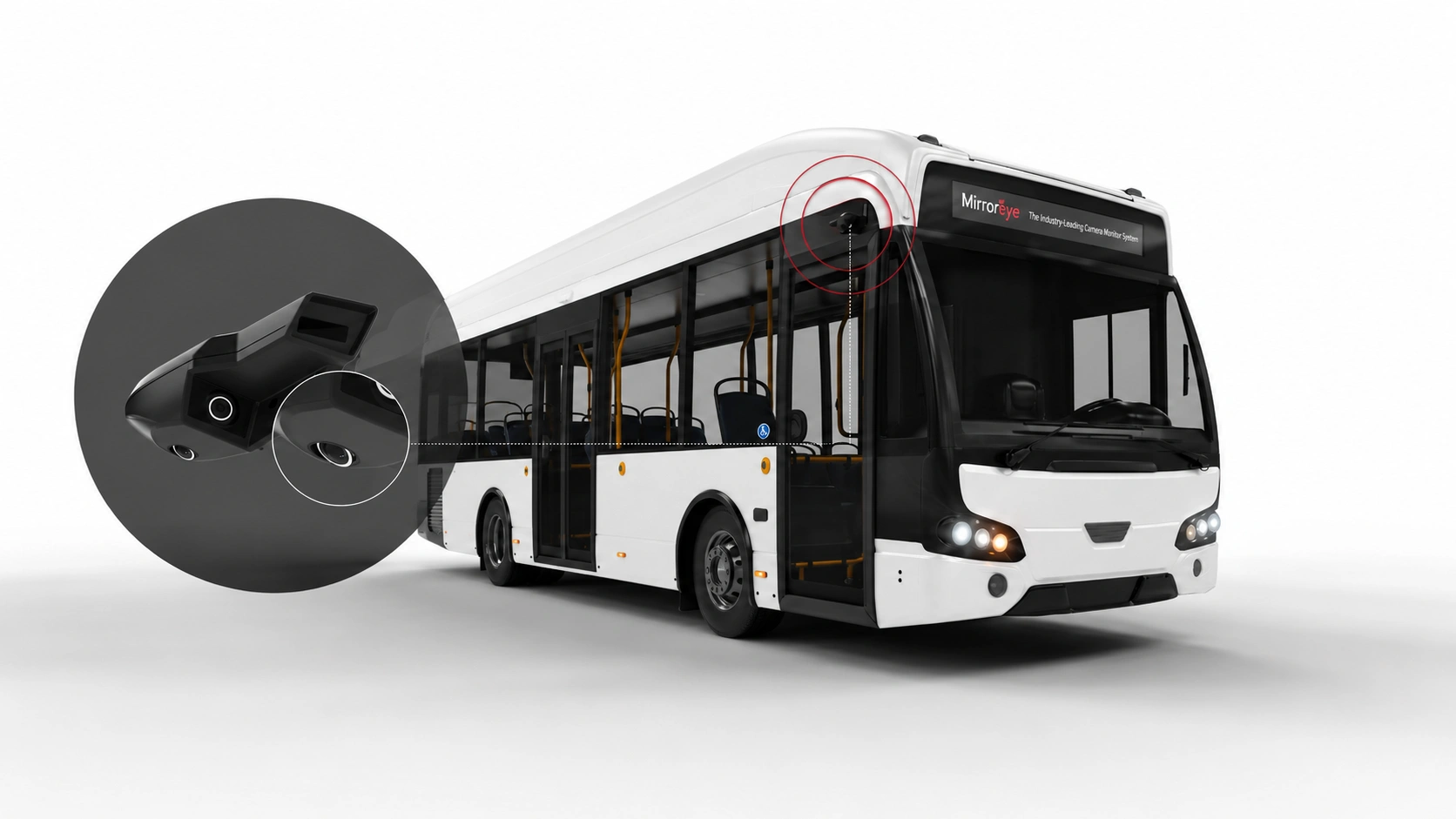
Stoneridge’s MirrorEye platform replaces traditional mirrors with externally mounted cameras that relay images to displays inside the vehicle. The latest version designed for buses and coaches incorporates functions such as Blind Spot Information System and Moving Off Information System capabilities, while also supporting digital video recording for operational review and analysis. According to the company, these features help manufacturers meet the European Union’s General Safety Regulation, which places greater emphasis on technologies designed to improve awareness of vulnerable road users and reduce collision risks.
The growing adoption of camera monitor systems also reflects wider changes taking place across the commercial vehicle industry. Manufacturers are increasingly integrating digital technologies that combine safety, compliance, and operational efficiency into unified platforms rather than treating them as separate vehicle components. These systems can provide drivers with more consistent visual information while giving fleet operators access to data that may support training, incident reviews, and future vehicle development.
Stoneridge’s latest programme illustrates how digital vision systems are steadily moving from specialised technology to mainstream commercial vehicle equipment. As regulators, manufacturers, and transport operators continue to prioritise road safety, innovations that improve driver awareness are becoming an increasingly important part of modern vehicle design. The shift suggests that future buses and coaches will rely less on traditional mirrors and more on integrated digital systems that enhance visibility while supporting broader advances in connected transportation.