At the Milken Institute Global Conference, Abu Dhabi outlined an ambitious strategy to use integrated data systems and AI infrastructure to reshape how healthcare is developed and delivered
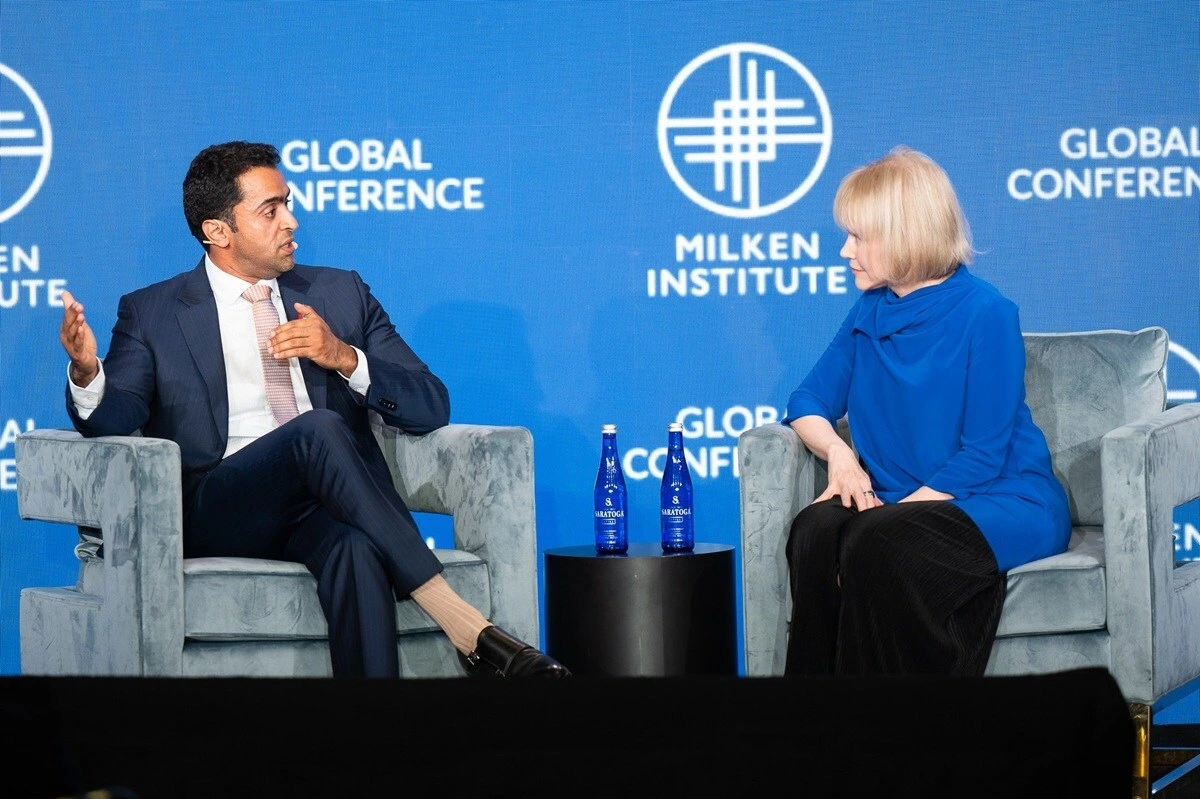
The Department of Health – Abu Dhabi used this year’s Milken Institute Global Conference to present Abu Dhabi as what officials described as a “living lab” for next-generation healthcare innovation. Speaking to an audience of policymakers, investors, and technology leaders, Department of Health Chairman Mansoor Ibrahim Al Mansoori framed the emirate as a place where companies can develop, test, and scale AI-driven health technologies within a fully integrated health ecosystem.
The announcement reflects a broader global shift in healthcare strategy, where governments are increasingly competing not only to provide care, but to become hubs for biomedical research, predictive medicine, and artificial intelligence development. Abu Dhabi’s pitch centers on the idea that large-scale, connected datasets can accelerate everything from drug discovery to emergency response. Officials described an infrastructure that combines genetic information, wearable-device data, clinical records, and real-time operational systems into a unified platform intended to support faster and more adaptive decision-making.
Central to that strategy is Abu Dhabi’s Unified Medical Operations Command Centre, or UMOC, which leaders characterized as the “health brain” of the system. According to the Department of Health, AI agents operating within the platform help monitor incidents in real time and support emergency coordination across the healthcare network. The emphasis on predictive intelligence and continuous monitoring aligns with a growing international movement toward anticipatory healthcare systems, where intervention happens earlier and more proactively than in traditional models built primarily around treatment after illness occurs.
The initiative also underscores how healthcare innovation is becoming intertwined with economic diversification efforts, particularly in Gulf economies seeking to expand beyond oil revenues. Abu Dhabi has spent years investing in biotechnology, genomics, and advanced infrastructure, positioning healthcare as both a public service and a strategic economic sector. During meetings held alongside the conference, officials reportedly discussed financing models tied to long-term health outcomes, as well as broader access to predictive and preventive care.
What emerges from Abu Dhabi’s proposal is less a single technology initiative than an attempt to redesign the relationship between healthcare, data, and governance. While many countries are experimenting with AI in medicine, Abu Dhabi is arguing that scale, centralized coordination, and sustained investment can allow those technologies to move from isolated pilots into everyday clinical practice. Whether that model can be replicated elsewhere may depend as much on public trust and regulation as on the technology itself.