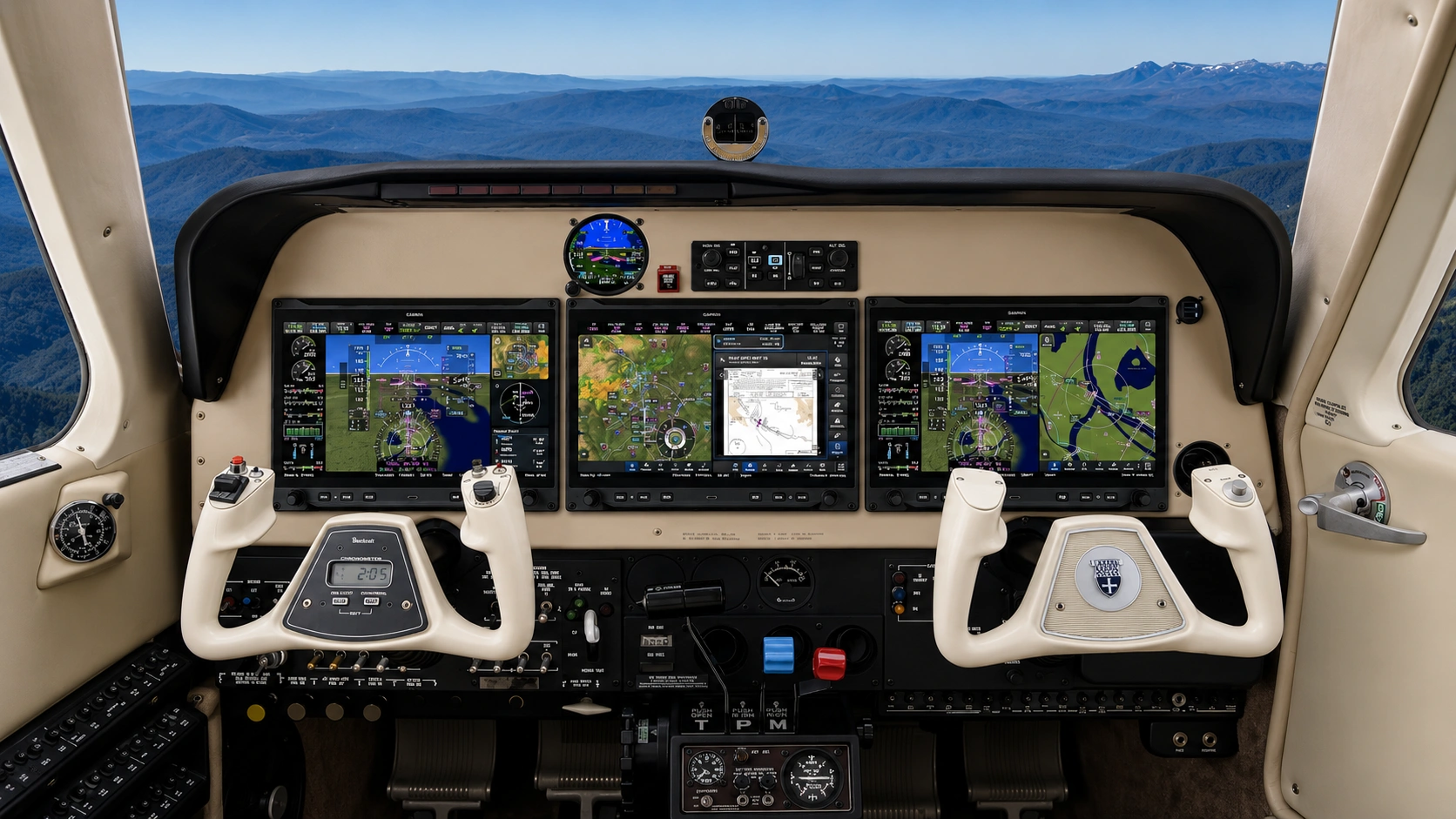
The company’s latest integrated flight display combines multiple avionics functions into a single system, reflecting a broader industry push toward simpler installations and more capable cockpits.
Garmin has introduced AXIS, a new family of integrated flight displays that combines flight instrumentation with navigation, communication, and audio capabilities into a single cockpit display. Intended for certified piston aircraft, experimental aircraft, and Light Sport Aircraft operating under the evolving MOSAIC framework, the system represents an effort to simplify avionics installation while expanding functionality for a broad range of pilots and aircraft owners.
The defining feature of AXIS is its unusually high level of integration. Depending on the model, a single 11.6-inch display can incorporate an IFR-certified GPS, NAV/COMM radios, and an audio panel alongside primary flight and multi-function display capabilities. By reducing the number of separate components required in an instrument panel, Garmin aims to decrease installation complexity, save weight, and make future upgrades more straightforward, particularly for aircraft already equipped with compatible Garmin hardware.
Beyond hardware consolidation, the announcement reflects how cockpit technology continues to evolve toward greater situational awareness and automation. AXIS supports synthetic vision, three-dimensional airport mapping, traffic and weather displays, engine monitoring, and a range of safety features, including emergency assistance tools and runway awareness technology. Connectivity with Garmin’s mobile applications and cloud-based services also allows pilots to wirelessly manage databases, upload flight logs, and monitor aircraft information, reinforcing the growing role of connected ecosystems in general aviation.
The system has also been designed with flexibility in mind. Garmin plans to offer multiple display sizes and configurations, allowing pilots to tailor installations for different aircraft types and operational needs. Compatibility with many existing Garmin sensors and accessories provides an upgrade path that may reduce the cost and disruption typically associated with replacing legacy avionics, an important consideration for owners balancing modernization with maintenance budgets.
Although new avionics systems are often introduced with increasingly sophisticated features, AXIS stands out for emphasizing integration as much as innovation. Rather than adding another standalone device to an already crowded instrument panel, Garmin is pursuing a more consolidated approach that mirrors broader trends in aviation technology. As aircraft owners continue investing in cockpit modernization, solutions that combine advanced capability with simpler installation may become an increasingly influential part of the next generation of general aviation equipment.