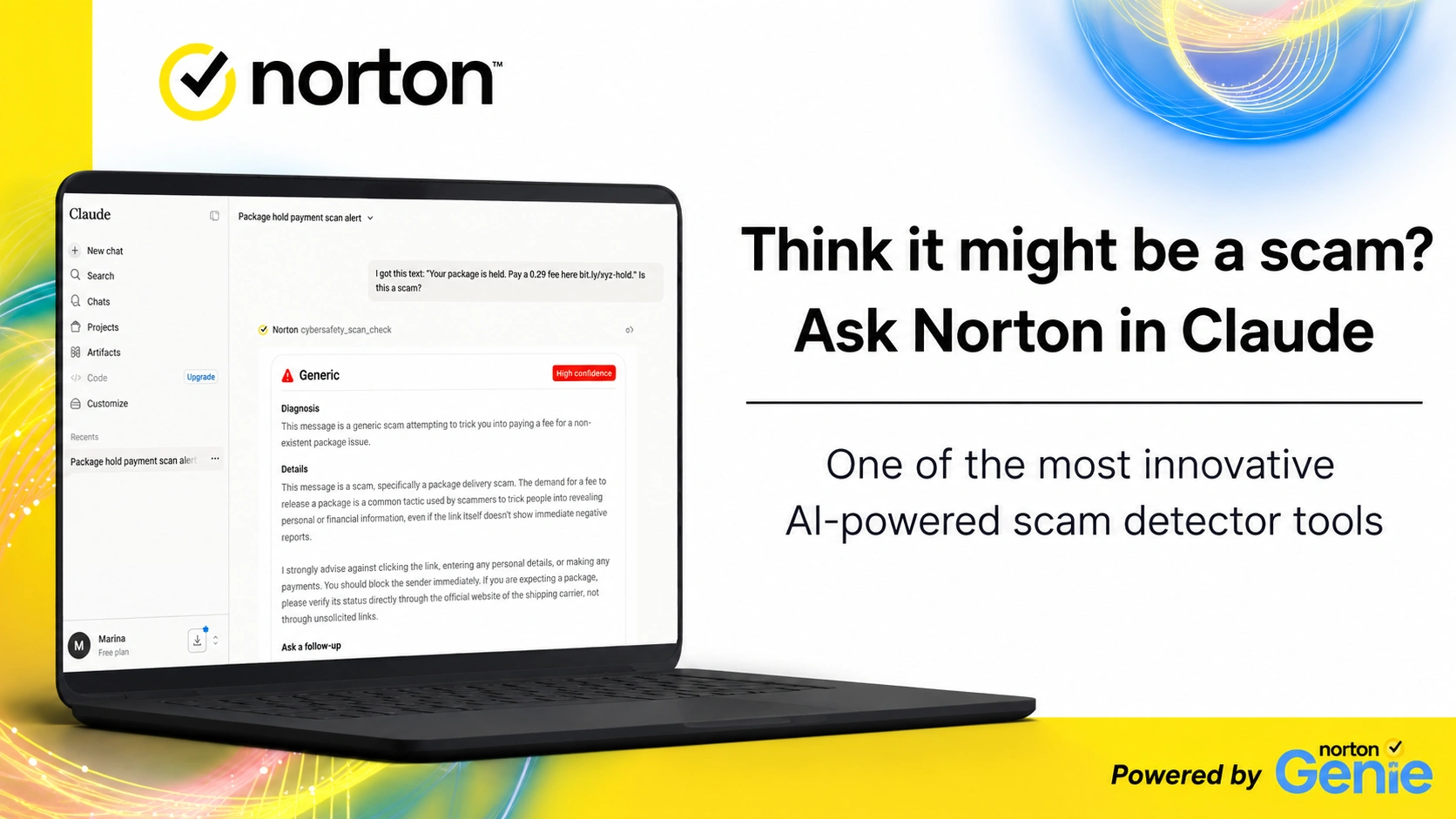
By expanding Norton Genie into Claude, the cybersecurity company reflects a broader shift toward embedding scam detection within the AI tools people increasingly rely on for everyday decisions.
Norton is expanding its AI-powered scam detection service, Norton Genie, into Claude, allowing users to check suspicious messages, emails, links, and images directly within the AI assistant. The move follows an earlier integration with ChatGPT and reflects how cybersecurity companies are adapting to a digital landscape where artificial intelligence is becoming a common source of advice for everyday online interactions. Rather than requiring users to visit separate security tools, the company is bringing fraud detection into conversations where people are already seeking guidance.
The announcement comes as online scams grow more sophisticated and increasingly exploit AI-generated content to appear authentic. Fraudulent package delivery notifications, fake customer support messages, romance scams, and phishing emails often rely on urgency, impersonation, or convincing language to persuade recipients to act quickly. As these tactics become harder to distinguish from legitimate communications, demand has grown for tools that can help users evaluate digital content before responding or clicking a link.
Within Claude, Norton Genie is designed to analyze more than the wording of a message. According to the company, it evaluates language patterns, social engineering techniques, suspicious requests for personal information, and the characteristics of links and destination websites before providing an assessment. Instead of simply labeling content as safe or unsafe, the tool explains why a message appears risky and suggests practical next steps, such as avoiding a reply, deleting the message, or not opening a link. That emphasis on context reflects a wider trend in cybersecurity toward helping users understand threats rather than relying solely on automated warnings.
The integration also highlights an emerging convergence between artificial intelligence and consumer security services. As AI assistants become increasingly embedded in work, communication, and online research, they are evolving beyond information retrieval into decision-support tools. Norton’s expansion into Claude suggests cybersecurity providers see these conversational platforms as an important new point of defense against fraud, meeting users where digital decisions are increasingly made. Whether this approach significantly reduces successful scams remains to be seen, but it represents another step toward integrating security more seamlessly into everyday online experiences.