SkyDefense’s newly unveiled CobraJet reflects the growing emphasis on autonomous, rapidly deployable systems as governments and infrastructure operators seek more adaptable responses to evolving drone threats.
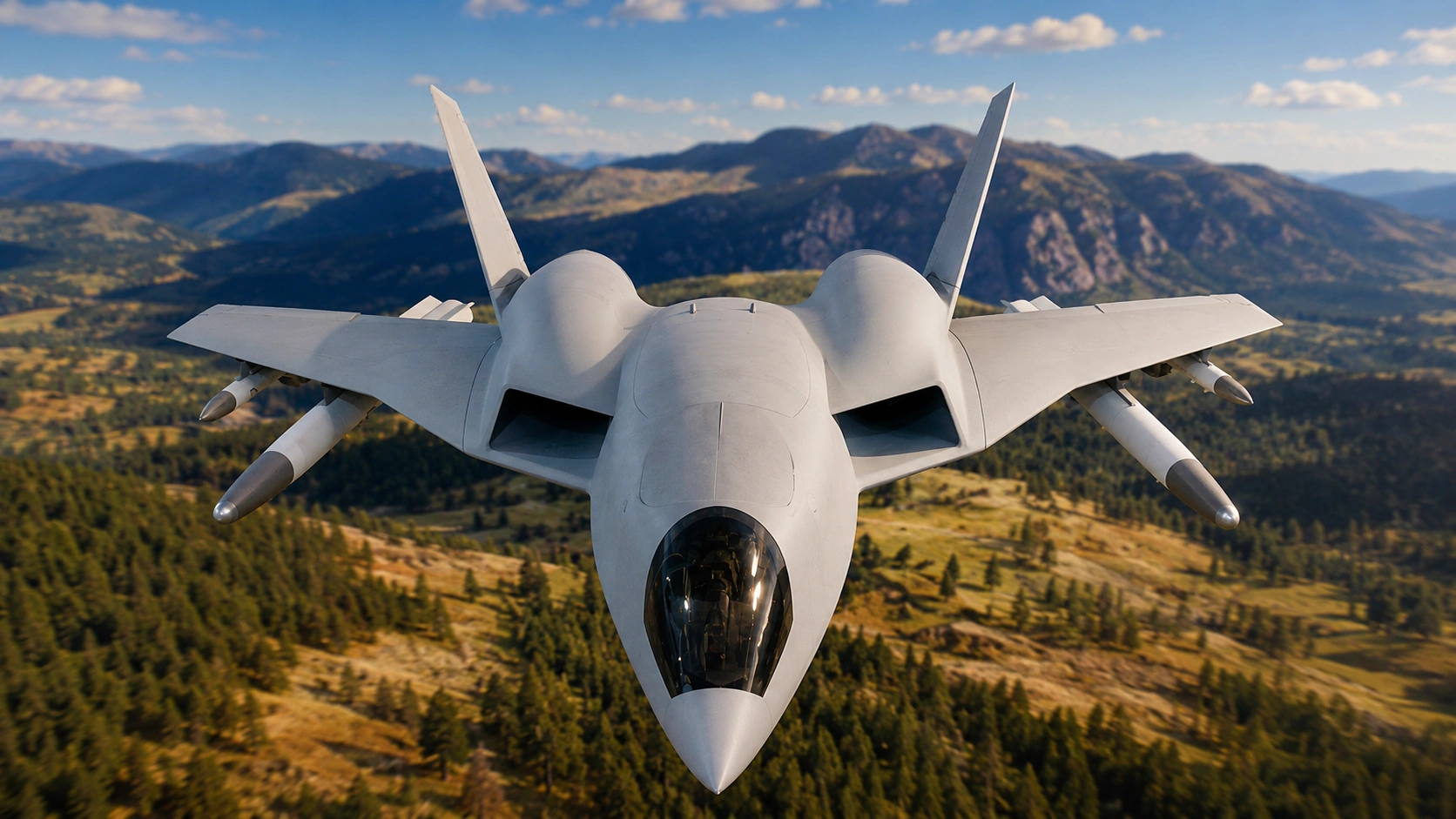
SkyDefense has introduced CobraJet, an autonomous vertical takeoff and landing (VTOL) aircraft designed to counter hostile drones using artificial intelligence, onboard sensors, and low-cost interceptors. The announcement comes as drone technology continues to evolve rapidly, creating new security challenges for military installations, airports, critical infrastructure, and public venues. Rather than relying solely on traditional air defense systems, newer approaches increasingly emphasize mobility, automation, and the ability to respond quickly to multiple airborne targets.
According to the company, CobraJet is available in several configurations powered by either battery-driven electric ducted fans or hybrid turbojet systems. Its design combines thrust-vectoring nozzles, modular carbon-fiber construction, and autonomous navigation supported by electro-optical and infrared sensors, allowing it to detect, track, and engage drones in a variety of operating conditions. For shorter missions, the aircraft can also function under manual remote control with AI-assisted guidance, offering operators flexibility depending on mission requirements.
A notable aspect of the system is its emphasis on relatively inexpensive interceptor munitions intended to disable or destroy small and medium-sized unmanned aircraft. SkyDefense says CobraJet can carry multiple guided interceptor types designed for different engagement scenarios, while larger variants are capable of acting as “drone motherships” by transporting additional interceptor drones. The company also describes CobraJet as part of a layered defense strategy, integrating with ground-launched systems and a portable command platform called VRAM that keeps human operators involved in decision-making while supporting operations in contested electromagnetic environments.
The unveiling reflects a broader trend within the defense sector toward countering increasingly sophisticated unmanned aerial systems with equally adaptable autonomous technologies. As drone swarms become a more realistic operational concern, defense developers are exploring scalable solutions that balance speed, precision, and cost rather than relying exclusively on expensive conventional missiles. The ability to manufacture interceptor components efficiently through methods such as 3D printing also illustrates the industry’s growing focus on production capacity alongside battlefield performance.
Field testing of CobraJet and its supporting command system is scheduled for the fourth quarter of 2026, with commercial production planned for early 2027. While the platform’s operational effectiveness will ultimately depend on testing under realistic conditions, its introduction highlights how counter-drone technology is becoming an increasingly important area of defense innovation as unmanned aircraft continue to reshape modern security environments.