The first official 7 Wonders Day celebration in Vietnam highlights how international recognition can shape tourism, cultural identity, and public appreciation for natural heritage beyond symbolic milestones.
New7Wonders is holding its official 7 Wonders Day celebration in Vietnam for the first time, placing the spotlight on Ha Long Bay, one of the organization’s New Seven Wonders of Nature. The event, centered in both Ha Long Bay and Hanoi, marks a symbolic moment for a country whose internationally recognized landscape has become closely associated with its tourism identity and global image over the past decade.
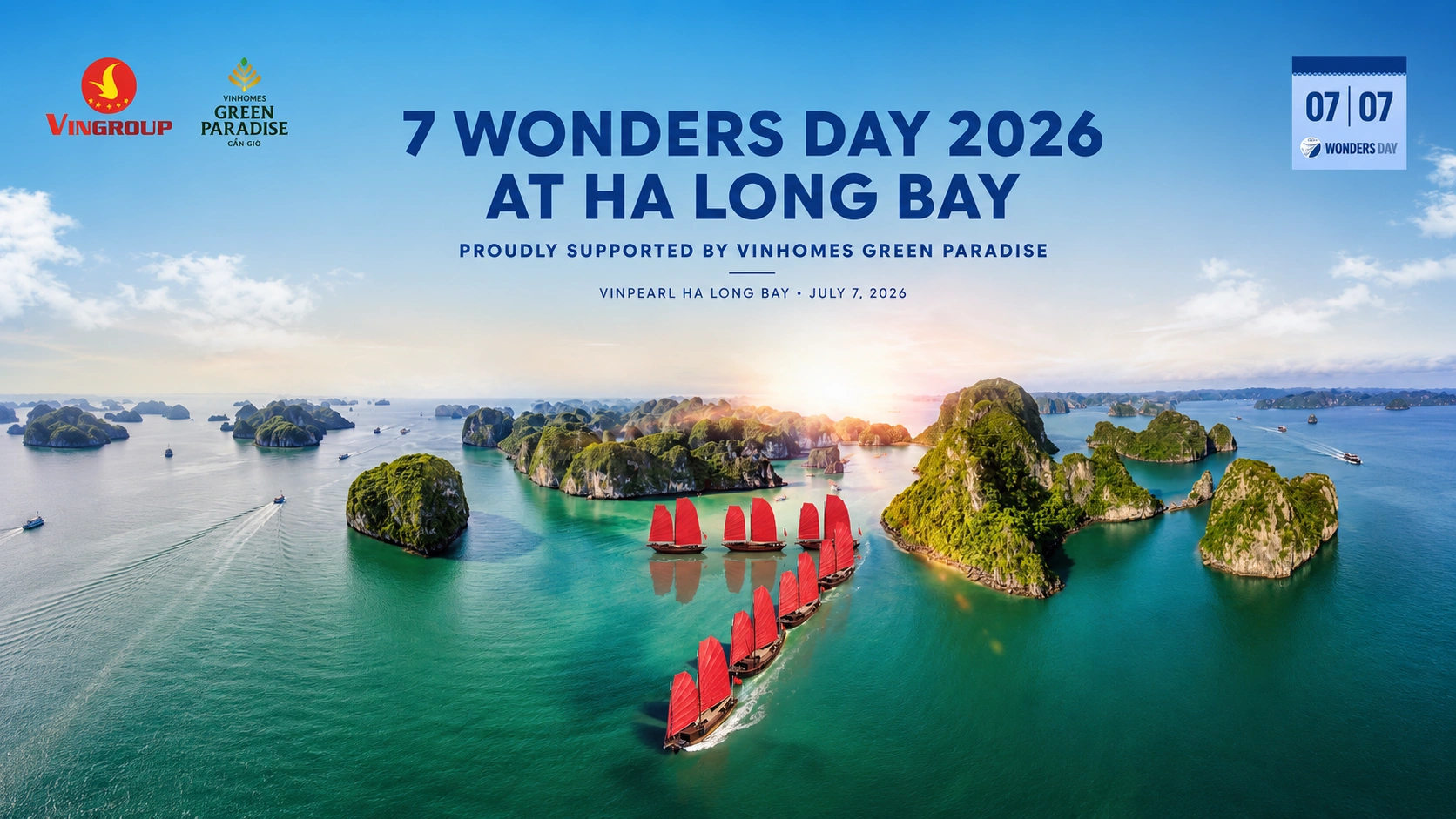
The annual observance, established in 2017 and held each year on July 7, is intended to encourage appreciation of sites considered significant for their natural or cultural value. This year’s Vietnamese celebration includes support from Vingroup and the national broadcaster VTV, reflecting a coordinated effort to bring the occasion to a nationwide audience. As part of the event, organizers unveiled a conceptual illustration depicting the number seven formed by traditional boats on Ha Long Bay, emphasizing the site’s enduring connection to Vietnam’s heritage.
While the announcement celebrates a ceremonial milestone, it also points to a broader conversation about how global recognition influences local communities. International designations often raise a destination’s profile, increasing visitor numbers and economic opportunities while simultaneously creating new responsibilities for conservation and sustainable management. Ha Long Bay, already one of Vietnam’s best-known attractions, illustrates the delicate balance between welcoming tourism and preserving a landscape valued for its ecological and cultural importance.
New7Wonders argues that international recognition can generate lasting social, cultural, and economic benefits rather than serving as a symbolic accolade alone. The organization cites what it describes as a “Wonder Effect,” in which global visibility strengthens national identity and encourages investment in local communities. Although the long-term impact of such recognition varies from place to place, Vietnam’s decision to host the official celebration suggests that the country continues to view Ha Long Bay not only as a celebrated natural landmark but also as a cornerstone of its international cultural presence.
Beyond commemorating a single destination, the event underscores a broader idea that shared natural and cultural landmarks can foster international interest while reminding nations of the ongoing responsibility to protect them. In that sense, the celebration is as much about stewardship and legacy as it is about recognition, inviting attention to the enduring value of places that connect local identity with global appreciation.