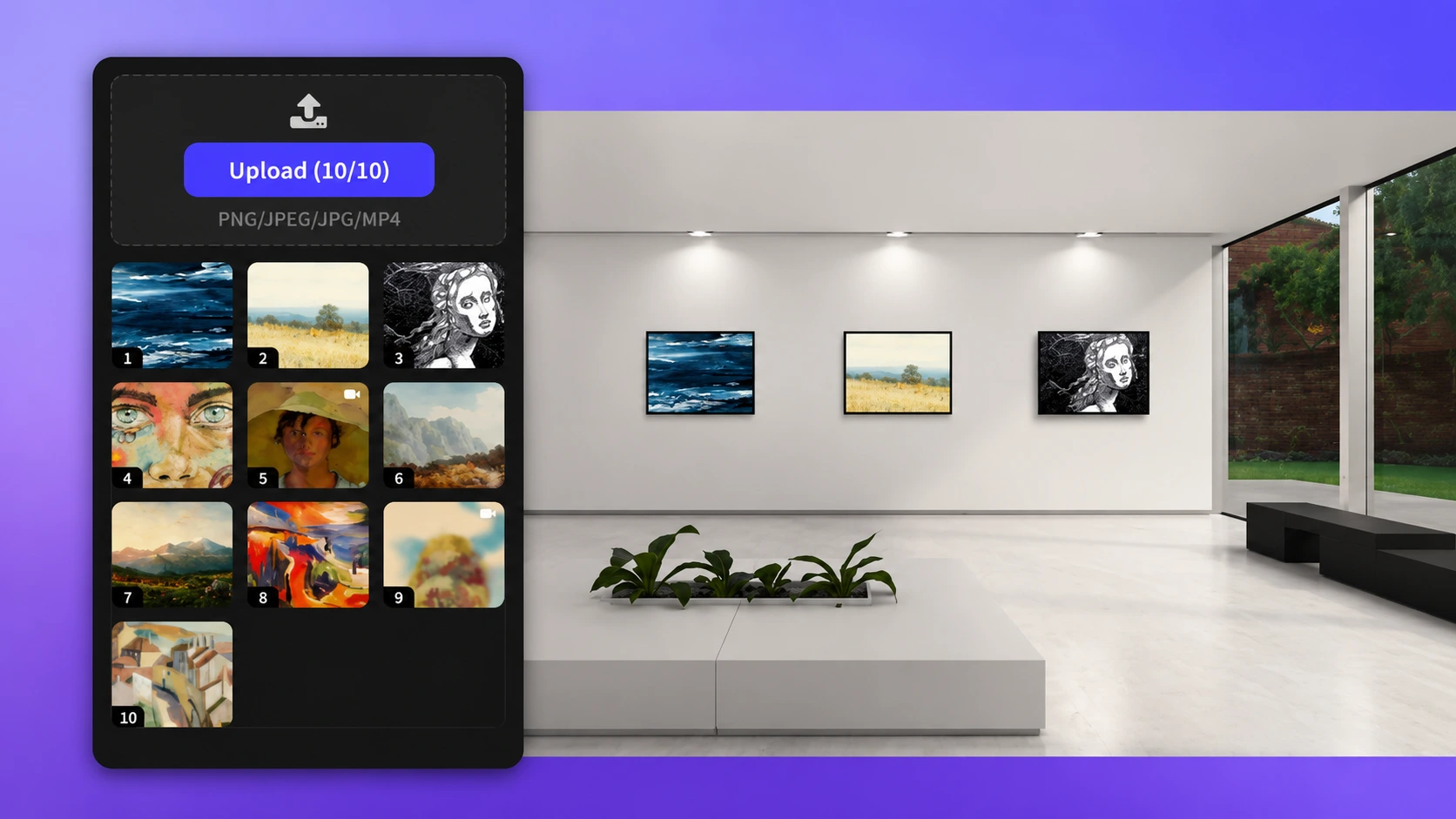
ExhVerse is lowering the barriers to creating immersive online exhibitions, reflecting a broader movement toward accessible digital spaces for artists, educators, and cultural institutions worldwide.
ExhVerse has launched a free platform that allows artists, photographers, educators, and cultural organizations to create immersive virtual exhibitions without requiring coding skills, software downloads, or significant financial investment. The Hong Kong-based company positions its service as a way to transform collections of digital images into navigable three-dimensional galleries that can be viewed through a web browser on desktop or mobile devices. The launch reflects the continuing evolution of online exhibition spaces as creators seek new ways to present work beyond conventional websites and social media feeds.
The platform enables users to upload artwork, arrange pieces within customizable virtual gallery environments, and publish exhibitions that visitors can explore room by room. ExhVerse’s free tier supports up to three exhibitions with as many as 30 works each, while a paid subscription expands those limits and adds features such as higher-resolution presentation, video support, and branding customization. By reducing technical and financial barriers, the company is targeting a wide audience that ranges from independent artists to schools, museums, and community organizations.
The announcement arrives at a time when digital exhibitions continue to complement rather than simply replace physical gallery experiences. Over the past several years, virtual spaces have become increasingly important for institutions seeking to reach audiences beyond geographic boundaries, while independent creators have embraced online platforms to showcase work without the costs associated with traditional exhibition venues. Three-dimensional environments attempt to recreate some of the pacing and spatial context of an in-person gallery visit, offering an alternative to the image grids that dominate many online portfolios.
Whether immersive digital galleries become a standard part of the creative landscape will depend on how audiences choose to engage with them over time. Even so, platforms such as ExhVerse illustrate a broader shift toward making sophisticated digital presentation tools more widely available instead of limiting them to large institutions with specialized resources. As artists and cultural organizations continue balancing physical exhibitions with online outreach, accessible virtual gallery technology may become less of a novelty and more of a practical extension of how creative work is shared, discovered, and experienced across global audiences.