As AI, immersive media, and digital culture evolve together, SIGGRAPH 2026 highlights the growing role artists and researchers play in questioning technology’s impact on society
SIGGRAPH 2026 will return to Los Angeles this July with a program centered on the increasingly blurred boundaries between art, technology, and scientific inquiry. The annual conference, long regarded as one of the most influential gatherings in computer graphics and interactive media, will bring together researchers, artists, technologists, and industry leaders to explore how emerging technologies are reshaping both creative expression and public life.
This year’s Art Gallery and Art Papers programs reflect a broader cultural shift in how digital tools are being used. Rather than presenting technology purely as innovation or spectacle, many of the selected works examine its emotional, ecological, and political dimensions. Organizers describe the gallery theme, “In-Betweens,” as an exploration of relationships between systems, materials, time, and identity in an increasingly interconnected world.
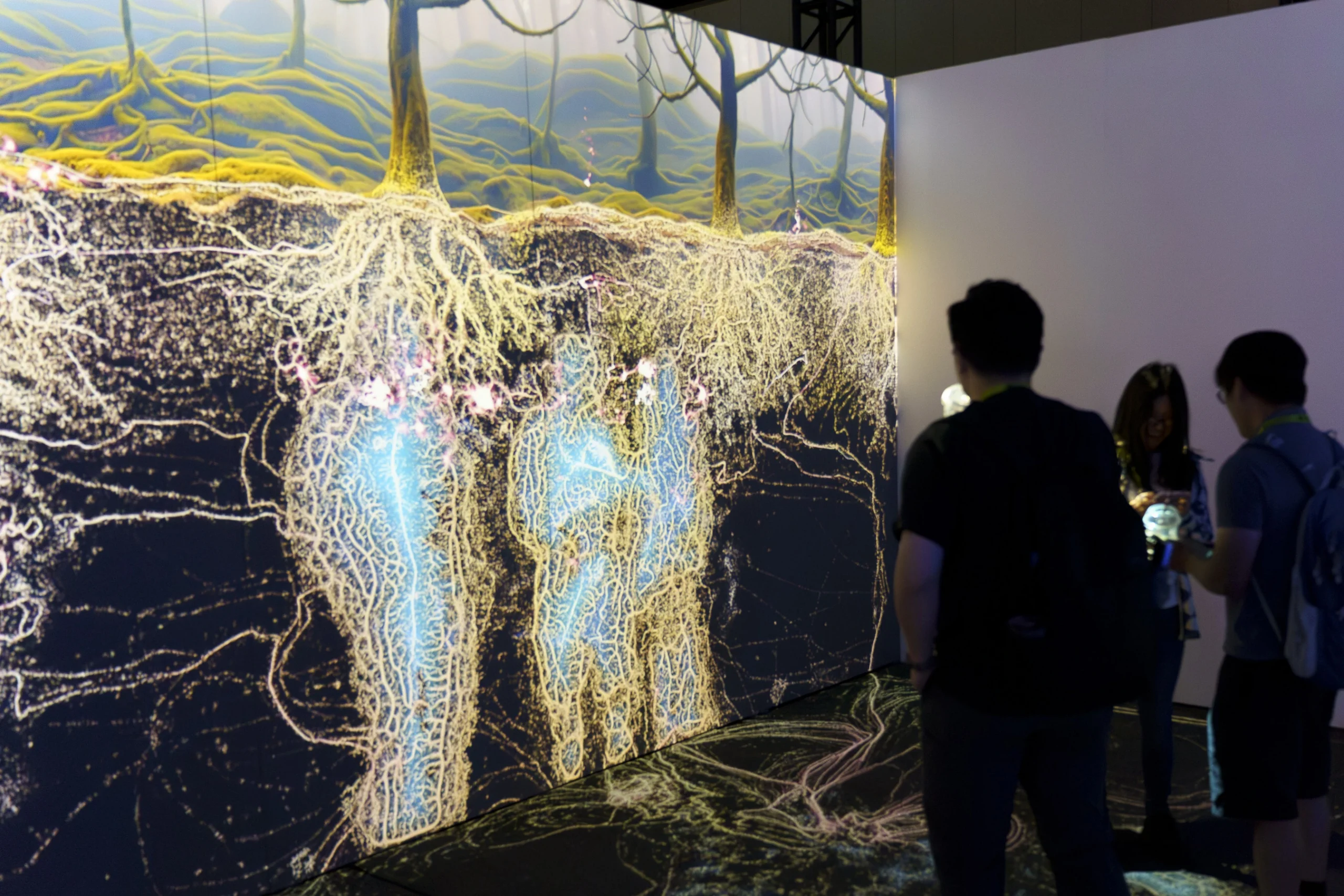
Several featured projects demonstrate how artists are using AI and interactive systems to address questions that extend far beyond software design. One installation transforms plankton research into an immersive experience about climate change and ocean ecosystems, while another uses a retro television interface to reveal how AI diffusion models generate images from abstract data. Other works examine migration, memory, biological intelligence, and the ways digital systems influence human perception. Together, they suggest a growing interest in technology not just as a tool, but as a force that shapes culture and collective understanding.
The Art Papers program expands that conversation into research and theory, focusing this year on the idea of translation across disciplines, cultures, and media. Projects range from mixed-reality performances inspired by Taiwanese puppetry to large-scale digital preservation efforts for historic architecture. Another featured work explores how light and sound can make opaque AI systems physically and emotionally interpretable, reflecting broader public concerns about the hidden complexity of machine learning systems.
For more than five decades, SIGGRAPH has been closely associated with advances in computer graphics and visual effects. Yet the 2026 edition suggests the conference is increasingly becoming a forum for examining how technology affects human experience itself. As AI and immersive media move further into daily life, the event’s emphasis on critical inquiry and artistic experimentation signals a growing recognition that the future of technology may depend as much on cultural interpretation as on engineering progress.