By bringing together leaders from seven Asia-Pacific markets, RIMAN signaled how Korean beauty brands are increasingly building regional ecosystems around wellness, research, and community-driven growth
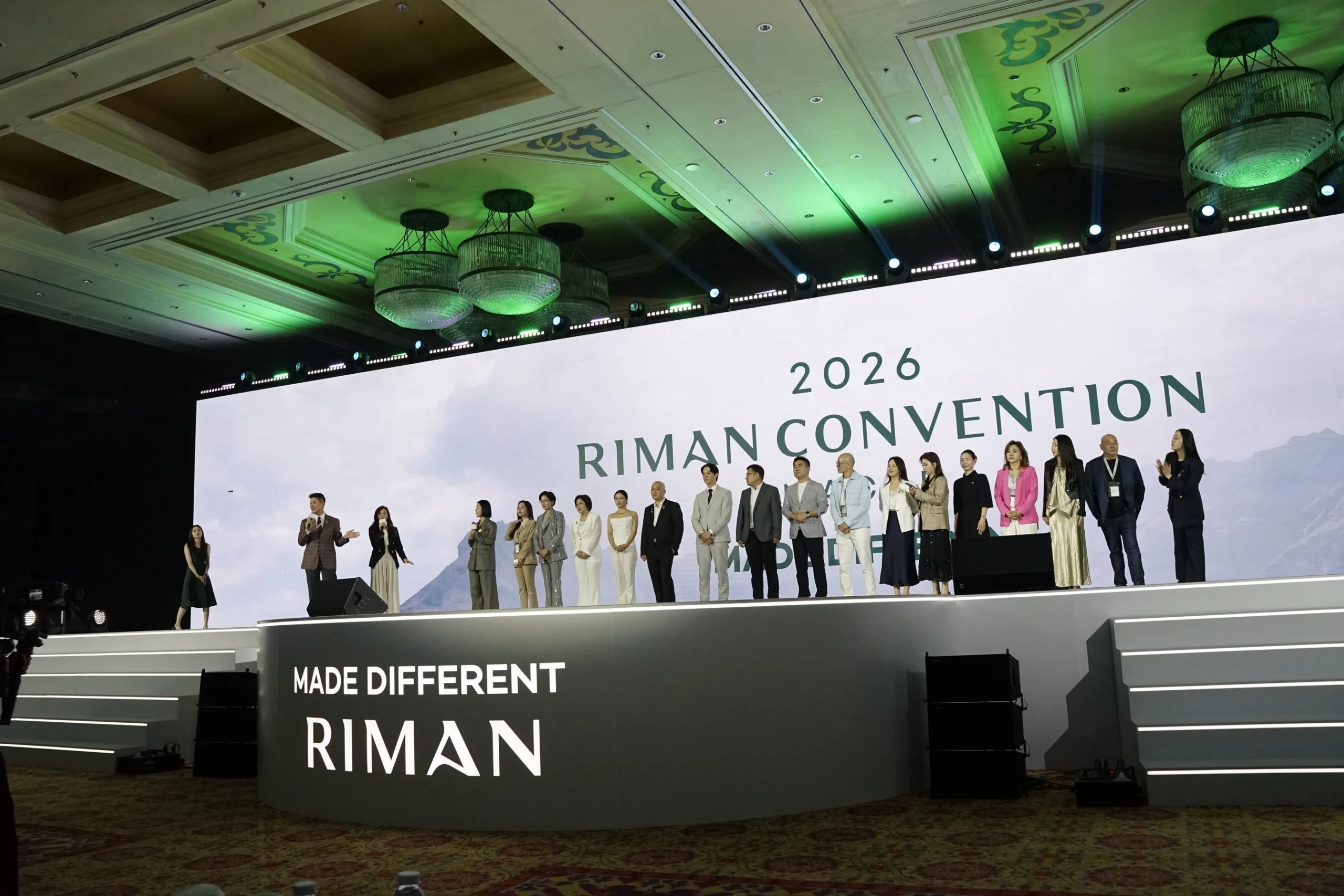
RIMAN gathered roughly 2,000 members and business leaders in Macau this April for its second regional convention, underscoring the expanding influence of Korean beauty and wellness companies across Asia-Pacific markets. The Seoul-based direct selling company used the three-day event to align teams from South Korea, Japan, Taiwan, Hong Kong, Singapore, Malaysia, and the Philippines around a shared strategy focused on product innovation and regional coordination.
Held at The Londoner Macao under the theme “MADE DIFFERENT,” the convention reflected a broader shift in the beauty industry toward ecosystem-building rather than simple product promotion. Events of this scale increasingly function as corporate summits, blending leadership training, brand storytelling, and consumer culture into experiences designed to strengthen loyalty across geographically dispersed markets. In RIMAN’s case, the emphasis appeared to center on balancing local market adaptation with a unified global identity.
The company also used the event to reinforce its positioning around proprietary ingredients and long-term research investment, a strategy that has become central to many premium K-beauty brands. One presentation highlighted a plant-based biomaterial derived from a proprietary chlorella strain sourced from Jeju Island, developed over nearly a decade with significant financial backing. The ingredient contains carotenoids including lutein and zeaxanthin and is expected to appear in future products later this year.
Jeju itself has become an increasingly important part of the company’s narrative. RIMAN repeatedly referenced its cultivation and sourcing operations on the island, alongside its signature ingredient Giant BYoungPool™, which has received plant variety protection recognition in both South Korea and the United States. In the competitive global skincare market, proprietary ingredients tied to specific geographic origins can serve as both scientific differentiators and branding tools, especially as consumers become more attentive to sourcing and formulation claims.
The Macau convention also highlighted how direct selling companies are adapting to changing consumer expectations in Asia. Rather than relying solely on traditional sales structures, many are leaning into experiential events, wellness positioning, and research-driven storytelling to maintain relevance in an increasingly crowded beauty landscape. For RIMAN, the gathering appeared less about immediate sales momentum and more about reinforcing a regional identity built on innovation, community, and the growing international appeal of Korean wellness culture.