New imaging systems unveiled at Hannover Messe reflect how thermal sensing is evolving from a diagnostic tool into a real-time monitoring layer for industrial operations and safety systems
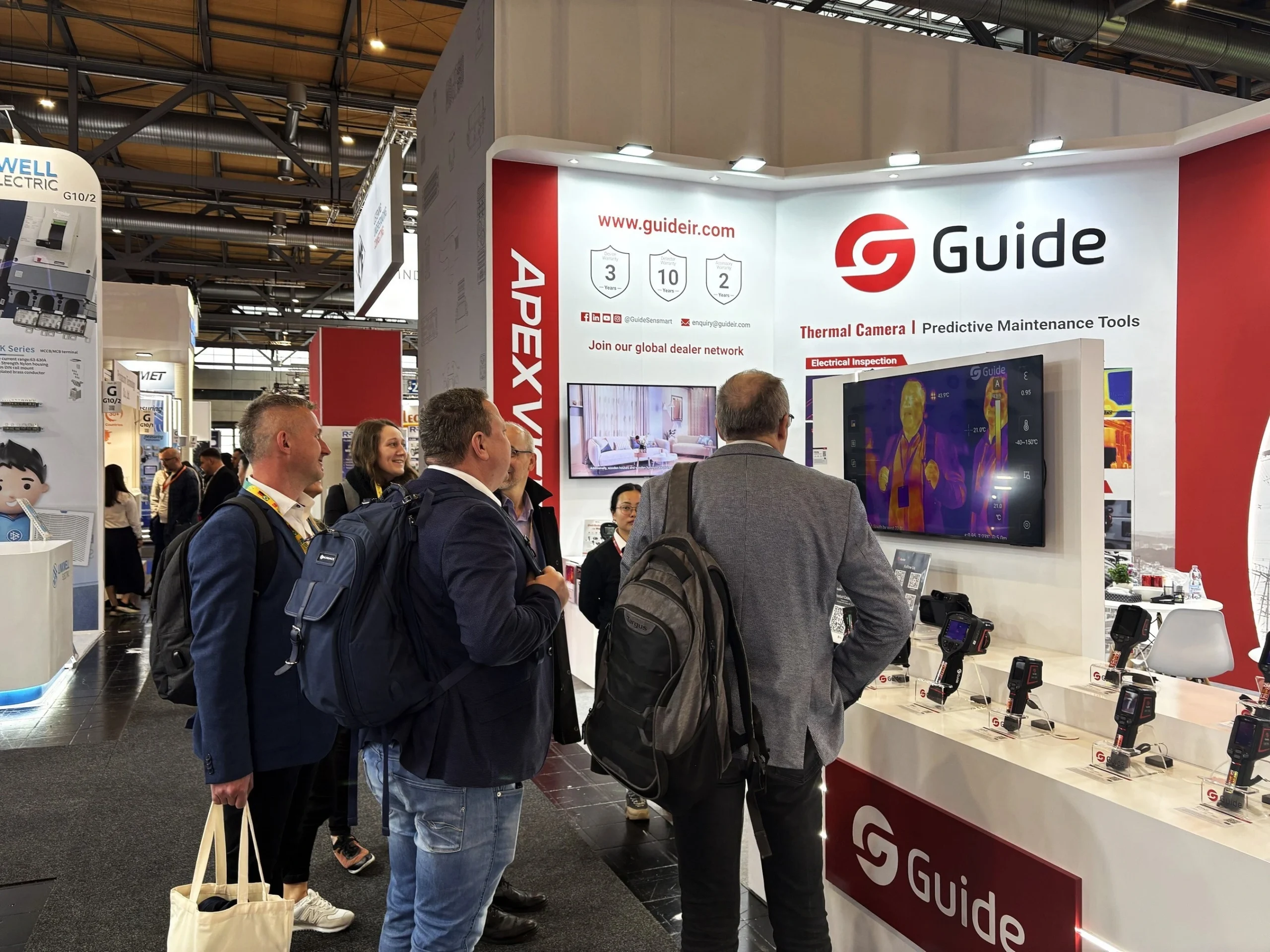
Guide used Hannover Messe 2026 to showcase how industrial thermography is shifting toward higher precision and broader integration. The company presented its latest thermal imaging platform, ApexVision, alongside a wider portfolio of tools and IoT-enabled systems designed for use across manufacturing, energy, and infrastructure environments.
At the center of the announcement is a focus on image clarity and responsiveness, two longstanding challenges in thermal sensing. ApexVision combines a new detector, enhanced processing capabilities, and adaptive algorithms to improve how subtle temperature variations are captured, particularly in dynamic or complex settings. This matters because even minor fluctuations can signal early-stage faults in industrial systems, where delayed detection often leads to higher costs or safety risks.
The technology is being applied across multiple camera models, indicating a move toward standardizing higher-performance imaging across product lines rather than limiting it to specialized equipment. In practical terms, this could expand access to more precise diagnostics in sectors such as power generation, petrochemicals, and building inspection, where thermal imaging has traditionally been used but not always at this level of detail or speed.
Beyond imaging itself, Guide also emphasized integrated IoT applications that combine thermal data with visible-light imaging and analytics. These systems are designed to support continuous monitoring and automated alerts, suggesting a shift from periodic inspections to always-on oversight. In industries where downtime or equipment failure carries significant financial or safety consequences, that transition could change how maintenance strategies are structured.
The broader significance of the announcement lies in how thermography is being repositioned within industrial systems. Rather than serving as a standalone diagnostic tool, it is increasingly becoming part of a connected infrastructure that supports predictive maintenance and operational intelligence. As industrial environments grow more complex, technologies that can provide early, reliable signals are likely to play a larger role in how organizations manage risk and efficiency.