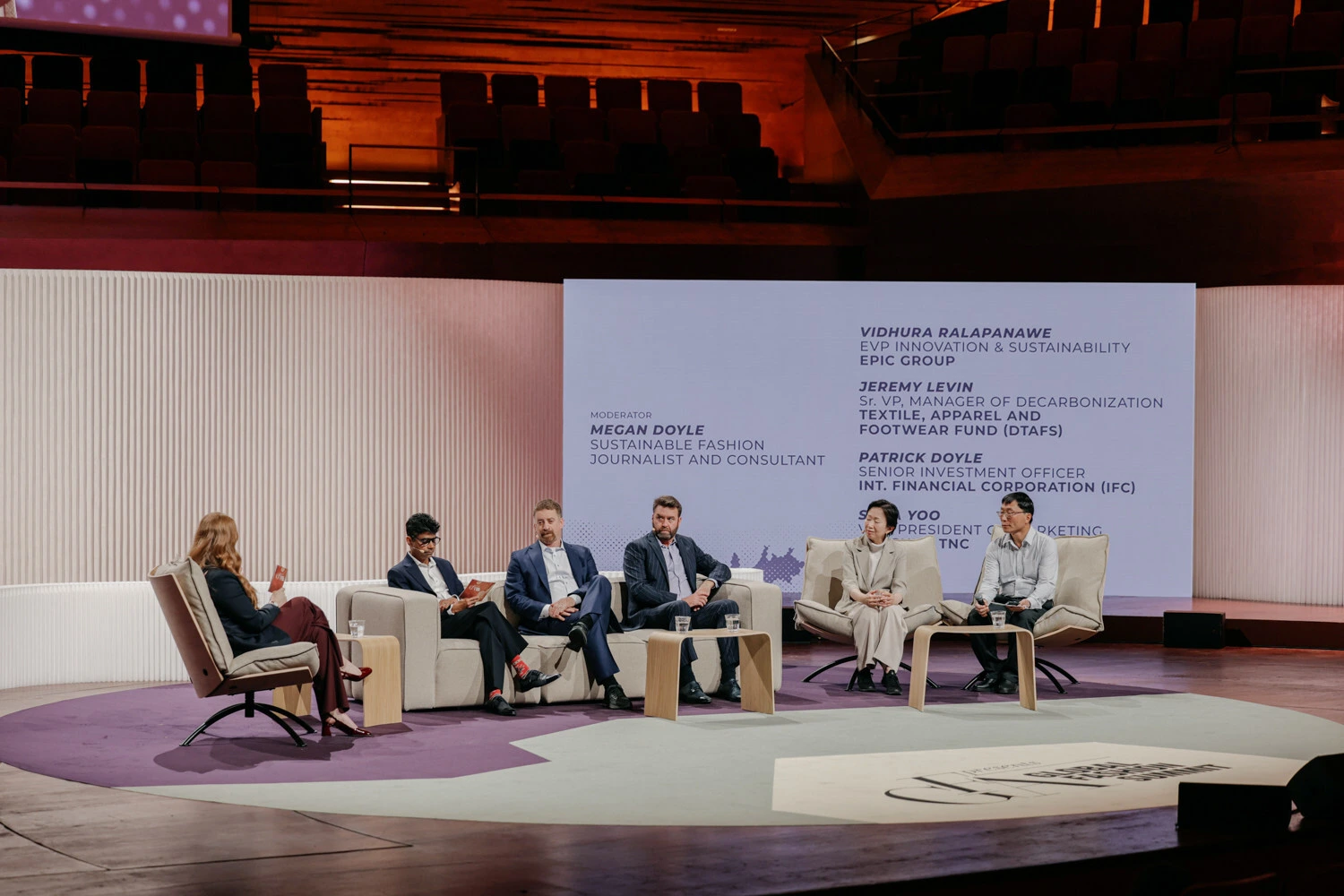
At the Global Fashion Summit, Hyosung TNC outlined how large-scale infrastructure and supply chain integration may determine whether lower-impact textiles can move into mainstream apparel production
Hyosung TNC used the Global Fashion Summit 2026 in Copenhagen to present what it describes as a major step toward large-scale commercialization of bio-based spandex. The company, one of the world’s largest elastane manufacturers, showcased an integrated production platform in Vietnam designed to convert sugarcane-derived materials into bio-based stretch fibers through a connected supply chain.
The announcement reflects a growing challenge facing the fashion industry as brands attempt to reduce dependence on fossil-based materials while maintaining the performance characteristics consumers expect from modern apparel. Stretch fabrics remain especially difficult to decarbonize because elastane is deeply embedded in categories such as activewear, denim, swimwear, and performance apparel. While recycled materials have gained traction in recent years, Hyosung argued during the summit that recycled spandex alone may not be sufficient because most existing alternatives still originate from fossil-based feedstocks.
At the center of Hyosung’s strategy is a nearly $1 billion investment in a vertically integrated manufacturing system that processes sugarcane into Bio-BDO, Bio-PTMG, and eventually bio-based spandex. Company representatives framed the project not simply as a material innovation, but as an infrastructure challenge requiring industrial-scale production, verified sourcing systems, and long-term collaboration between textile suppliers and fashion brands. The emphasis on supply chain integration highlights how sustainability initiatives increasingly depend on operational scale rather than niche product experimentation.
Executives speaking at the summit also acknowledged the economic realities slowing adoption. While interest in sustainable materials continues to grow, higher costs and limited consumer willingness to pay premium prices remain significant barriers. Hyosung executives suggested that broader adoption will require both industry coordination and greater public awareness around how textile production contributes to carbon emissions and resource use.
The company’s participation at the summit, including a documentary collaboration with BBC StoryWorks, signals how sustainability in fashion is increasingly becoming a story about systems transformation rather than isolated eco-friendly products. As pressure grows on apparel brands to meet climate targets, the debate is shifting toward whether sustainable materials can be produced consistently, affordably, and at global scale. Hyosung’s investment suggests the next phase of textile sustainability may depend less on invention alone and more on the ability to industrialize alternatives quickly enough to reshape mainstream manufacturing.