The brand’s sunscreen debut reflects a broader shift in men’s grooming, where overlooked categories like SPF are being reframed through convenience, formulation clarity, and sensory appeal
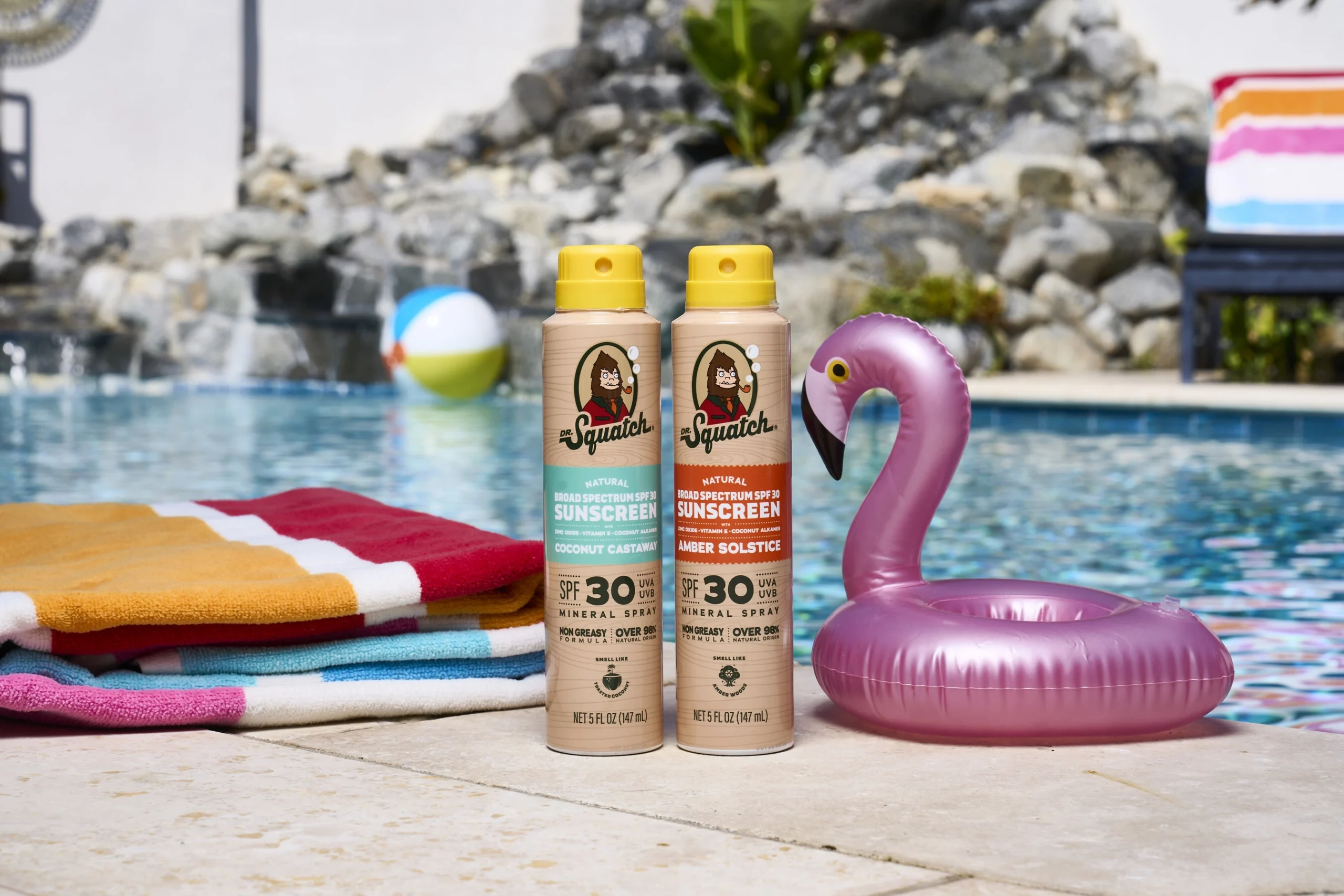
Dr. Squatch is expanding beyond its core grooming lineup with the introduction of a spray sunscreen, marking its entry into a category that has historically received less attention from male-focused brands. The move signals a growing recognition that sun protection, long treated as a seasonal afterthought, is becoming part of a more comprehensive approach to daily personal care.
The product itself centers on a mineral-based SPF 30 formula, using zinc oxide as its active ingredient. This choice aligns with a broader industry trend toward mineral sunscreens, which sit on the skin’s surface rather than being absorbed, and are often positioned as simpler alternatives to chemical-based formulations.
What makes the launch notable is less the formulation itself and more the framing around it. Sunscreen has often been perceived as inconvenient or unpleasant to use, particularly among men who may already view grooming routines as minimal. By offering a spray format and emphasizing scent and texture, Dr. Squatch appears to be addressing those barriers directly, positioning sun care as something that fits more seamlessly into existing habits.
The inclusion of signature scents also reflects how the category is evolving. Products that were once purely functional are increasingly being designed with sensory experience in mind, suggesting that differentiation now depends as much on how a product feels and smells as on what it does. This mirrors broader shifts in personal care, where emotional and experiential factors play a growing role in purchasing decisions.
Ultimately, the expansion into sun care highlights a gap that many brands are beginning to explore. As awareness of skin health increases, especially among younger consumers, categories like sunscreen may no longer remain peripheral. Instead, they are becoming integrated into everyday routines, with brands competing not just on protection, but on how easily they can make that protection part of daily life.