A second collaboration reimagines Casio’s ring watch as a cultural artifact, reflecting how music, fashion, and consumer tech increasingly converge in limited-edition design
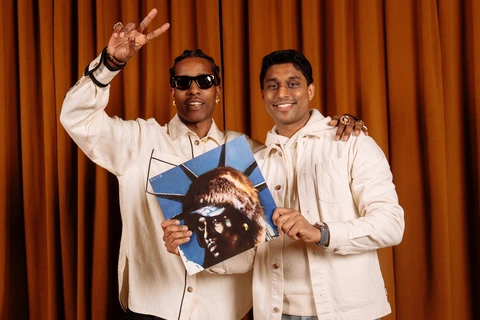
Casio America, Inc. is once again partnering with musician J Balvin, this time to revisit an unconventional idea: the ring watch. Their latest collaboration, the CRW001JB-9, distills the functionality of a digital timepiece into a miniature, wearable form, suggesting that even legacy consumer electronics can be reframed through the lens of style and identity.
The release builds on an earlier partnership between the two, signaling a longer-term alignment between global brands and cultural figures who shape taste beyond their primary industries. For Casio, a company long associated with durable, utilitarian watches, the collaboration points to an evolving strategy—one that treats its archive not as fixed history but as raw material for reinterpretation.
At its core, the ring watch is both familiar and unusual. It carries standard digital features—dual time, stopwatch, backlight—yet presents them in a format more often associated with jewelry than electronics. That shift reflects a broader trend in consumer design, where function alone is no longer the primary differentiator; instead, objects are increasingly valued for how they communicate personality and cultural affiliation.
J Balvin’s influence is visible in the design language, particularly in the gold-toned finish and decorative detailing that elevate the piece beyond a purely technical object. While celebrity collaborations are hardly new, their persistence suggests a deeper shift in how products are marketed and consumed, especially among younger audiences who view limited releases as collectible expressions rather than everyday tools.
The decision to produce the watch in limited quantities further aligns with a scarcity-driven model borrowed from fashion and streetwear. In that context, the CRW001JB-9 is less about innovation in timekeeping and more about positioning—turning a niche product into a cultural signal. As brands like Casio navigate a crowded market, such collaborations illustrate how heritage companies are adapting by blending legacy design with contemporary cultural relevance.