The launch of Heineken 0.0 Ultimate reflects the rapid rise of non-alcoholic beer and the growing influence of health-focused consumers who want social drinks without alcohol, sugar, or extra calories.
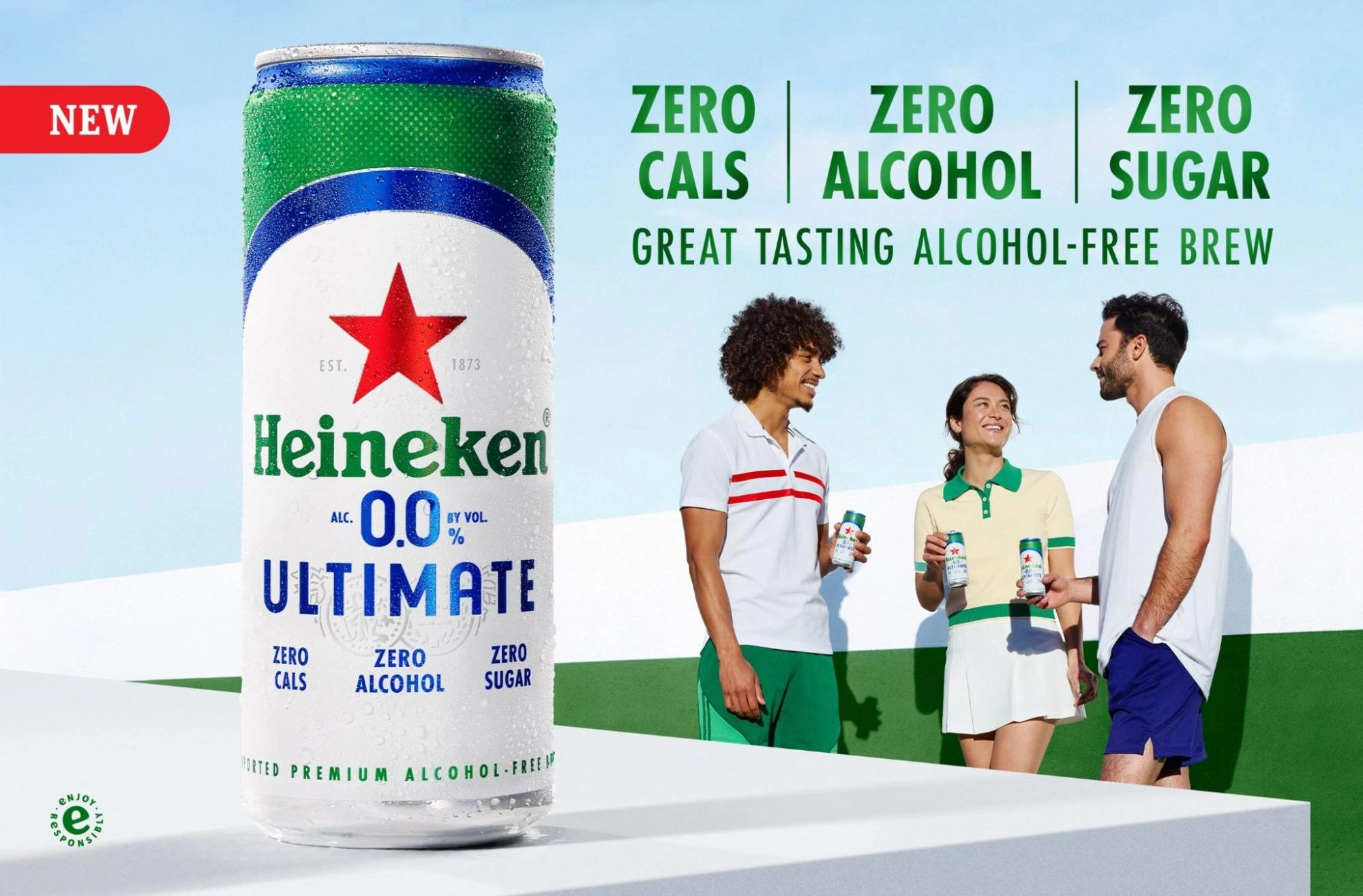
Heineken USA has introduced Heineken 0.0 Ultimate, a new non-alcoholic beer formulated with zero alcohol, zero calories, and zero sugar. The product builds on the company’s earlier Heineken 0.0 line and arrives at a moment when breweries are experimenting with new ways to appeal to consumers who still want the ritual of beer without its traditional ingredients.
The release highlights how quickly the non-alcoholic beer category has evolved. Industry data cited by the company shows that U.S. sales of non-alcoholic beer grew sharply between 2021 and 2025, reflecting broader cultural shifts often associated with “sober curious” lifestyles and increased attention to health and wellness.
For many younger consumers, drinking choices are becoming less tied to alcohol and more connected to social settings or personal routines. The emergence of alcohol-free alternatives—once considered niche—suggests that breweries are rethinking how beer fits into everyday occasions, from sports and daytime gatherings to casual events where alcohol may no longer be central.
Heineken has been one of the most visible global brewers investing in this transition. The company introduced Heineken 0.0 in 2019 and has since expanded the line with flavored variations and limited releases, positioning alcohol-free beer as a category with room for experimentation rather than simply a substitute for traditional lagers.
The newest product goes a step further by removing calories and sugar as well, responding to another set of consumer priorities that shape modern beverage trends. For breweries, such formulations require careful balancing of brewing techniques to maintain flavor while altering the underlying ingredients.
Whether products like Heineken 0.0 Ultimate will significantly reshape beer consumption remains uncertain. But their growing presence on store shelves suggests that the idea of beer itself is evolving—from a drink defined by alcohol content to one defined by taste, social context, and individual choice.