
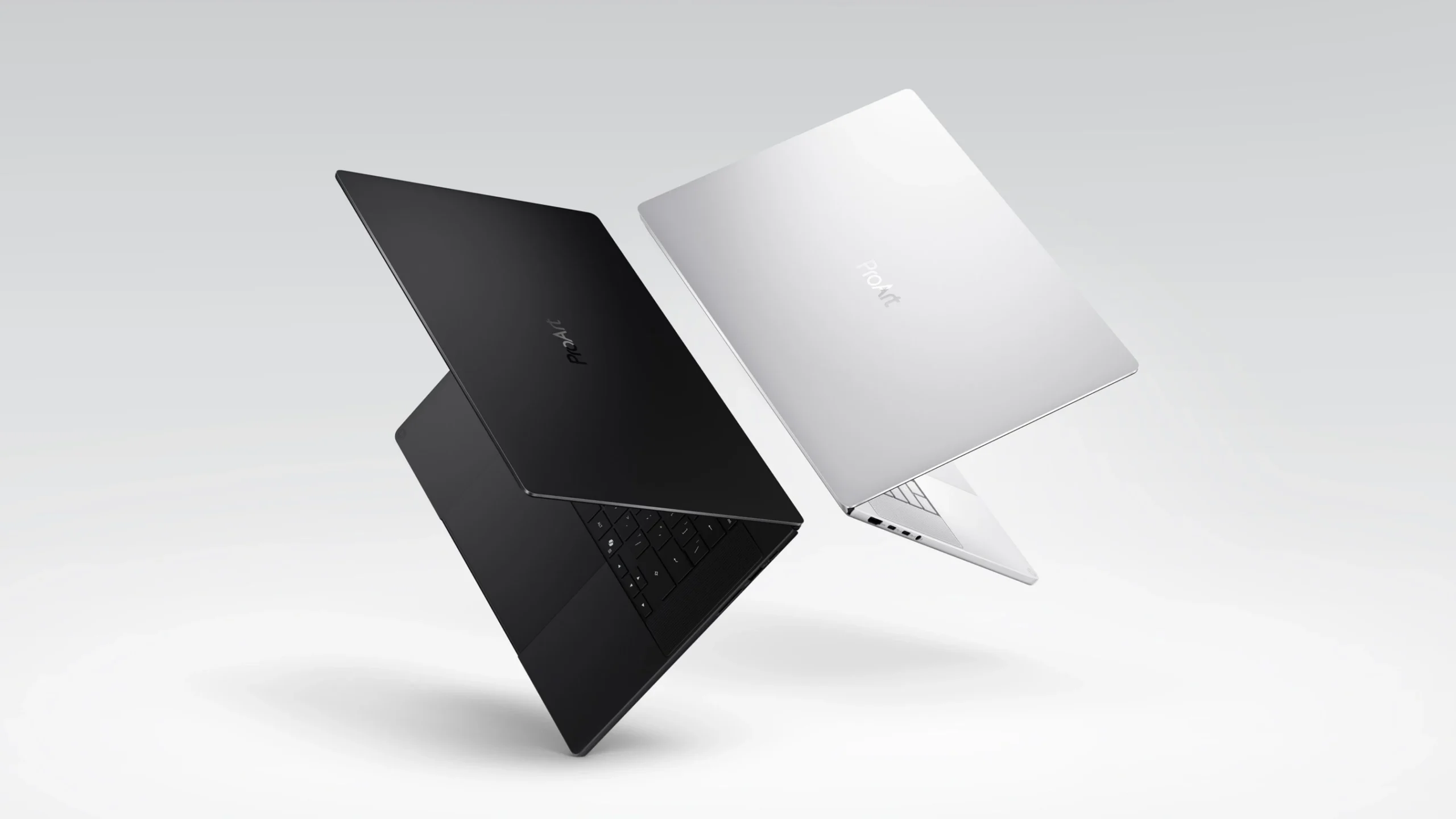
At COMPUTEX 2026, ASUS unveiled ProArt systems built around powerful on-device AI capabilities, reflecting a broader shift toward personal AI computing and creative workflows.
ASUS used COMPUTEX 2026 to introduce a new generation of ProArt computers aimed at creators, developers, and professionals increasingly working with artificial intelligence tools. The new lineup, which includes the ProArt P16 and P14 laptops alongside a compact ProArt Mini PC, is built around NVIDIA’s RTX Spark platform and reflects the growing industry push toward running advanced AI workloads directly on personal devices rather than relying exclusively on cloud services.
The announcement highlights how rapidly the definition of a personal computer is changing. For years, creative workstations were judged primarily by their ability to edit video, render graphics, or manage large design projects. Increasingly, however, manufacturers are positioning AI processing as a core capability, enabling users to generate content, run intelligent assistants, and automate complex workflows locally. ASUS is framing its latest ProArt systems as tools for that emerging era.
At the center of the new devices is NVIDIA RTX Spark, a computing platform that combines a Blackwell RTX graphics processor with a Grace CPU architecture. ASUS says the systems can deliver up to one petaflop of AI performance while supporting as much as 128GB of unified memory. While those specifications are highly technical, they point to a practical goal: giving creators enough local computing power to work with increasingly sophisticated AI models without constantly sending data to external servers.
The hardware upgrades are paired with ASUS’s broader effort to integrate AI into creative workflows. The company plans to include proprietary creator applications, local generative AI features, and AI agents designed to streamline tasks and accelerate production processes. This reflects a wider trend among technology companies that increasingly view software intelligence, rather than hardware specifications alone, as the primary differentiator in future computing experiences.
Beyond AI capabilities, ASUS has also focused on portability and visual quality. The new systems feature OLED displays designed for professional creative work while becoming thinner and lighter than previous generations. Those improvements suggest that manufacturers are no longer treating AI performance and mobility as competing priorities.
As AI becomes more deeply embedded in everyday computing, products like the new ProArt lineup offer a glimpse into how creative professionals may work in the coming years. Rather than serving solely as tools for executing tasks, personal computers are increasingly being designed as platforms that can collaborate with users, helping shape ideas, automate routine work, and expand creative possibilities.