A new entrant from Bai founder Ben Weiss reflects a broader shift in consumer expectations, as drinkers increasingly demand transparency, simpler ingredients, and lower-sugar options across categories.
Crooked has introduced Crooked Pop, a ready-to-drink alcoholic soda positioned around organic ingredients and zero sugar, marking founder Ben Weiss’s return to the beverage industry. The launch builds on his earlier success with Bai, but this time targets an alcohol category that has been slower to adapt to changing consumer preferences.
At the center of the product is what the company calls Organic Super Dry Alcohol, a fermentation-based alternative derived from grains such as quinoa, amaranth, millet, and cassava. Unlike traditional approaches that rely on distilled spirits or malt bases, the process aims to create a neutral alcohol without additional flavoring agents or sweeteners.
The timing of the launch reflects a noticeable shift in the broader drinks market, where consumers are paying closer attention to ingredient lists and nutritional profiles. While these expectations have reshaped non-alcoholic beverages over the past decade, alcoholic products have only recently begun to face similar scrutiny.
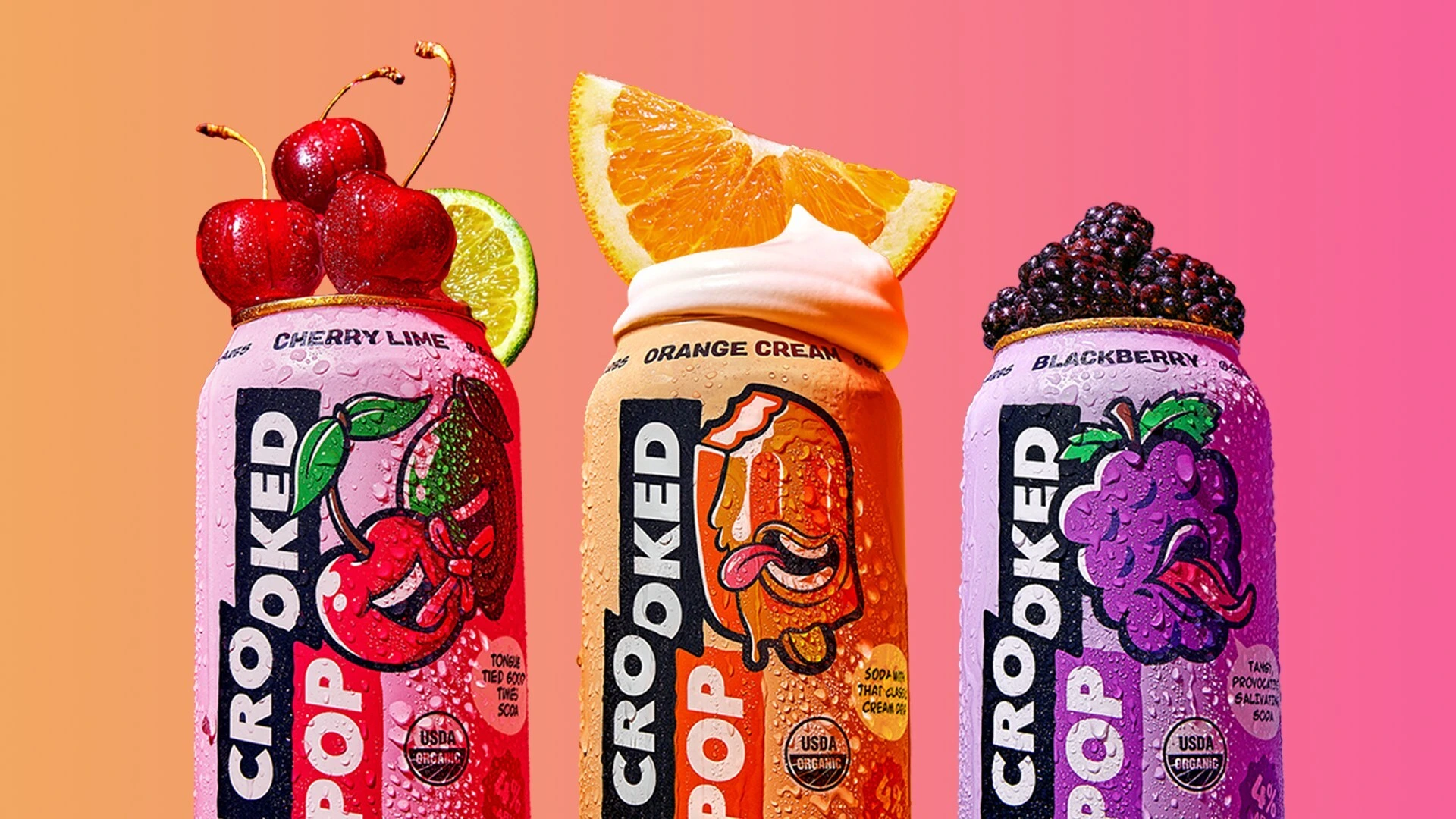
Crooked Pop enters a segment often defined by sugary formulations and artificial additives, positioning itself as an alternative with fewer calories and minimal carbohydrates. Its initial flavors—such as cherry lime, orange cream, and blackberry—suggest an attempt to retain the familiarity of traditional sodas while altering their underlying composition.
The concept of “clean” alcohol remains loosely defined, but its growing use signals an effort by brands to align with wellness-oriented trends. In practice, this often translates into clearer labeling, simplified ingredients, and reduced sugar content, even as the core nature of alcoholic beverages remains unchanged.
Weiss’s involvement adds a layer of credibility to the launch, given his track record in identifying gaps in the beverage market. However, replicating that success in alcohol may prove more complex, as regulatory frameworks, distribution channels, and consumer habits differ significantly from those in soft drinks.
The introduction of Crooked Pop suggests that the ready-to-drink alcohol category is entering a new phase of experimentation. As companies test alternative formulations and branding strategies, the market may begin to mirror the transformation already seen in non-alcoholic beverages.
Whether this approach resonates widely will depend on how consumers balance taste, price, and perceived health benefits. Still, the launch points to a clear direction: even in traditionally indulgent categories, expectations around transparency and composition are becoming harder for brands to ignore.