At MWC 2026, the Chinese optical fiber maker positioned low-latency hollow-core technology as critical infrastructure for AI training, global connectivity and energy-efficient digital networks.
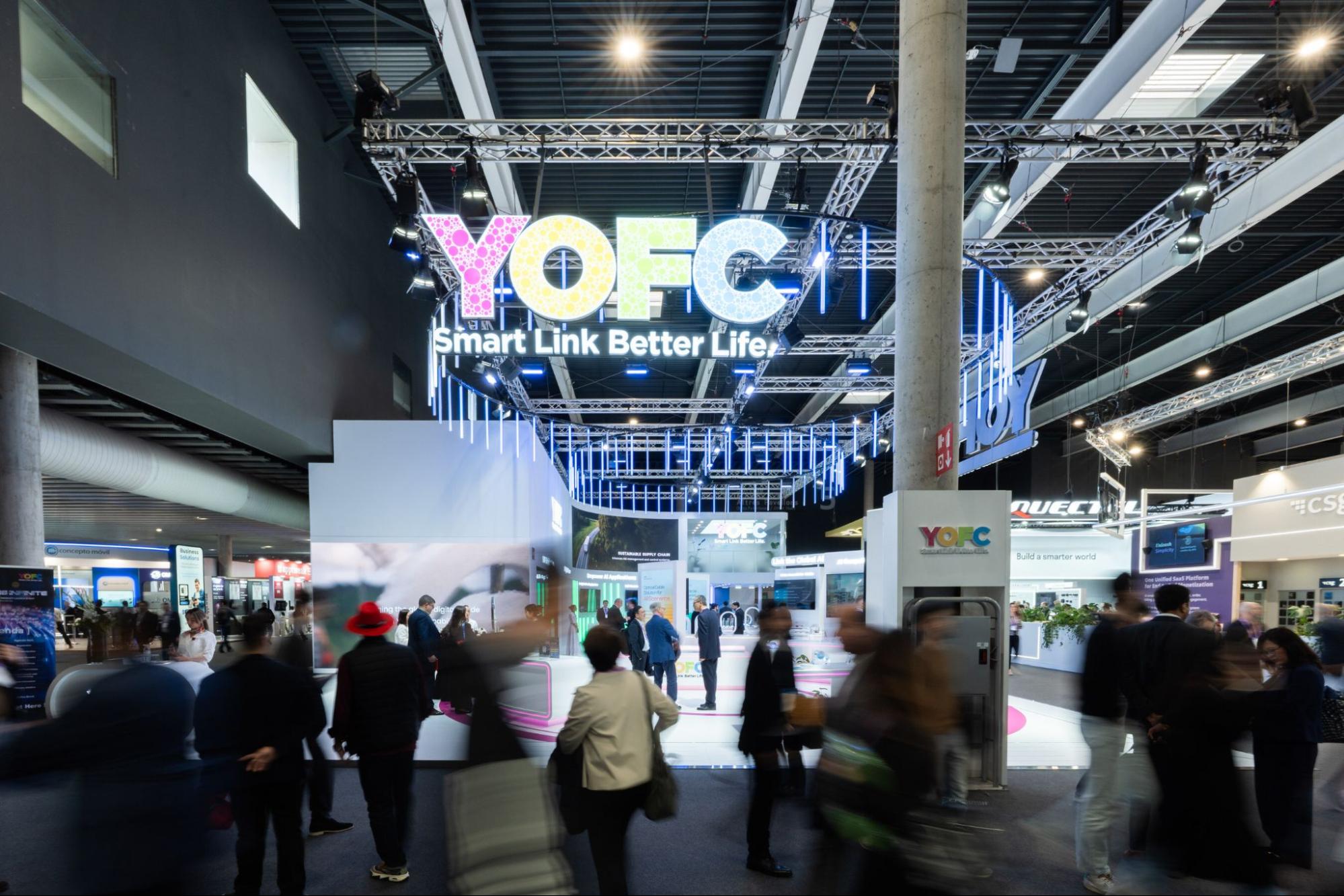
Yangtze Optical Fibre and Cable Joint Stock Limited Company (YOFC) used MWC Barcelona 2026 to highlight a vision of digital infrastructure shaped by artificial intelligence and next-generation fibre. Under the theme “AI × Fibre,” the company showcased advances in hollow-core fibre and a broader all-optical ecosystem designed to support high-bandwidth, low-latency computing.
The centerpiece of YOFC’s exhibition was its hollow-core fibre technology, which differs from conventional solid-core fibre by guiding light through an air-filled core. According to the company, this approach can reduce transmission latency by roughly 31 percent and significantly lower nonlinear optical effects. Such gains are particularly relevant as AI systems demand faster data transfer between distributed data centers and computing clusters.
As large-scale AI model training becomes more common, infrastructure bottlenecks increasingly shift from processors to networks. YOFC’s argument is that improvements in fibre technology can help relieve those constraints, especially when paired with 400G and 800G optical transceivers. The company says it has achieved commercial-scale production of long-length, ultra-low-loss hollow-core fibre, placing it among a limited number of manufacturers able to move beyond laboratory prototypes.
Beyond the fibre itself, YOFC presented a range of application scenarios. These included AI-focused computing centers, global network corridors using submarine cables, and industry-specific fibre solutions for transportation and immersive entertainment. The emphasis on an “all-optical” ecosystem reflects a belief that next-generation networks will rely on deeper integration between physical fibre infrastructure and emerging digital services.
Sustainability also featured prominently in the company’s messaging. YOFC framed hollow-core fibre and related technologies as supporting energy efficiency across the lifecycle of digital infrastructure, from manufacturing to deployment. As AI workloads expand and energy consumption becomes a central concern, network efficiency may become as strategically important as computing power.
While many discussions around AI focus on software breakthroughs, YOFC’s showcase underscored a quieter reality: the intelligence of tomorrow still depends on the physics of light moving through glass—and, increasingly, through air-filled fibre cores.