By linking stablecoin balances to familiar card payouts through Visa Direct, the new Wirex feature highlights how crypto infrastructure is quietly moving from speculative use cases into the operational plumbing of global business payments.
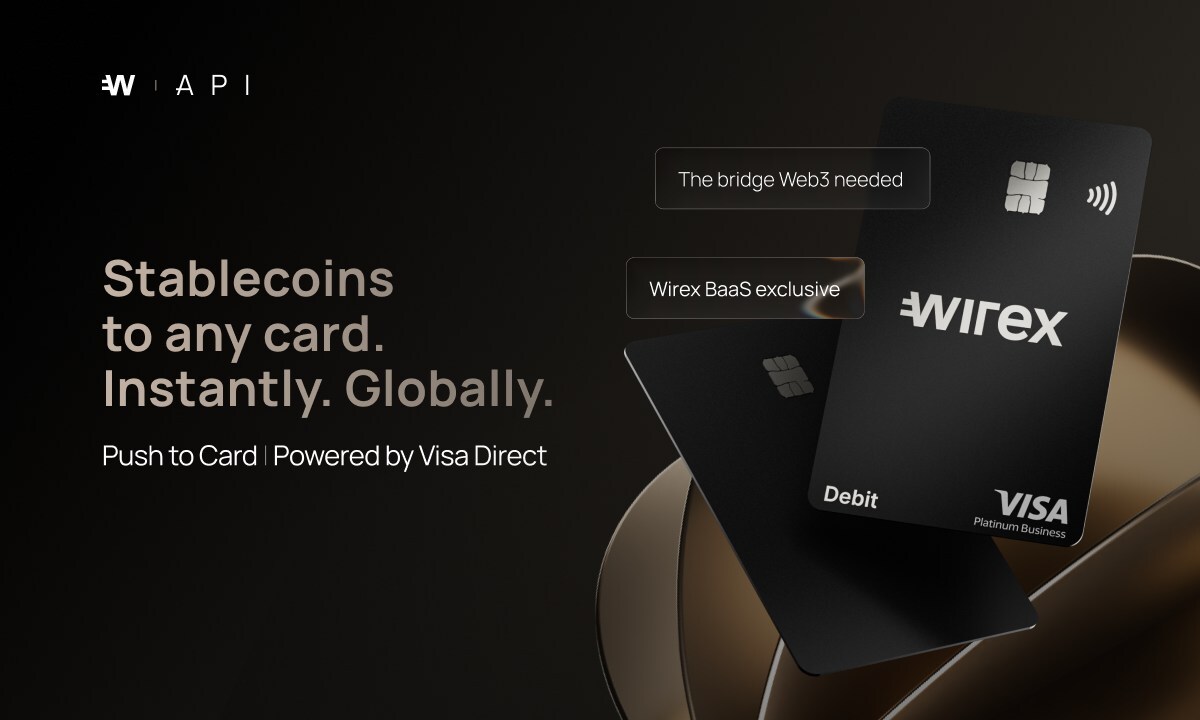
Wirex has introduced a new capability that brings stablecoins closer to everyday financial workflows, launching a Visa Direct–powered “Stablecoin Push-to-Card” feature for its Banking-as-a-Service clients. Rather than focusing on trading or wallets, the announcement centers on payouts—an often-overlooked but critical point where digital finance meets real-world usability. For many businesses, this last step determines whether faster money movement actually translates into trust and efficiency.
The significance lies in the problem being addressed. Stablecoins are already effective at moving value across borders, but converting that value into something recipients can immediately use has remained inconsistent and operationally complex. Wirex’s approach routes stablecoin-funded balances directly to eligible payment cards, allowing recipients to receive funds through a familiar “paid to card” experience without navigating local banking formats or cross-border wiring rules.
For platforms operating across multiple countries, this represents a shift in how payout infrastructure is assembled. Instead of stitching together country-specific rails, compliance requirements, and exception handling, companies can rely on a card-based endpoint that scales internationally. According to the announcement, the system reaches more than three billion cards across over 200 countries and territories, suggesting an emphasis on coverage rather than bespoke local solutions.
This matters most for businesses with distributed workforces and global supplier networks, where delays in payments can affect retention, cash flow, and credibility. Contractor compensation, employee reimbursements, and vendor settlements are not glamorous use cases, but they are where friction is felt most acutely. By reducing the steps between authorization and receipt, the model reframes stablecoins as a backend funding layer rather than a user-facing novelty.
More broadly, the launch reflects a maturing phase of crypto-financial infrastructure. Instead of asking users to adapt to new formats or terminology, tools like Stablecoin Push-to-Card adapt digital assets to existing habits and expectations. If adoption of stablecoins continues to move in this direction—embedded, abstracted, and largely invisible—it may be less about redefining money and more about quietly modernizing how money already moves.