The Envision Energy founder is the first private-sector recipient of the Energy Institute’s President’s Award, reflecting a growing belief that the net-zero transition will be shaped as much by industry builders as by policymakers.
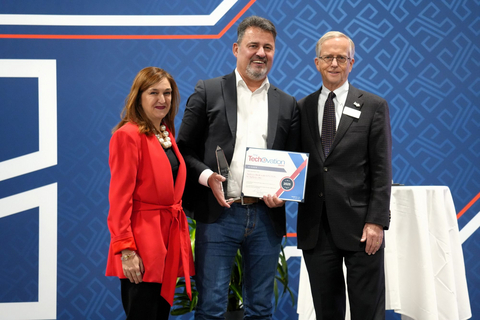
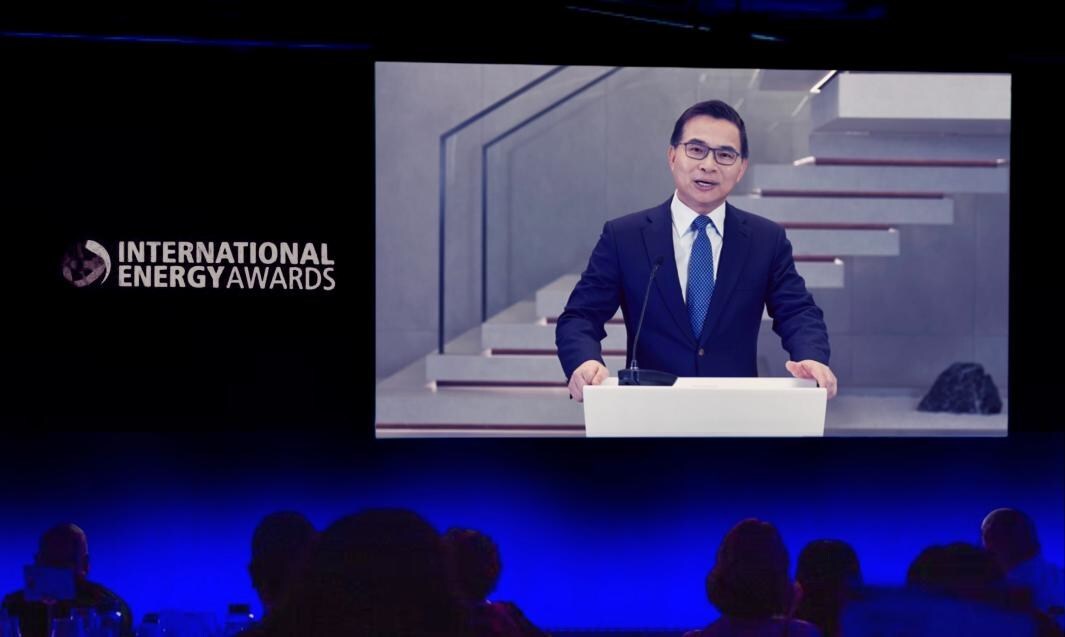
Envision Energy founder and CEO Lei Zhang has been named the recipient of the Energy Institute’s 2026 President’s Award, becoming the first private-sector leader to receive the organization’s highest honor. The London-based Institute framed the recognition as both an individual milestone and a marker of how climate-era leadership is changing, as businesses increasingly sit at the center of the energy transition. Past recipients have largely come from government, diplomacy, and international institutions, making Zhang’s selection a notable departure.
In announcing the award, the Energy Institute pointed to Zhang’s influence as a systems thinker who treats decarbonization not simply as an environmental requirement, but as a large-scale economic and infrastructure challenge. The Institute cited Envision’s role in shaping standards, supporting skills development, and promoting long-term planning around energy systems. It also highlighted a growing view that net-zero progress will depend on companies capable of building the physical and digital backbone needed to make the transition financially durable.
Zhang has become a visible figure in the global climate conversation, including co-founding the Global School of Sustainability with the London School of Economics and being named among TIME’s “100 Most Influential Climate Leaders of 2025.” In remarks tied to the award, he argued that renewable energy has reached a turning point, with costs falling enough for clean power to be “affordable and abundant.” He suggested that skepticism about renewables—particularly concerns about “overcapacity”—echoes historical resistance to other disruptive technologies.
To make the point, Zhang invoked the spread of paper in Europe during the 13th century, when it was dismissed as cheap and inferior to parchment. In his telling, paper’s affordability ultimately expanded access to knowledge and helped reshape society, an analogy he used to describe what abundant energy could do for the modern world. He also warned that artificial intelligence may dramatically increase global power demand over the coming decades, potentially multiplying electricity needs.
Envision’s recent launch of Dubhe, described as an “energy foundation model,” reflects this emphasis on linking energy systems with AI-driven demand. Whether Zhang’s optimism proves accurate remains an open question, but the Energy Institute’s decision signals something clear: the energy transition is no longer viewed as a policy project alone. It is increasingly being treated as a competition of infrastructure, technology, and long-term execution—and the private sector is now being recognized as a central actor in that race.